Folder · 3 symptoms
Uneven Rooms, High Bills and Humidity
Uneven rooms, high bills and damp or dry air usually trace back to airflow: a dirty filter, blocked grilles, leaky ducts, a fan left on ON or equipment sized wrong for the house.
Checked against makers' and agencies' documents by Hum Drip Hiss · how pages are made · Updated
Vitals
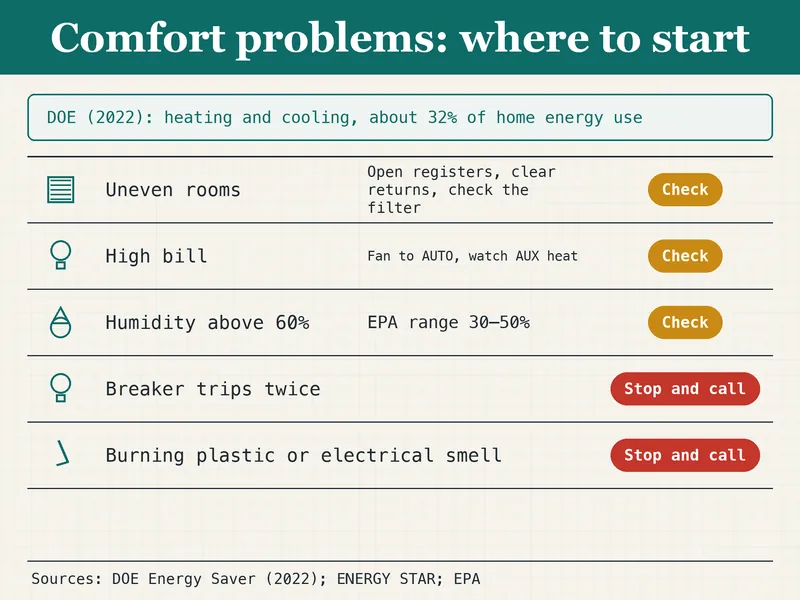
- DOE's Energy Saver booklet (2022) puts air conditioning plus space heating at roughly 32% of a home's energy.
- A typical duct system loses about 20 to 30 percent of its air to leaks, holes and poor connections, per ENERGY STAR.
- EPA advises indoor humidity below 60 percent, ideally 30 to 50 percent.
- A 2003 Lawrence Berkeley National Laboratory study found closing registers raised energy use in the California houses it modeled.
- ENERGY STAR lists rooms too hot or too cold, rising bills and humidity problems among the prompts to have a system evaluated.
Why are some rooms uneven?
Mostly because air isn't reaching them in the amount the room needs. ENERGY STAR says about 20 to 30 percent of the air in a typical duct system leaks out, and names "rooms that are difficult to heat and cool" as a sign. Add rising heat, a sun-baked attic, blocked registers and weak upstairs returns, and a two-story house can run several degrees apart between floors.
DOE's Energy Saver booklet says discomfort can often be fixed by clearing blocked registers, freeing stuck dampers, or repairing disconnected or damaged ducts. The first and last of those split neatly: grilles are yours, ducts and dampers are a technician's.
Rooms too hot or too cold
Why do high bills point to the HVAC?
Because heating and cooling are the biggest single energy use in most homes, about a third of it (DOE, 2022). When the system runs longer, the bill follows: a thermostat fan left on ON, a clogged filter, a heat pump leaning on electric AUX heat in mild weather, or an AC that never shuts off.
ENERGY STAR says airflow problems can reduce a system's efficiency by up to 15 percent, and that dirty coils make it run longer. Lennox advises a call when AUX heat runs more than about 30 minutes, though AUX during defrost or very cold weather is normal.
When the bill jumps
What humidity should a home hold?
EPA says keep it below 60 percent, ideally 30 to 50, and its humidifier page says not to humidify above 50. Summer dampness usually means the AC isn't running long enough to dry the air, or the fan is on ON and blowing moisture off a wet coil back into the house, as Lennox explains. Winter dryness is normal to a point; AprilAire designs its humidifiers to hold 35% at 70°F when it's 20°F or warmer outside.
Damp or dry air
Which uneven rooms and comfort problems can you fix yourself?
The airflow basics are yours; anything inside a cabinet or duct is not. These take about 10 minutes, in this order:
- Thermostat: correct mode for the season, AUTO fan, a sensible setpoint, EM HEAT off.
- Filter: a monthly look; out it goes when dirty, and 1-inch filters get swapped by month 3 at the latest.
- Grilles: every supply register open, returns dusted and free of furniture, rugs and drapes.
- Humidity: a hygrometer reading in two rooms before changing any setting.
- Outdoor unit: kill power at its disconnect first, then pull debris, snow and plant growth away from the cabinet.
The 10-minute safe checks page explains each step and where it ends.
When a comfort problem means stop and call
- Vents give off a smell of hot plastic or wiring: switch the thermostat to OFF, flip the furnace switch or HVAC breaker off, then call. If you see smoke or flame, leave the house and dial 911.
- The HVAC breaker trips again after one reset.
- Frost building on the copper lines or the indoor coil.
- Water near the furnace, air handler or humidifier wiring.
- A musty smell from the vents or visible mold in the system.
- AUX or emergency heat running for long stretches in mild weather.
- If you're unsure, stop and call a licensed HVAC technician.
When are uneven rooms a design problem?
When the rooms stay uneven with clean filters, open grilles and no leaks you can see, the cause is often the design: duct sizes, return paths, one thermostat for two floors, or equipment sized wrong. ENERGY STAR warns that oversized equipment may cycle too frequently, giving less comfort, and suggests asking a contractor for a duct leakage test.
Its replace page lists rooms too hot or too cold, rising bills and humidity problems as reasons to have a contractor evaluate the system. Those are prompts to ask questions, not proof the equipment must be replaced.
Do uneven rooms, high bills and damp air share a cause?
Often, yes: poor airflow. ENERGY STAR's quality installation page says poor airflow can bring "reduced efficiency, higher utility bills, overly damp air, reduced comfort." When two of the three show up together, start with the filter and grilles, then ask a technician to measure airflow. The stop-and-call list and the Hum Drip Hiss home page cover symptoms outside this folder, such as short cycling.
All comfort and bill pages
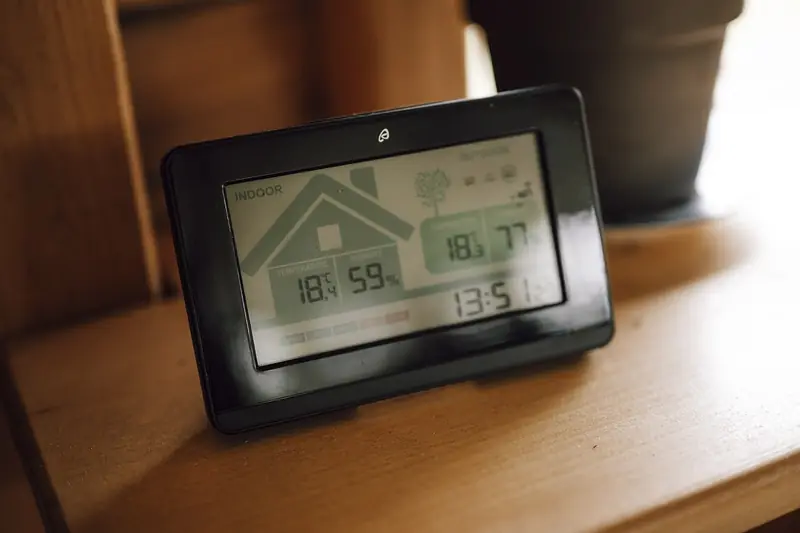
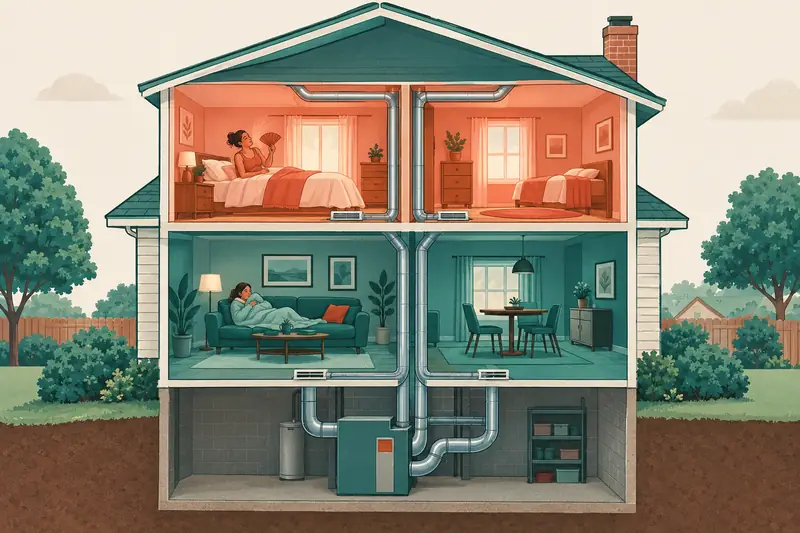 Comfort and bills: Hot upstairs, cold downstairs
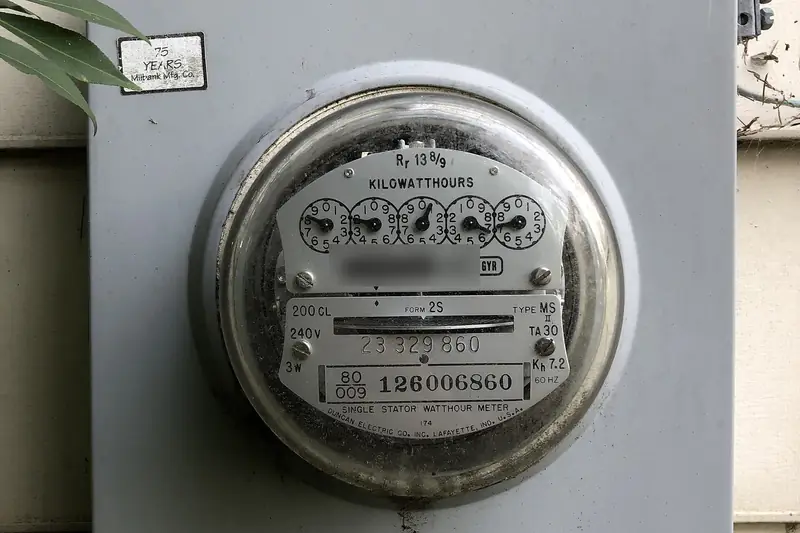 Comfort and bills: High electric bill
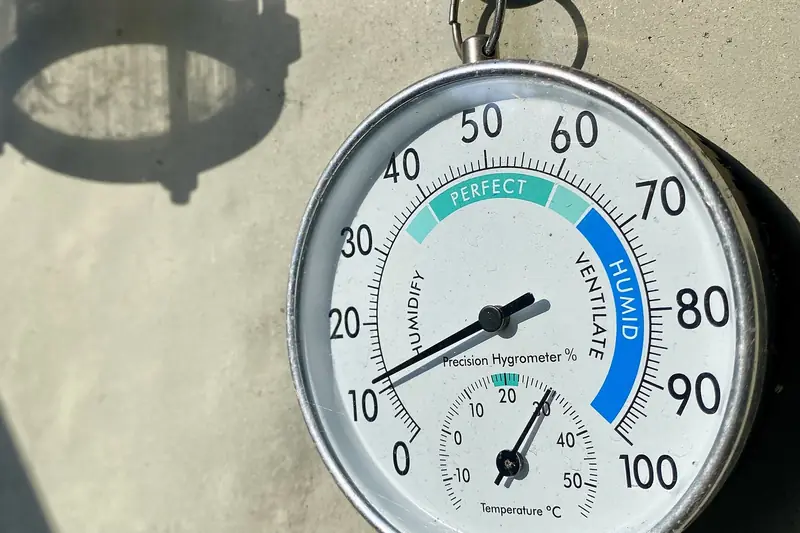 Comfort and bills: Humidity too high or too low
 10-minute safe checks
Numbers on the chart
- About a thirdshare of household energy spent heating and cooling (32%)DOE Energy Saver, 2022
- 20–30%of duct air lost in a typical houseENERGY STAR
- 30–50%EPA's ideal indoor humidity rangeEPA
- Up to 15%efficiency lost when airflow is poorENERGY STAR
| Complaint | Where it usually starts | First step at home | Page |
|---|---|---|---|
| Hot upstairs, cold downstairs | Ducts, returns, attic heat | Open registers; clear returns | Uneven rooms |
| Bill jumped this month | Fan on ON, AUX heat, dirty filter | Fan to AUTO; check the filter | High electric bill |
| Sticky, damp house | Short AC cycles, fan on ON, plugged drain | Measure humidity; fan to AUTO | Humidity too high |
| Dry, staticky winter air | Cold outdoor air, low humidifier setting | Measure first; adjust in small steps | Humidity too low |
Case notes
This hub summarizes the three comfort pages and uses the same sources: DOE's Energy Saver booklet (August 2022); four ENERGY STAR pages (duct sealing, maintenance, installation quality, when to replace); EPA's mold and humidifier pages; Lawrence Berkeley National Laboratory report LBNL-54005 (2003); and Lennox and AprilAire homeowner pages, all checked in October 2026. Costs, rebates and tax credits are deliberately left out.
Asked at intake
Which comfort problem should I check first?
Start with whatever changed most recently, then do the filter and grilles, because poor airflow sits behind all three problems. Measuring humidity and noting run times gives the technician something to work with.
Can one problem cause uneven rooms, high bills and damp air at once?
Yes. ENERGY STAR ties poor airflow to lower efficiency, higher bills, damp air and less comfort, so one restriction can show up all three ways.
Does closing vents in empty rooms save money?
The Lawrence Berkeley study found it raised energy use in the houses it modeled, and closing more than 60% of registers can restrict airflow enough to trip safeties or freeze coils. Keep them open.
How do I know if my ducts leak?
ENERGY STAR's signs include high summer and winter bills, rooms that are hard to heat and cool, and ducts in an attic, crawlspace or garage. A technician can run a leakage test to confirm.
Is a dry house in winter a fault?
Usually not. Cold outdoor air holds little moisture; aim for EPA's 30 to 50 percent and lower the humidifier if windows fog.
Is a new system the answer to comfort problems?
Not by itself. ENERGY STAR treats uneven rooms and rising bills as reasons to get the system looked at, and a new unit on leaky ducts keeps the same leaks.