Why Is My Electric Bill So High?
Why is my electric bill so high? Heating and cooling use about a third of home energy (DOE, 2022), so a fan left on ON, a clogged filter, long AUX heat runs or nonstop AC often explain a jump.
Checked against makers' and agencies' documents by Hum Drip Hiss · how pages are made · Updated
Vitals
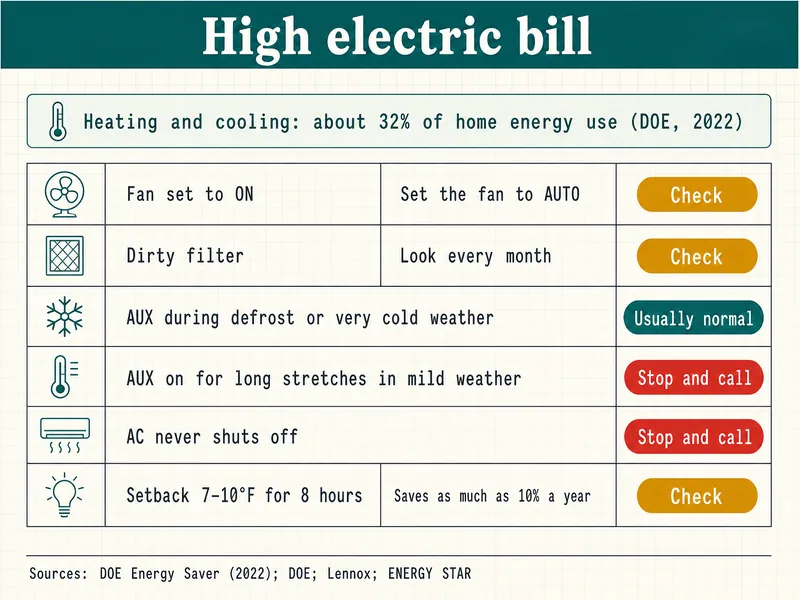
- Air conditioning and space heating are typically about 32% of home energy use, the largest share, per DOE's Energy Saver booklet (2022).
- Turning the thermostat back 7–10°F for 8 hours a day can save as much as 10% a year on heating and cooling, per DOE.
- On a heat pump, AUX heat during defrost or very cold weather is normal; long AUX runs in mild weather are a reason to call.
- ENERGY STAR says airflow problems can cut a system's efficiency by up to 15 percent.
- Lennox says an air conditioner may run longer on hot days but should not run constantly.
- DOE advises the thermostat fan on AUTO unless a professional set it to run continuously.
Why is my electric bill so high all of a sudden?
A sudden jump usually means something is running longer than it used to. The most common HVAC causes, roughly most common first:
- A hotter or colder month than the last one. Compare the kilowatt-hours on the bill with the same month last year before suspecting a fault.
- The thermostat fan set to ON, so the blower runs around the clock.
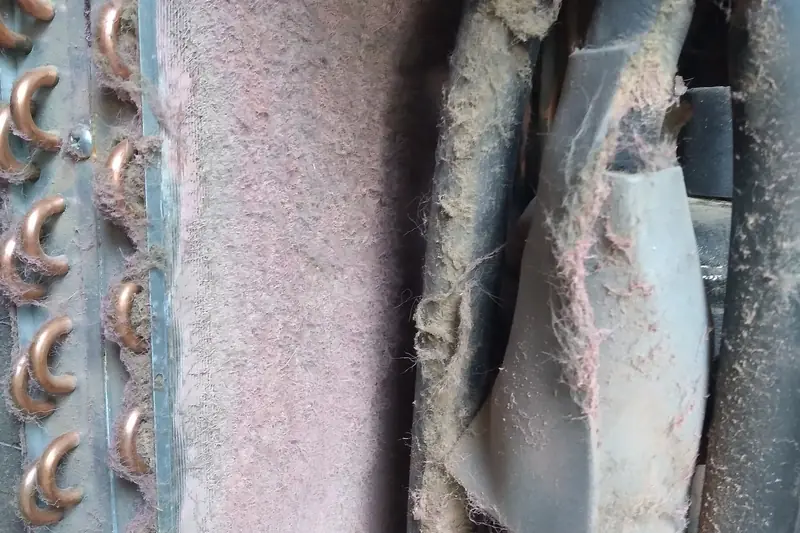
- A clogged filter, which ENERGY STAR says "can increase energy costs and damage your equipment."
- Electric backup heat on a heat pump (AUX or emergency heat) running far more than it should.
- An AC that runs nonstop because the setpoint is very low, the coils are dirty, or a part has failed.
- Leaky ducts: ENERGY STAR's duct sealing page lists high summer and winter utility bills as a sign of poorly performing ducts.
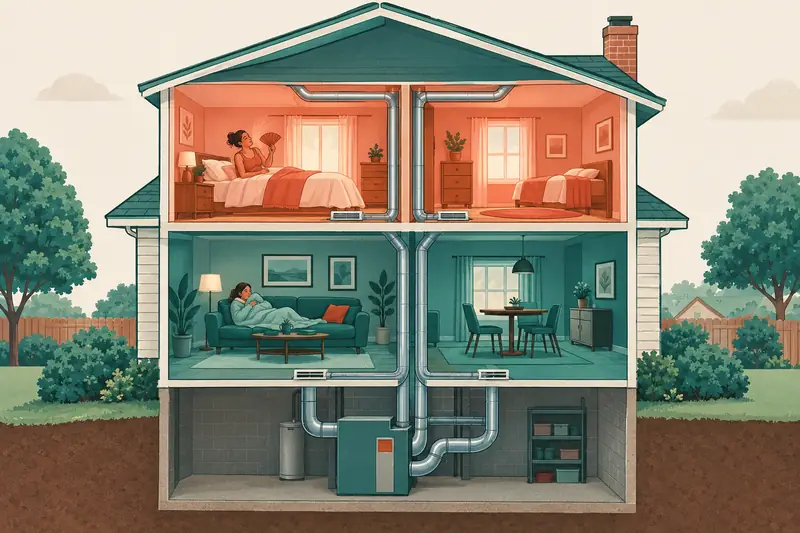
If the bill rose but the house also feels uneven or damp, see hot upstairs, cold downstairs and house humidity too high, because the same airflow problems show up there.
How much of the electric bill is heating and cooling?
About a third of home energy use goes to heating and cooling. DOE's 2022 Energy Saver booklet (p.16) says air conditioning and space heating together are the largest energy users in a home, typically about 32% of energy use. That share covers all fuels, so a gas-heated home sees part of its heating on the gas bill, while an all-electric home with a heat pump or electric furnace sees nearly all of it on the electric bill.
Because heating and cooling are the biggest slice, a small change in how long the system runs moves the total more than almost anything else in the house.
Could emergency or AUX heat be running?
On a heat pump, yes, and it is one of the costliest surprises. Honeywell describes AUX heat as backup heat that helps the compressor hold the setting, and notes that emergency and auxiliary heat are often the same source, such as electric heat strips. Trane says AUX may show while the heat pump is in defrost.
So AUX during defrost or on a very cold night is normal. AUX that stays on for long stretches in mild weather is not: Lennox advises calling a professional if it runs more than about 30 minutes. Emergency heat is meant for when the heat pump itself has failed; Carrier says to switch to it only if the heat pump has broken down, and then call. If the thermostat was left on EM HEAT after a past problem, that alone can explain a winter bill. The defrost mode page shows what normal defrost looks and sounds like.
Is the AC or furnace running nonstop?
Long cycles on the hottest days are expected; constant running is not. Lennox says an air conditioner may cycle longer when it is hotter than usual but should not run constantly, and that a setpoint far too low keeps it chasing a temperature it can't reach. An undersized system also runs constantly.
Trane adds two checks: with the fan set to ON, the blower runs even when cooling is off; and if the outdoor unit keeps running with the thermostat off, the contactor may be welded closed, an electrical fault for a professional. Low refrigerant can also make a system run without reaching the setpoint, and only a certified technician handles refrigerant. If the system instead starts and stops every few minutes, read short cycling.
What thermostat settings lower a high electric bill?
Steady, moderate setpoints and the fan on AUTO. DOE's 2022 booklet says to set the thermostat as high as is comfortable in summer and raise it while sleeping or away, and that a ceiling fan lets you turn the thermostat up about 4°F with no loss in comfort. It also advises leaving the fan switch on AUTO unless an indoor air quality professional set the system to run continuously.
In heating, DOE says turning the thermostat back 7–10°F for 8 hours a day can save as much as 10% a year. Heat pumps are the exception: big manual setbacks can call for electric strip heat during the warm-up. Use a smart or programmable thermostat designed for heat pumps, as DOE advises, or keep a steady setting as ENERGY STAR recommends for heat pumps.
A battery-powered thermostat swap can be a homeowner job when you follow the maker's instructions; if the wiring is unclear, or the system is a heat pump with backup heat, leave it to a technician.
What can you check yourself?
Five checks take about 10 minutes and need no tools; the 10-minute safe checks page explains each one.
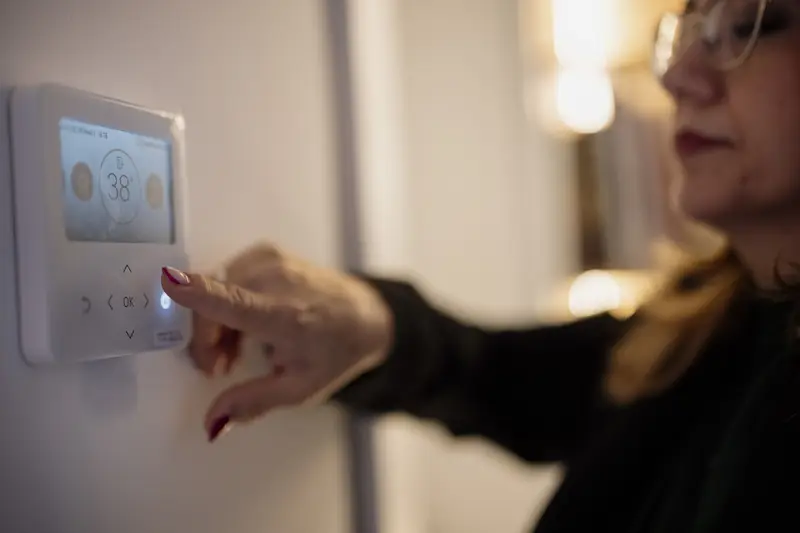
- Thermostat mode and fan. Mode matches the season, fan on AUTO, setpoint reasonable, and not stuck on EM HEAT.
- Filter. ENERGY STAR says to look at it every month; change it once it is dirty, and don't let a 1-inch filter go past 3 months.
- Registers and returns. Open, vacuumed and not buried under furniture or rugs.
- Outdoor unit. With power off at the outdoor disconnect, clear leaves, snow and plants from around it. Don't open its service panel.
- Watch one cycle. Note how long the system runs and whether AUX shows on the thermostat. Write the times down.
When a high bill means stop and call
- AUX or emergency heat stays on for long stretches in mild weather.
- The outdoor unit keeps running with the thermostat off. Turn the system off at the breaker and call.
- Ice on the indoor coil or the refrigerant lines; switch cooling off and let it thaw.
- The HVAC breaker trips a second time after one reset.
- A smell like melting plastic or hot wires: set the thermostat to OFF and cut power at the furnace switch or breaker. Visible smoke or fire: everyone out, then 911.
- If you're unsure, stop and call a licensed HVAC technician.
Does a high electric bill need a technician?
Call when the simple checks don't explain the jump, or when any stop sign above appears. ENERGY STAR says dirty evaporator and condenser coils make the system run longer and that airflow problems can reduce efficiency by up to 15 percent; it also recommends a contractor check-up each year, cooling in spring and heating in fall. Its quality installation page says to ask the contractor to test and adjust refrigerant charge and to perform a duct leakage test.
ENERGY STAR's replace page lists "equipment needs frequent repairs and your energy bills are going up" as a prompt to have the system evaluated. Treat that as a question to ask, not a verdict. The stop-and-call list covers the safety signs across every symptom.
Notes to bring to the technician
Bills and dates
Which months jumped, the kilowatt-hours compared with the same month last year, and any change in rate or household.
Run times
How long cycles last, whether the system ever shuts off, and how often AUX or EM HEAT shows.
Checks done
Filter date, fan setting, thermostat mode, and what you cleared around the outdoor unit.
Other signs
Ice, water, uneven rooms, damp air or a tripped breaker.
Numbers on the chart
- 32%of home energy use for heating and cooling combinedDOE Energy Saver, 2022
- 10%yearly heating and cooling saving from a 7–10°F setback for 8 hours a dayDOE
- 4°Fhigher summer setpoint a ceiling fan allows without losing comfortDOE Energy Saver, 2022
- Up to 15%drop in system efficiency that poor airflow can causeENERGY STAR
- 30 minutesAUX run in mild weather after which Lennox advises a callLennox
| What you see | Probable reason | Homeowner step | Get a technician if |
|---|---|---|---|
| Blower runs all day | Thermostat fan on ON | Set the fan to AUTO | Blower still never stops |
| AUX lit on a mild day | Backup heat carrying the load | Note how long it stays on | AUX runs over about 30 minutes |
| EM HEAT on the display | Emergency heat left selected | Return to normal HEAT | The heat pump won't heat without it |
| AC never shuts off | Low setpoint, dirty coils, or a failed part | Raise the setpoint; check the filter | It runs with the thermostat off |
| Bills up, rooms uneven | Leaky ducts or poor airflow | Open registers; clear returns | You find loose or crushed ducts |
Case notes
This page is based on DOE's Energy Saver booklet (August 2022) and its home upgrades page; ENERGY STAR's maintenance checklist, duct sealing, quality installation, replacement and air-source heat pump pages; and Honeywell, Trane, Lennox and Carrier homeowner pages on AUX heat and nonstop running, each checked during October 2026. Utility rates, repair prices, tax credits and rebates are not covered, and the page does not mix DOE's all-fuel energy share with EIA's electricity-only figures.
Asked at intake
Does leaving the fan on ON use much electricity?
It keeps the blower motor running all day instead of only during heating or cooling, which adds run time. DOE advises AUTO unless a professional set the system to run continuously.
Is it cheaper to leave the heat pump at one temperature?
ENERGY STAR says heat pumps do not save energy by being turned down when you're away or asleep and suggests picking a comfortable setting and leaving it. DOE says setbacks can work with a thermostat designed for heat pumps.
Why did my bill go up after a cold snap?
Heat pumps lean on backup heat more in very cold weather, and every system runs longer. Compare kilowatt-hours with the same month last year; if mild weeks also show long AUX runs, call a technician.
Can a dirty outdoor unit raise the bill?
ENERGY STAR says dirty condenser and evaporator coils make the system run longer and raise energy costs. You can clear debris from around the unit with power off at the disconnect; coil cleaning inside the cabinet is technician work.
Does a gas furnace affect the electric bill?
The burners use gas, but the blower and controls use electricity, so a fan stuck on ON or very long cycles still show up on the electric bill.
Will a smart thermostat lower my bill on its own?
DOE says ENERGY STAR certified smart thermostats are certified on field data to deliver savings, but the saving depends on the schedule it runs. Choose one compatible with your system, especially a heat pump.
Could a refrigerant leak raise my bill?
Carrier lists running without reaching the set temperature as a symptom of low refrigerant. Only an EPA-certified technician may handle refrigerant, so call rather than adding any.
Related bill and comfort pages
Back to the six symptom folders