Furnace or AC Squealing Noise
A furnace or AC squealing noise usually points to a motor: worn blower bearings or an old belt, the inducer fan, or the outdoor fan motor; check the filter, then turn it off and call.
Checked against makers' and agencies' documents by Hum Drip Hiss · how pages are made · Updated
Vitals
- Trane links a high-pitched squeal or screech from a furnace to the blower motor, whose ball bearings "may start to wear out" with age (Trane).
- Bryant says squealing or grinding at an air conditioner can mean a worn fan motor, failing bearings or "a loose fan belt on older systems," and to turn the AC off right away (Bryant).
- A high-pitched sound at a furnace can also come from the inducer motor, a valve, or a dirty filter, per Trane's noises page.
- Check the filter monthly; Carrier replaces 1-inch filters every 1 to 3 months depending on the home.
- ENERGY STAR recommends a contractor's pre-season check-up once a year: cooling in spring, heating in fall.
- Motors sit behind panels with live wiring and, outdoors, capacitors that hold a charge after the power is off: technician work.
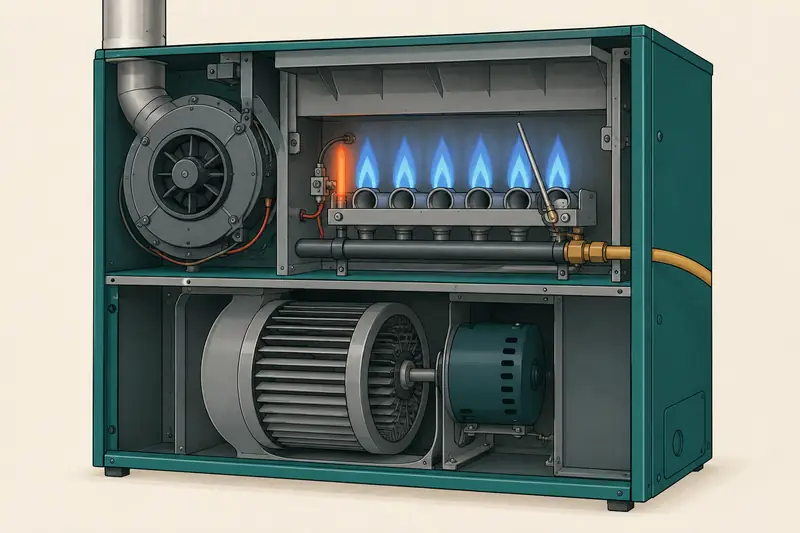
The maker pages behind this page point at three spinning parts: the blower that moves house air, the small inducer fan that clears combustion gases in a gas furnace, and the fan on top of the outdoor unit. Where the sound comes from, and when, tells you which one.
What makes a furnace or AC squealing noise?
Most squeals come from a motor bearing wearing out or, on older equipment, a belt slipping. Trane puts a high-pitched squeal or screech at the furnace down to "trouble with the blower motor," and Bryant lists worn bearings or failing motors in both the indoor blower and the outdoor fan as causes of "squealing, grinding, or intermittent operation before complete failure."
Bryant calls a loose fan belt a problem of older systems. The other furnace culprit is the inducer motor, which Trane names alongside a valve and a too-restrictive filter for high-pitched sounds.
Is it the blower, the inducer or the outdoor fan?
Match the squeal to the moment it starts. In a gas furnace, Carrier explains that the inducer fan runs first, "before the main burners ignite," to clear gases from the heat exchanger. A squeal that begins at the very start of a heating cycle, before warm air reaches the registers, fits the inducer.
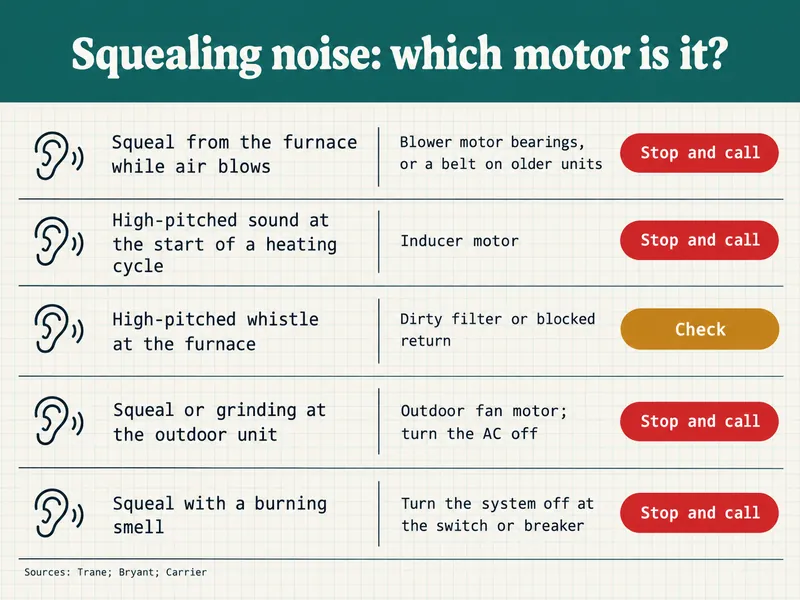
A squeal that starts when air begins to move through the registers, in heating or cooling, fits the blower. A squeal you hear outside, from the top of the condenser, fits the outdoor fan motor. The table sums it up.
| When and where you hear it | Likely part | Safe first step | Stop and call if |
|---|---|---|---|
| At the furnace, as soon as a heating cycle begins | Inducer motor | Check the filter | It continues after a clean filter |
| At the furnace or air handler, while air is blowing | Blower motor bearings, or a belt on older units | Check the filter and registers | Any squeal or screech that keeps returning |
| Whistle at the furnace while running | Dirty filter or blocked return | Replace the filter, clear returns | The whistle stays with a new filter |
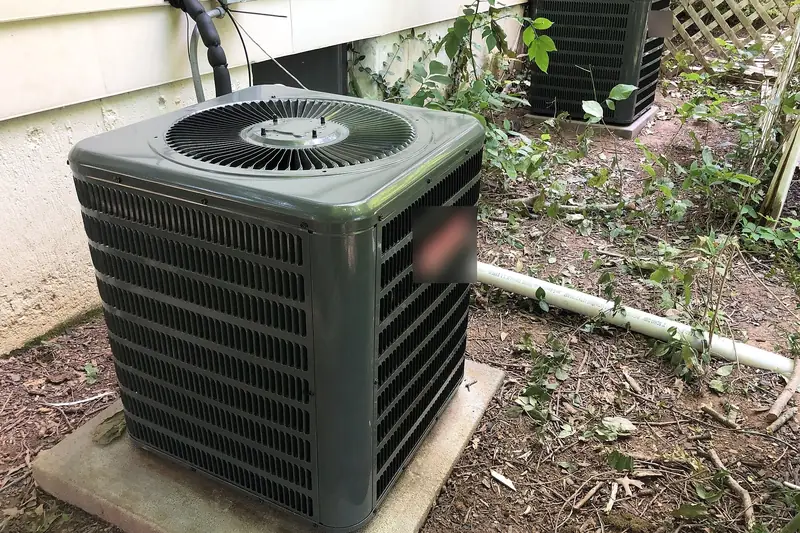
| On top of the outdoor unit | Outdoor fan motor | Turn the AC off at the thermostat | Every time: Bryant says turn it off |
| Any squeal with a burning smell | Overheating motor | Turn the system off | Every time |
Is a squealing noise urgent?
An outdoor squeal is urgent; an indoor one needs a call soon. Bryant says to turn an air conditioner off "immediately" when you hear squealing or grinding, and Trane says that for an outdoor high-pitched noise you should "turn the unit off to avoid damage." Carrier adds that running without a working condenser fan can overheat the compressor.
Indoors, Trane's advice for a blower squeal is "call for furnace repair." Bryant notes that worn bearings can squeal before a motor fails completely, so the noise is an early warning worth acting on. If the squeal comes with a burning or plastic smell, turn the system off at the thermostat and at the furnace switch or breaker and call; the burning smell page covers which smells mean what.
What can a homeowner check?
The filter, the registers and returns, and the space around the outdoor unit are yours; the motors are not. Work through them top to bottom; the safe checks list explains each one in more depth.
- Filter first. Trane says that if a high-pitched furnace noise stops when the filter comes out, change the filter. Look at it monthly and swap it once it looks dirty, following the filter maker; for 1-inch filters, 3 months is the outer limit.
- Registers and returns. Open closed supply registers and move furniture off return grilles so air can flow.
- Listen for the timing. Note whether the squeal starts with the inducer at the beginning of a cycle, with the blower, or outside.
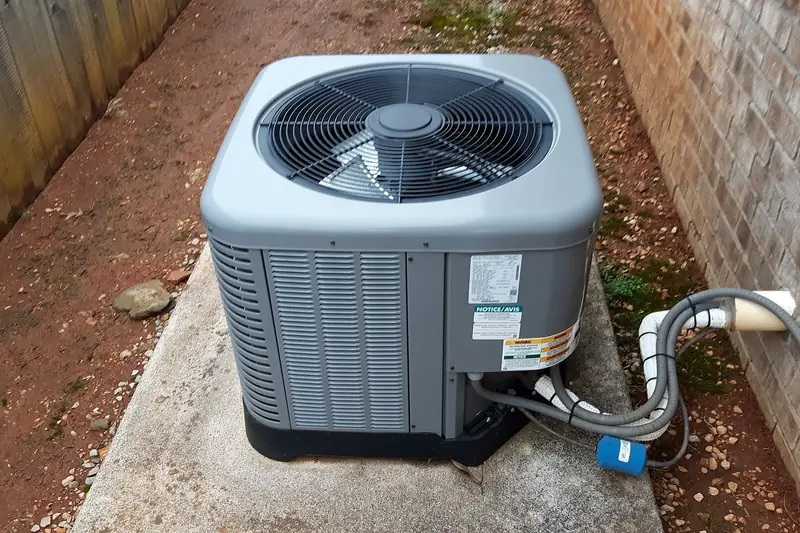
- Outdoor unit, power off. Turn the system off at the thermostat, then switch off the outdoor disconnect or breaker before you go near it. Clear leaves from the top grille and keep plants at least 2 feet from the sides, as Trane advises. Don't reach inside the grille or open any panel.
- Note the light. If the furnace has a sight window with a blinking light, count the blinks and match them to the label on the door.
Stop there. Bryant's line is that "safe homeowner troubleshooting ends before opening the equipment cabinet," because the cabinet holds lethal voltage and, in the outdoor unit, capacitors that store a charge after power is off.
Stop and call if
- The outdoor unit squeals or grinds: turn the AC off and leave it off
- The squeal continues after a clean filter and open registers
- You smell burning, hot plastic or wiring, or see smoke
- The blower or outdoor fan has stopped turning, or hums without spinning
- The breaker trips again after one reset
- If you're unsure, stop and call a licensed HVAC technician.
What does the repair usually involve?
The technician confirms which motor is noisy, then either services it or replaces it. Trane says a technician "may be able to solve the problem by replacing the ball bearings and lubricating the motor," but the blower motor may need replacing.
Motors are matched to the equipment. Carrier notes that parts like blower motors "should be matched to the equipment's requirements," which is why the replacement is a technician's job: it involves live wiring and, on many motors, a capacitor; Trane notes that capacitors help run furnace motors such as the blower. The listing below is a technician's part; it shows what a replacement motor looks like and how it is specified, not something to buy and fit yourself.
How do you keep a squealing noise from coming back?
Clean airflow and a yearly check-up are the best protection. ENERGY STAR recommends annual pre-season check-ups by a contractor, cooling in spring and heating in fall, and warns that "a dirty filter can increase energy costs and damage your equipment, leading to early failure." Trane's maintenance list includes cleaning and lubricating parts.
Between visits, keep the filter on a monthly check, keep returns clear, and keep the outdoor unit free of leaves, grass clippings and plants. If a squeal returns, note when it started and what changed.
Tell the technician
Where and when
Furnace or outdoor unit; at the start of a cycle, when air begins to blow, or all the time.
What it sounds like
A steady squeal, a chirp that comes and goes, grinding or scraping.
What changed
New filter, a recent cold snap, a storm that left debris in the outdoor unit.
What you did
Filter changed, registers opened, system turned off at the thermostat and disconnect.
Readings
- 1–3 monthsCarrier's replacement range for 1-inch furnace filtersCarrier
- 1 a yearPre-season contractor check-up: cooling in spring, heating in fallENERGY STAR
- 2 ftClearance Trane suggests between plants and the sides of the outdoor unitTrane
- 1 resetTimes to reset a tripped breaker before leaving it off and callingBryant
Case notes
Based on Trane's furnace noise, HVAC noise and AC troubleshooting pages, Bryant's AC repair page, Carrier's furnace parts, cold-air and AC fan pages, and the ENERGY STAR maintenance checklist, read in October 2026. Left out: oiling or belt-adjusting steps (they mean opening the cabinet), motor specifications, and repair costs, which maker pages give without a source.
Asked at intake
Why does my furnace squeal only when it first turns on?
A squeal in the first seconds of a heating cycle fits the inducer motor, which Carrier says runs before the burners ignite. Either way, note the timing and call.
Can I oil a squealing blower motor myself?
Oiling means opening the blower compartment, where there is live wiring and often a capacitor that holds a charge. Leave lubrication to the technician at the yearly check-up.
Is a squealing noise from the AC the same as a hissing noise?
No. A squeal is mechanical, from a motor or belt. Trane says hissing near the indoor coil or the outdoor refrigerant lines can be a large refrigerant leak: shut the system off and call. Hissing near a gas line can be a gas leak: get out and call from outside.
Will a new filter stop the squeal?
Only if the filter was the cause. Trane says that if a high-pitched furnace noise stops when the filter is out, change the filter; if the noise continues, call for repairs.
Can I run the furnace until the technician comes?
A mild indoor squeal with good airflow and no smell is usually not an emergency, but the bearing is wearing and could seize. If it gets louder, smells hot, or the blower stops, turn the system off. Outdoor squeals mean turning the AC off now.
Does a squealing heat pump in winter mean the same thing?
The outdoor fan motor is the same part in a heat pump, so a squeal or grinding there gets the same answer: turn it off and call. A brief whoosh and steam during defrost is normal and is not a squeal.
More sounds and next steps
Back to all symptoms, by what you notice