Folder · 4 symptoms
Furnace and AC Noises: What Each Sound Means
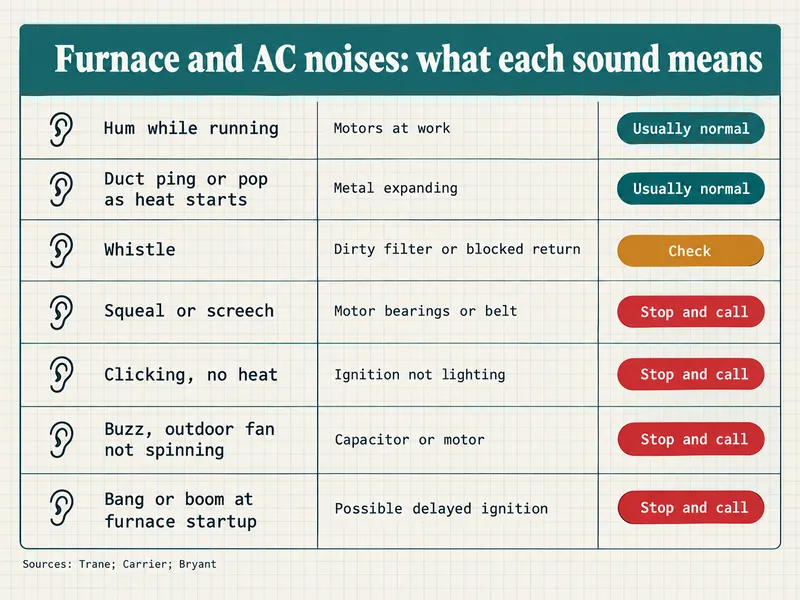
Furnace and AC noises fall into three groups: a steady hum and a click before ignition are normal, a whistle means check airflow, and a bang, squeal, repeated click or stalled buzz means turn it off and call.
Checked against makers' and agencies' documents by Hum Drip Hiss · how pages are made · Updated
Vitals
- Trane calls a furnace hum, a click before ignition and slight duct pinging normal sounds (Trane).
- A sudden bang at the furnace on startup could be delayed ignition and "needs immediate attention," per the same page.
- Bryant says to turn an AC off right away for squealing, grinding or scraping (Bryant).
- An outdoor fan that hums but won't spin usually means a failed capacitor, says Carrier, and capacitors stay charged after power is off.
- Heat pump defrost hums with the fan stopped for a few minutes, up to about 15; that is normal.
- Hissing near a gas line plus a rotten-egg smell means leave the house first and call from outside.
Every system makes noise; act on the ones that are new, louder, or arrive with no heat, no cooling, a smell or a tripped breaker.
What do furnace and AC noises usually mean?
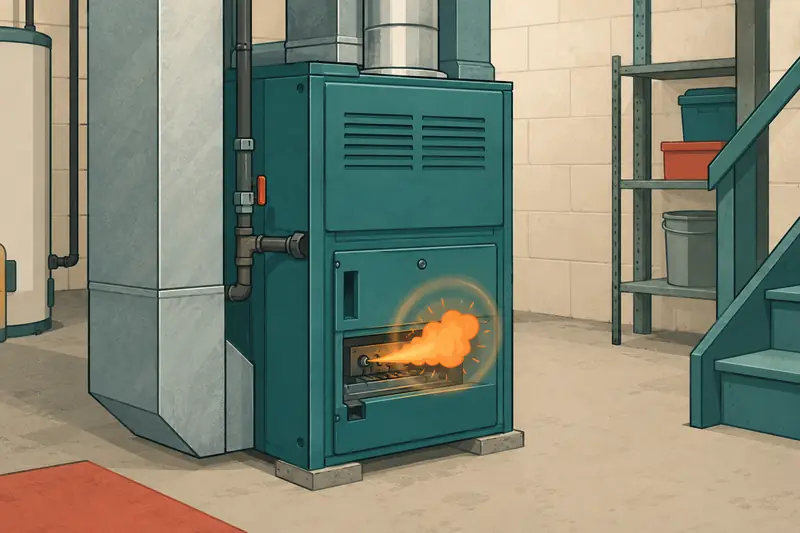
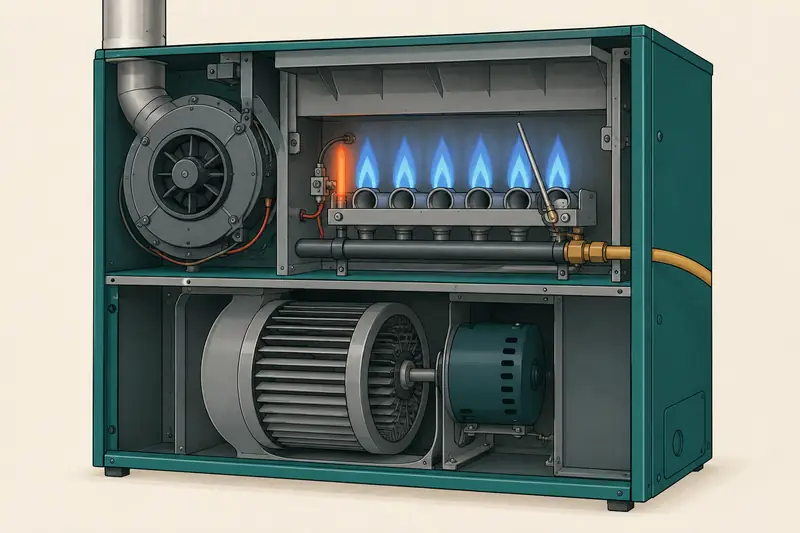
Most unusual noises come from something that moves or something that lights. Trane's noises page traces squeals and loud hums to motors (blower, inducer and outdoor fan), clicking to controls, capacitors and contactors, and rattles to loose or unbalanced parts. Bangs at startup and repeated clicks with no heat point to the ignition sequence. Pick the sound that matches yours.
The four common sounds
Which noises mean shut the system off?
A bang at the burners, a squeal or grind at the outdoor unit, a hum with a still fan, and any noise with a burning smell. A noise with a gas smell is different: leave the house first, touching no switches, and call 911 or the gas utility from outside. Carrier says running an AC without a working condenser fan can overheat the compressor, and Trane says that when a normally quiet unit "suddenly starts making a loud noise, shut the system off and call for HVAC repair."
For the other noises, turn the system off at the thermostat, then at the furnace switch or the AC breaker. A tripped breaker gets one reset only. The stop-and-call list has every sign in one place.
Stop and call if
- The furnace booms or bangs as the burners light
- The outdoor unit squeals, grinds, or hums while its fan stays still
- The furnace clicks over and over with no flame, or shows a lockout code
- Any noise comes with a burning, plastic or electrical smell; smoke or flames mean leave the house and phone 911
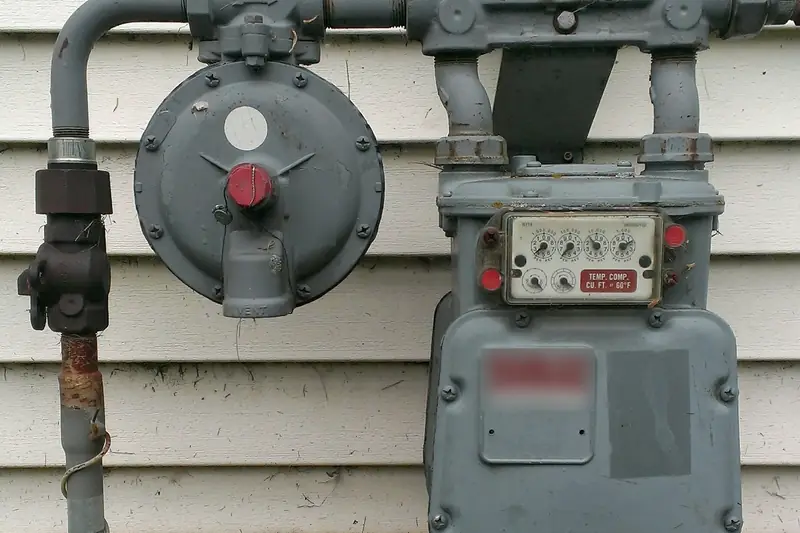
- Hissing near a gas line or a rotten-egg smell: get everyone out now; don't flip switches, use phones, light anything or touch the meter; once far enough away, phone 911, the gas company's emergency number, or both
- A carbon monoxide alarm sounds: get everyone outside and call 911 from outside
- The breaker trips again after the one reset
- If you're unsure, stop and call a licensed HVAC technician.
Are any of these noises normal?
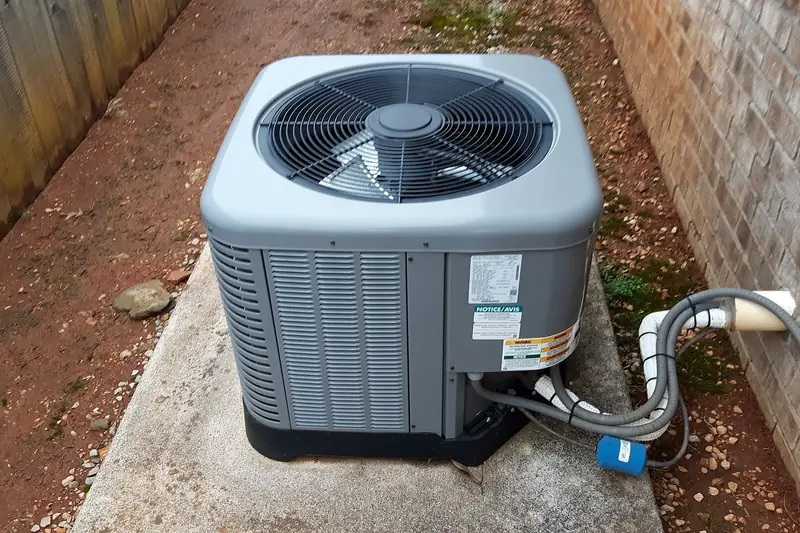
Yes: a steady hum, a click before ignition, and duct pings as the heat comes on. Trane lists all three as normal furnace sounds. Outdoors, Trane says some units are "naturally loud when starting and stopping," and that a heat pump in defrost hums "while the fan is stopped," which is also normal.
Lennox says a defrost cycle usually lasts 5 to 15 minutes and can bring steam and a whooshing sound. The heat pump defrost page explains when frost becomes a service call.
| Noise | Where | Usual cause | Next step |
|---|---|---|---|
| Steady hum | Furnace or outdoor unit | Motors running | None |
| Click before ignition | Furnace | Normal start | None |
| Ping or pop as heat starts | Ducts | Metal expanding | None |
| Whistle | Furnace or registers | Dirty filter or blocked return | Replace filter, open registers |
| Rattle with vibration | Either unit | Loose part, blower wheel or unlevel unit | Call for service |
| Squeal or screech | Furnace or outdoor unit | Motor bearings or old belt | Turn off and call |
| Repeated clicking, no heat | Furnace | Ignition failing | Safe checks, then call |
| Hum, fan not spinning | Outdoor unit | Capacitor or fan motor | Turn off and call |
| Bang at startup | Furnace | Possible delayed ignition | Turn off and call |
| Hissing | Gas line or refrigerant lines | Possible gas or refrigerant leak | Gas: leave first; refrigerant: turn off and call |
What about whistling, rattling and hissing?
Whistling is usually airflow, rattling is usually something loose, and hissing is a leak until proven otherwise. Trane says a furnace whistle "most likely points to airflow problems," and suggests checking the filter, opening registers and clearing returns. A rattle with vibration can be the blower wheel, a fan motor, a loose screw or bolt, or an unlevel outdoor unit, and Trane says it is not normal.
Trane warns that a hiss at the indoor coil or the copper lines outside may mean a big refrigerant leak; switch the system off and call. Only EPA Section 608-certified technicians can buy refrigerant for home systems. Hissing near a gas line is the gas protocol above; the gas smell page has the full steps.
How do you describe a noise to a technician?
Say what it sounds like, where it comes from, and when in the cycle it happens. Trane suggests noting whether clicking comes "at startup, at shutdown, or continuously while running," and that habit works for every noise. Add what else changed: no heat, warm air, a smell, a blink code from the furnace label, or a tripped breaker.
List what you already tried from the 10-minute safe checks, such as a new filter or debris cleared with the power off.
Which furnace and AC noises can wait a day?
Normal sounds can wait forever; a whistle, a duct pop or a mild rattle with good heat or cooling can usually wait for a scheduled visit. ENERGY STAR recommends an annual pre-season check-up, cooling in spring and heating in fall, which is a good time to mention them. Anything on the stop list above, or any noise that gets steadily louder, should not wait.
Readings
- 1 clickA click before ignition is a normal furnace soundTrane
- 5–15 minTypical heat pump defrost cycle, when a hum with a still fan is normalLennox
- 30 minBryant's wait after switching off an AC breaker, for internal charge to dissipateBryant
- 1 a yearPre-season contractor check-up, cooling in spring and heating in fallENERGY STAR
Case notes
This hub summarizes Trane's furnace noise and HVAC noise pages, Carrier's AC fan page, Bryant's AC repair and AC-not-turning-on pages, Lennox's defrost page, the EPA Section 608 sales rule and the ENERGY STAR maintenance checklist, all read in October 2026. Each linked page cites its own sources. Not covered: noises from boilers, radiators and water heaters, and repair costs.
Asked at intake
Why is my HVAC system louder at night?
A quieter house makes normal hums and duct pops easier to hear. If the sound itself is new or louder, note when it happens.
Can a dirty filter cause strange furnace noises?
Yes. Trane links whistling to airflow problems and says a dirty or too-restrictive filter can cause a high-pitched furnace sound. Check the filter monthly and replace it when it looks dirty.
Is a humming outdoor unit with the fan running normal?
Yes. A hum with the fan standing still is the one to act on.
Why does my heat pump whoosh and steam in winter?
That is defrost. Trane and Lennox both describe a whoosh as the refrigerant reverses, steam from melting frost, and a stopped outdoor fan for a few minutes.
Should I record the noise?
A short phone recording from a safe distance helps a technician hear what you heard. Never remove a panel or reach into a unit to get a clearer recording.
Is a clicking noise from the outdoor unit normal?
Trane says clicking outside can relate to a capacitor or contactor, among other things, and asks you to note the timing. If the unit clicks but never starts, turn it off at the thermostat and breaker and call.
Related pages
Back to the Hum Drip Hiss front desk