Dirty Sock Syndrome and Musty Vent Smells
Dirty sock syndrome is the name for a musty, locker-room smell from the vents, usually traced to mold or mildew on a damp indoor coil, drain pan or duct; start with the filter and indoor humidity.
Checked against makers' and agencies' documents by Hum Drip Hiss · how pages are made · Updated
Vitals
- Trane says a musty smell from the vents while the system runs is not normal, and links "Dirty Sock Syndrome" to mold and mildew in the ducts or on the evaporator coil.
- Trane's first step is the filter: if it's dirty or wet, change it.
- The EPA's target for indoor humidity is 30-50%, and below 60% at most (EPA mold and moisture page).
- The EPA says wet materials dried within 24-48 hours usually won't grow mold.
- If you know or suspect the system is contaminated with mold, the EPA says not to run it, because it can spread mold through the house.
- Most modern indoor coils are tightly sealed, so Lennox sends coil servicing to an HVAC professional.
What is dirty sock syndrome?
Dirty sock syndrome is a nickname for a stale, sour smell from the supply vents when the system starts. Trane calls it a musty odor and says some people think it smells like vinegar. It describes a smell; it isn't a diagnosis.
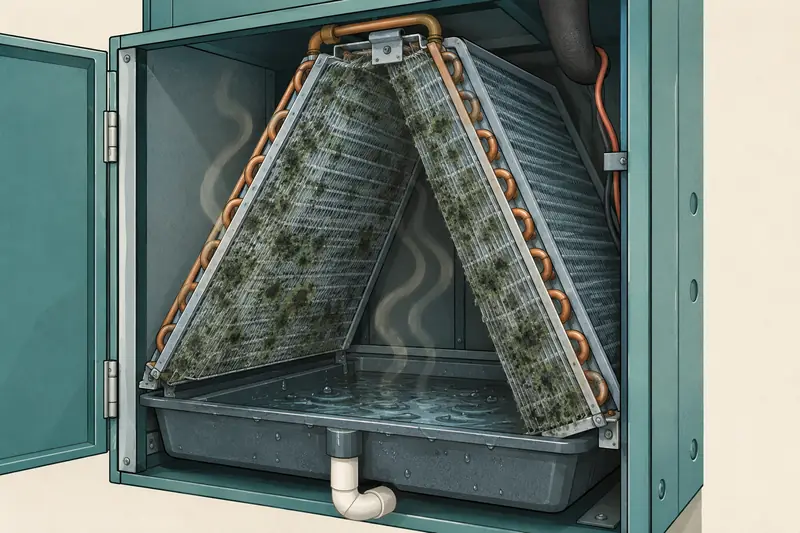
The usual explanation is growth on something that stays damp. Trane points to mold and mildew in the ductwork, on the evaporator coil or elsewhere in the system, and Carrier says a musty or moldy smell could mean mold or mildew in the ducts or the furnace-mounted cooling coil.
A musty smell is different from the danger smells. Rotten eggs or sulfur means gas: get out and call from outside. A hot plastic smell means turn the system off. Those have their own pages on a gas smell in the house and a burning smell from the furnace.
Why do vents smell musty?
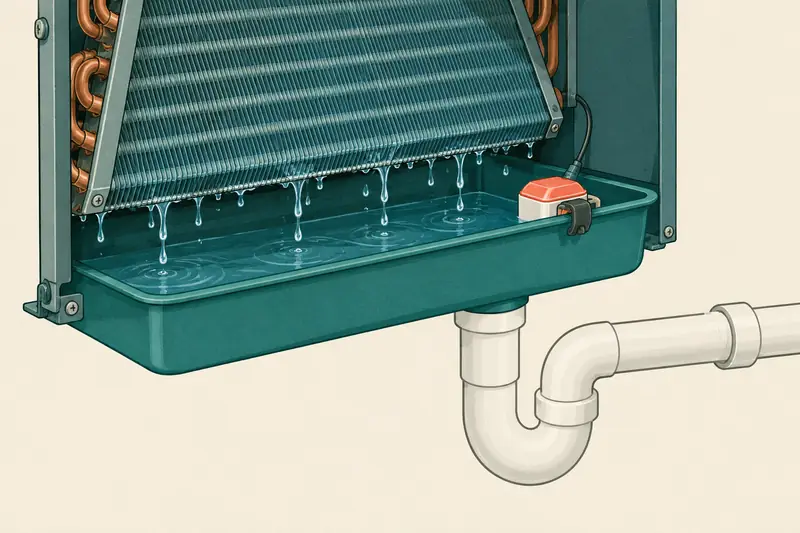
Because the indoor coil is wet by design. In cooling mode it pulls water out of the air, and that water drips into a drain pan and out a drain line. The EPA's page on air duct cleaning says condensation on or near cooling coils is a major factor in moisture getting into the system, and that controlling moisture is the most effective way to stop growth in ducts.
Common reasons the moisture lingers:
- A wet or clogged filter. Trane's first check, and Lennox says old filters can let mold and mildew grow in the ductwork.
- Standing water in the drain pan. The EPA says substantial standing water or debris in the condensate pan is a problem needing immediate attention.
- High indoor humidity. Air above about 60% relative humidity keeps surfaces damp; see when house humidity is too high.
- An oversized system. ENERGY STAR says oversized units short-cycle, so less water drains off the coil and some evaporates back into the air.
- Months of disuse. Lennox says a musty odor may simply mean the system hasn't run in a while; if it persists, mold or mildew is more likely.
Is a musty vent smell harmful?
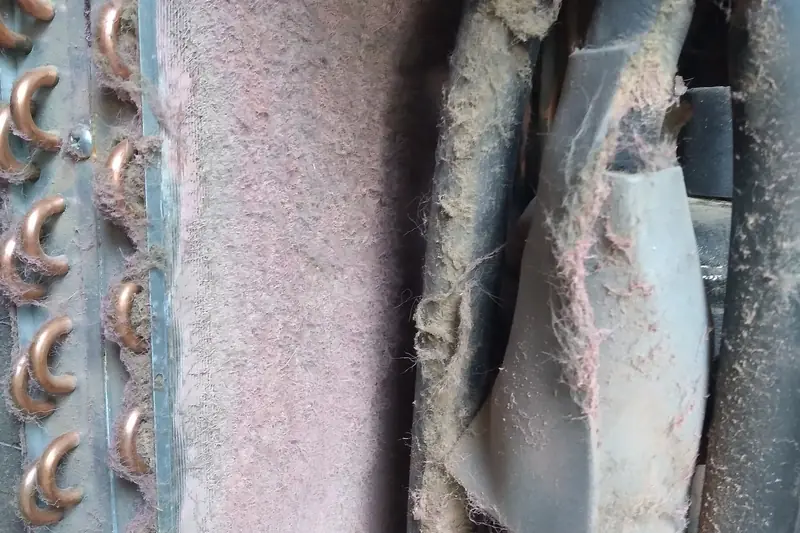
It can be for some people. The EPA says molds produce allergens and irritants, that inhaling mold spores may cause allergic reactions such as sneezing, runny nose, red eyes and skin rash in sensitive people, and that mold can trigger asthma attacks in people with asthma who are allergic to it.
The same EPA page says not to run the system if you know or suspect it is contaminated with mold, because it could spread mold through the building. If anyone in the house has asthma or allergies, talk to a health professional and have the system checked.
What can you check yourself?
Start with the parts you can reach without tools, with the system off at the thermostat for anything wet. Each check ends at the cabinet door.
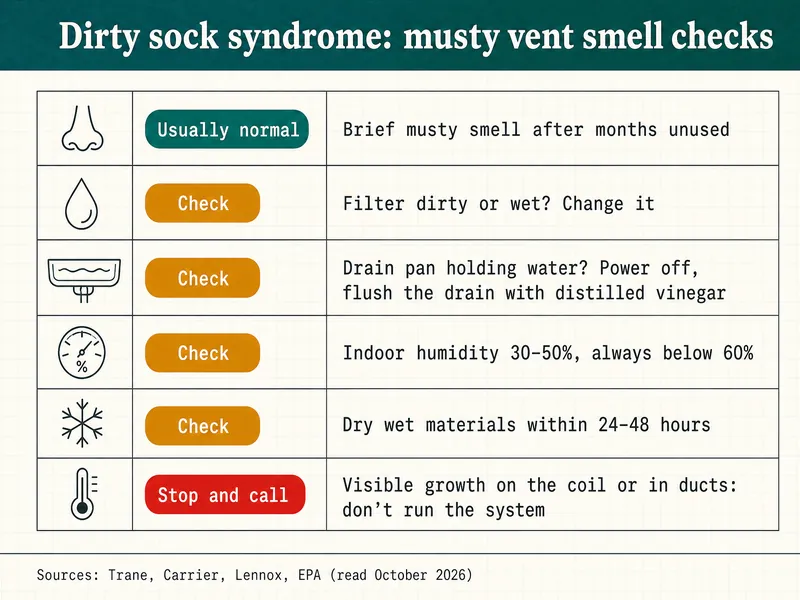
- Filter. Pull it out. If it's wet, dark or dusty, replace it. After that, check it monthly and replace it when it looks dirty, per the filter maker, and at least every 3 months for 1-inch filters.
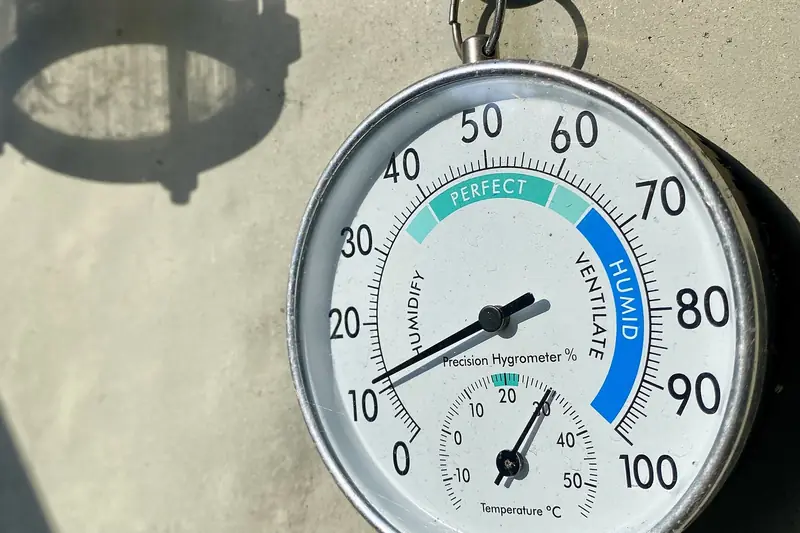
- Humidity. A simple hygrometer shows indoor relative humidity. Aim for 30-50%; above 60% for days at a time feeds musty smells.
- Drain pan and drain line. With power off at the thermostat and the switch or breaker, look at the pan under the coil if it's visible. Empty standing water. At the drain line's access cleanout, Carrier suggests pouring a cup of distilled vinegar; Lennox also allows a cleaner approved for PVC. Use only those. Vinegar may not clear every clog.
- Registers and returns. Make sure none are blocked by furniture. The EPA says dusty return registers are normal and can be vacuumed or removed and cleaned.
- Wet spots. Dry any water from a leak or overflow within 24-48 hours, and look for musty patches near the air handler.
Stop there. Don't spray disinfectant or cleaner into the coil or ducts, don't open the coil cabinet, and don't scrub the fins. The ten-minute safe checks list runs the same order for any symptom.
Stop and call if
- You can see mold on the coil, inside the air handler or at the duct openings: switch the system off and leave it off.
- The drain pan keeps refilling, water reaches the floor, or water is near any electrical part.
- Duct insulation is wet or moldy (the EPA says it can't be cleaned and should be replaced).
- Anyone's asthma or allergy symptoms get worse when the system runs.
- The smell comes back within weeks of a new filter and dry drain.
- If you're unsure, stop and call a licensed HVAC technician.
How does a technician clean the coil?
It's a technician's job, because most indoor coils sit inside a sealed cabinet. Lennox says most modern AC units have tightly sealed evaporator coils and to call an HVAC expert for servicing, and Trane lists cleaning the indoor coil, checking the condensate line and drain pan, and duct cleaning among the possible fixes.
The EPA gives homeowners a way to check the result. Its duct-cleaning page asks whether both sides of the cooling coil are visibly clean, whether a flashlight shone into the coil shows light on the other side, whether the fins are straight, and whether the drain pan is clean and draining. It also says to ask the service provider to show you any mold they say they found.
Be wary of chemical add-ons. The EPA says research hasn't shown that biocides or sealants sprayed inside ducts work, and that none are registered for internally insulated ducts.
Tell the technician
When it smells
At cooling startup, during heat-pump heating, all the time, or only after the system sat unused.
What you found
The filter's condition, standing water in the pan, and the humidity reading.
Who is affected
Anyone with asthma or allergies, and whether symptoms track the system running.
What's been done
When the drain was last flushed, any spray or treatment used before, and any recent leak.
How do you keep the smell away?
Keep the coil area dry and the air below 50% humidity. The EPA's targets are 30-50% relative humidity, never above 60%, and it says to keep air conditioning drip pans clean and drain lines flowing. ENERGY STAR's maintenance checklist adds that a plugged condensate drain can cause water damage and affect indoor humidity.
- Check the filter every month and replace it on schedule.
- Ask your technician to show you the drain line's cleanout. Trane suggests having a technician show you how to pour a cup of distilled vinegar down the line if it keeps clogging.
- In humid weather, a dehumidifier helps. ENERGY STAR says certified models use about 20% less energy than similar conventional ones.
- Have a pre-season check-up each year so the coil and pan get looked at; ENERGY STAR suggests spring for cooling.
Filters and other indoor air quality products are items a homeowner can buy and fit, as long as the size and rating suit the system. The EPA suggests at least a MERV 13 filter or as high as your system fan and filter slot can take, and says you may need a technician to tell you what that is.
| Source | What you might notice | Safe check | Stop and call if |
|---|---|---|---|
| Wet or dirty filter | Musty smell right at startup | Replace the filter | Smell returns within weeks |
| Drain pan holding water | Damp smell, water near the air handler | Power off, empty the pan, flush with vinegar | Pan keeps refilling or water reaches electrical parts |
| Growth on the indoor coil | Sour or "dirty sock" smell when cooling starts | None inside the cabinet | Always: coil cleaning is a technician job |
| Mold in ducts or wet duct insulation | Musty smell from many vents at once | Look into registers only | Visible mold or wet insulation |
| Humid house | Musty smell, damp windows or walls | Hygrometer; aim for 30-50% | Humidity stays above 60% with the AC running |
Readings
- 30-50%The EPA's ideal band for relative humidity indoorsEPA mold brief
- 60%Ceiling for indoor humidity before mold risk climbsEPA mold brief
- 24-48 hoursWindow to dry soaked materials before mold usually startsEPA mold brief
- 20%Energy a certified dehumidifier saves versus a similar conventional unitENERGY STAR dehumidifier page
If water is reaching the floor, the page on an AC leaking water inside covers the drain side in more depth. Signs from every folder that need a professional are pulled together on the stop-and-call page.
Case notes
Sources: Trane's page explaining HVAC odors and sounds, two Carrier pages (burning smells; cleaning a drain line), Lennox's pages on burning smells and an AC that won't turn off, the EPA's brief on mold and moisture and its page on air duct cleaning, and ENERGY STAR's maintenance checklist and dehumidifier page, all read in October 2026. Trade and contractor articles on dirty sock syndrome were not used, and no claim is made about which microbe causes it. No product was tested, and no repair cost is given.
Asked at intake
Why does the smell only show up when the AC first starts?
The coil and pan sit damp between cycles, and the first rush of air carries whatever has grown there into the room. If it fades after a few minutes and returns every startup, the coil or pan is the likely source.
Will dirty sock syndrome go away on its own?
A smell from a system that sat unused can fade, according to Lennox. One that keeps coming back usually needs the filter, the drain and the coil dealt with; drying out the source is what stops it.
Can I spray disinfectant into the vents?
It isn't recommended. The EPA says research hasn't shown that chemical treatments inside ducts work. Leave treatment decisions to a technician you've asked about the pros and cons.
Does duct cleaning fix a musty smell?
Sometimes, if the growth is in the ducts. The EPA doesn't recommend routine duct cleaning but lists visible mold growth as a reason for it, and says growth will return unless the moisture problem is fixed.
Should the AC keep running until the technician arrives?
If you can see mold or suspect it, no; the EPA says running a contaminated system can spread it. If it's only a faint smell with a dry pan and a new filter, ask the technician when you call.
Is a musty smell from the vents ever carbon monoxide?
No. Carbon monoxide has no smell, so only a CO alarm can warn you about it. A musty smell points to moisture, not combustion.
Related pages