Gas Smell in the House: Leave, Then Call
Gas smell in the house? Get everyone out now without touching switches, phones or flames, and call 911 or your gas utility only once you are outside and well away.
Checked against makers' and agencies' documents by Hum Drip Hiss · how pages are made · Updated

Smell gas? Do this before reading on
- Get every person and pet out of the house now, on foot.
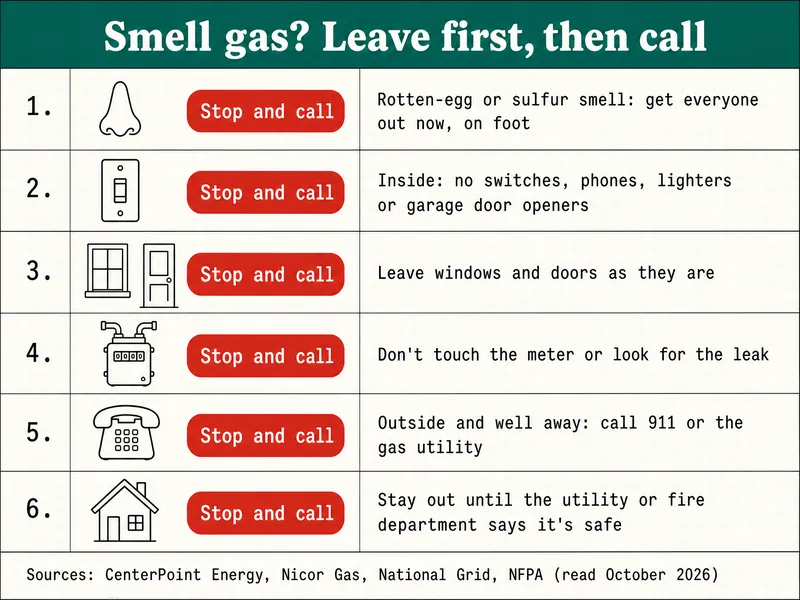
- On the way out, leave light switches, phones, doorbells and the garage door opener alone, and don't light or start anything.
- Leave windows and doors as they are. Don't look for the leak and don't touch the gas meter.
- Once you're outside and well away, call 911 or your gas utility's emergency line (often both).
- Stay out until the utility or the fire department tells you it's safe to go back.
- If you're unsure, treat it as an emergency: get out and call 911 from outside.
Vitals
- Utilities mix mercaptan into natural gas, which is why leaking gas smells of rotten eggs or sulfur (CenterPoint Energy).
- The smell can be faint or missing even during a leak, says Dominion Energy, so a weak whiff still counts.
- CenterPoint tells customers to get at least 350 feet from the building before making any call.
- NFPA's 2026 safety messages: leave the building, then call 911 and the gas company.
- Dominion lists phones, garage door openers, radios, TVs and light switches as possible spark sources; touch none of them inside.
- For propane, the industry safety booklet says get away first, then call your propane retailer, 911 or the fire department.
What should you do if you smell gas in the house?
Leave right away and call from outside. Every gas utility page read for this site gives the same order: people out first, the phone call second, and nobody back inside until responders clear the house. CenterPoint Energy says to leave the area immediately with family members and pets on foot.
Don't stop for belongings or to shut off appliances. A gas leak is an evacuation, not a heating repair to troubleshoot, and hissing near a gas line is one more reason to go now.
Why does natural gas smell like rotten eggs?
Natural gas has no smell of its own, so utilities add one. National Grid says it adds a sulfur-smelling chemical called mercaptan "to help you recognize a leak immediately", and Nicor Gas describes the same odorant as one "often associated with rotten eggs". Trane notes that some people say it smells more like a skunk.
The odorant is a warning, not a measurement. Nicor Gas says some people can't detect it because their sense of smell is reduced or because other odors in the room mask it, and Dominion says the odorant can be weak even when gas is escaping. A faint smell deserves the same response as a strong one.
Smell isn't the only sign. PG&E's natural gas safety booklet lists a hissing, whistling or roaring sound near a gas line or appliance.
What should you never do inside?
Inside a house that smells of gas, do nothing that could make a spark or a flame. Dominion Energy says not to turn on or off any battery-powered, rechargeable or electrical device, and names phones, garage door openers, radios, TVs and computers. Spire adds alarm systems and lights to that list.
- Don't flip light switches on or off, ring the doorbell, or unplug anything.
- Don't use a cell phone or landline until you are outside and away.
- Don't smoke, strike a match, use a lighter or start a car in an attached garage.
- Leave windows and doors as they are. National Grid says this plainly, and CenterPoint says not to waste time on windows when the priority is getting out.
- Don't hunt for the source. CenterPoint, Dominion and Nicor all tell customers not to try to locate a leak.
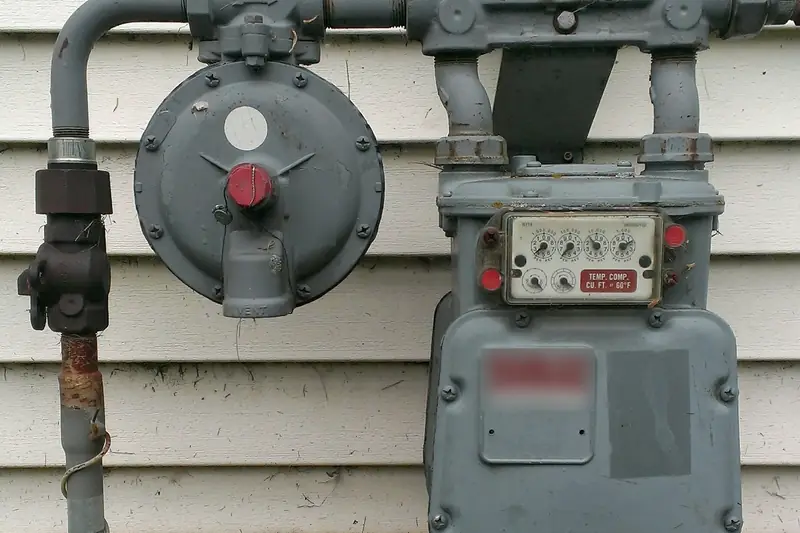
- Don't touch the gas meter, the tank or any gas valve. CenterPoint says not to try shutting off the meter unless you've been trained, and PG&E says not to try to control the leak or repair the pipe or meter.
- Don't relight a pilot or restart the furnace. NFPA's message is short: if you smell gas, don't light the appliance.
If you have a plug-in or battery natural gas detector and it sounds, Nicor says to assume there is a leak and leave. It also warns not to pull the detector's battery to silence it, because that can spark too.
Who do you call, and from where?
Call from outside, well away from the house: 911, your gas utility's emergency line, or both. Utilities word this differently. PG&E's emergency page says to leave the area and call 9-1-1, CenterPoint says to call 911 and then its leak hotline, and NFPA's 2026 Educational Messages say to call 9-1-1 and the gas company.
Distance matters. CenterPoint asks people to move at least 350 feet from the building before dialing. If you don't know your utility's number, 911 is the right call; the dispatcher can bring in the utility.
Make the call yourself. National Grid and Nicor both say not to assume someone else has reported it. If a neighbor smells it too, both households should get clear.
What happens after the call?
The utility or fire crew checks the house and decides when it's safe. According to Trane, the gas company will turn off the gas to the home, locate the leak and tell you what needs to be done. Nicor says to stay away until emergency personnel indicate it is safe to return.
Who fixes what depends on where the leak is. CenterPoint says it maintains the service line up to and including the meter, and that appliances and equipment inside the home are the customer's, to be repaired by a licensed professional. CenterPoint also says it answers leak reports at no charge.
If the leak was at the furnace, the next visit is from a licensed HVAC technician. Ask the utility, and then the technician, when each appliance may be restarted and who should do it. Until then, leave the furnace off even if the house gets cold.
Tell the technician
When and where
Roughly when you first noticed the smell, and which room or appliance it seemed strongest near.
What else you noticed
Any hissing, a furnace that wouldn't light, a bang at startup, or a CO alarm going off.
What the utility found
Whether the gas was shut off at the meter and which appliance or pipe the crew pointed to.
What has changed
Any recent work: a new appliance, a moved range, or a contractor digging near the gas line.
What if it's propane?
Propane gets the same first step: get away. The Propane Education & Research Council's safety booklet says to get everyone out, not to touch light switches, and to avoid smoking, vaping and open flames. It describes the added smell as "a unique odor", and because propane is heavier than air it may settle near the floor, so a basement can smell stronger than the rooms above.
The booklet also describes closing the tank valve in some cases, but this site leaves that step to the propane retailer or the fire department: you can't always tell whether the leak is at the tank, and keeping your distance is the safe choice. From well away, call your propane retailer, 911 or the fire department, and stay away until one of them says it's safe.
Numbers from the utilities
- 350 ftMinimum distance CenterPoint asks people to move from the building before callingCenterPoint Energy
- 2 calls911 and the gas company, the pair named in NFPA's 2026 messageNFPA
- 3 soundsHissing, whistling or roaring near a gas line or appliance can mean escaping gasPG&E
| Moment | Do | Don't | Source |
|---|---|---|---|
| First smell | Get everyone and pets out on foot | Stop to pack, switch off appliances or sniff around | CenterPoint Energy |
| Leaving | Walk straight out the nearest door | Touch switches, doorbells, phones or garage door openers | Dominion Energy, Spire |
| Windows and meter | Leave windows and doors as they are | Touch the meter or valves, or search for the leak | National Grid, CenterPoint Energy |
| The call | Call 911 or the utility from at least 350 feet away | Call from inside, or assume a neighbor called | CenterPoint Energy, Nicor Gas |
| Going back | Wait for the utility or fire department to clear it | Relight a pilot or restart the furnace yourself | Nicor Gas, NFPA |
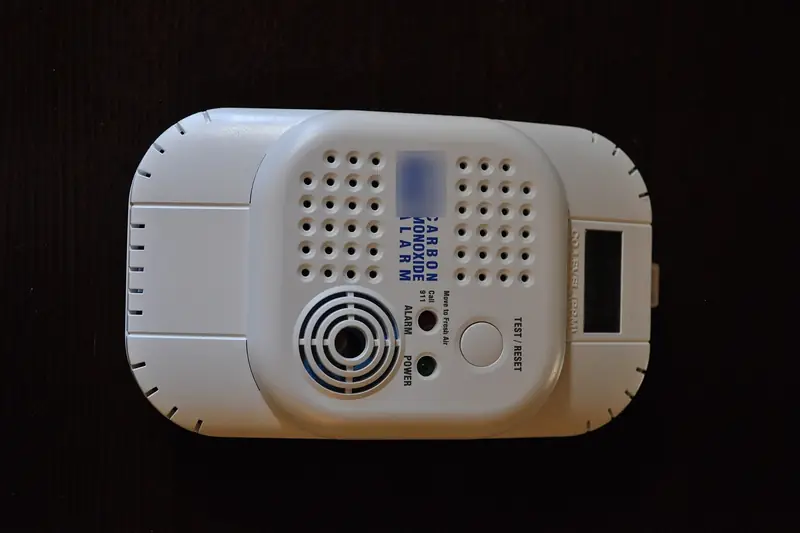
For the full list of signs that mean stop, see the stop-and-call list. For other odors from the system, the furnace and AC smells hub sorts them by risk, and a hot plastic or burning smell from the furnace has its own page. Carbon monoxide has no smell at all; the page on a carbon monoxide detector beeping covers what to do when the alarm sounds. A bang when the furnace lights is another sign that belongs with a technician, not the ten-minute safe checks.
Case notes
This page is based on the leak-safety pages of CenterPoint Energy, Nicor Gas, National Grid, Dominion Energy, Spire and PG&E, NFPA's 2026 Educational Messages, the Propane Education & Research Council's safety booklet, and Trane's page on HVAC smells, all read in October 2026. Where utilities differ (which number to call first, windows), it follows the more cautious reading. It leaves out meter shut-off steps, leak-finding methods and appliance relighting, because every source reserves those for the utility or a trained professional. Nothing here was tested in a home.
Asked at intake
Is it safe to make the call from the front porch?
Not yet. CenterPoint says to move as far from the suspected leak as you can before making any calls, and it names at least 350 feet from the building. Walk to the street or a neighbor's yard first, then dial.
Should I turn off the furnace at its switch before leaving?
No. The furnace switch is an electrical switch, and gas utilities say not to turn any switch on or off in a house that smells of gas. Leave it as it is and let the crew deal with the appliances.
What if only my house smells of gas and the neighbors' don't?
Treat it as an emergency anyway. CenterPoint's own answer to this question is that every gas smell should be checked right away by calling the utility and 911.
Can I go back in to get a pet or my keys?
No. Take pets with you on the way out if you can do it without delay, but don't go back for anything. Nicor says to stay away until emergency personnel indicate it is safe to return.
Will the gas company fix my furnace?
Usually not. CenterPoint says it is responsible for lines up to and including the meter, and that equipment inside the home needs a licensed professional. Expect a licensed HVAC technician to repair a furnace leak.
Do I need a natural gas detector as well as a CO alarm?
They detect different gases. A CO alarm senses carbon monoxide, not natural gas; Nicor describes separate natural gas detectors that sense methane and says to leave if one sounds. Neither replaces leaving when you smell gas.
More on smells and alarms
Back to the Hum Drip Hiss front desk