Folder · 3 symptoms
HVAC Water Leaks and Ice
HVAC water leaks usually start at a condensate drain: the AC coil, a 90%+ furnace or a humidifier makes water, and a clog, a stopped pump or a frozen coil sends it to the floor.
Checked against makers' and agencies' documents by Hum Drip Hiss · how pages are made · Updated
Vitals
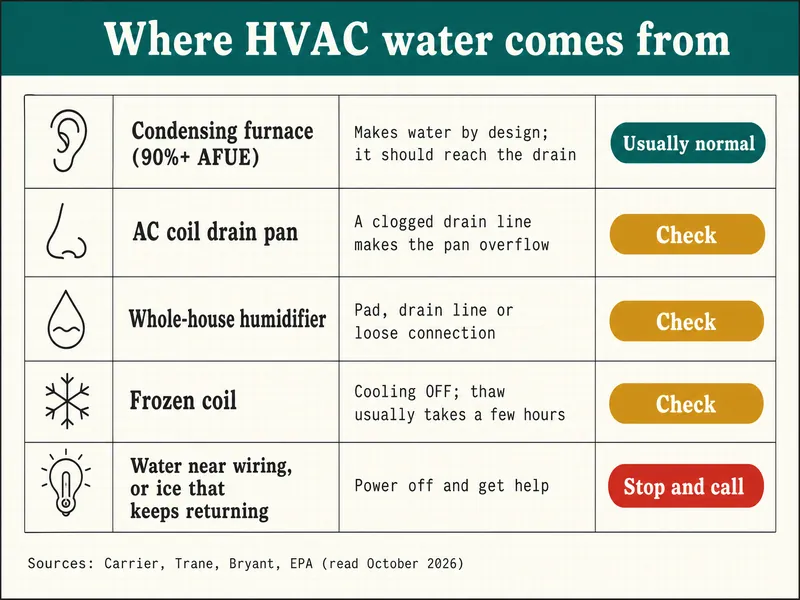
- Furnaces rated 90% AFUE or higher make water by design, says Carrier; it should reach a drain, not the floor.
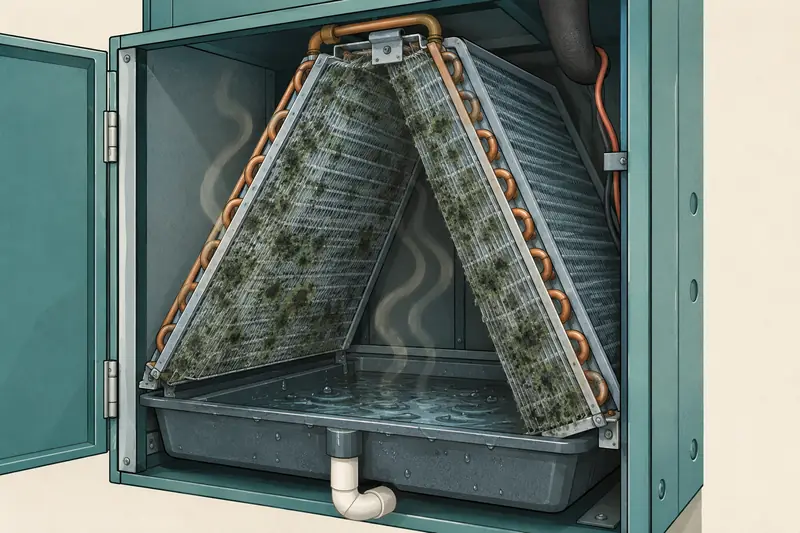
- An AC coil drains into a pan and a line; Trane says a clogged pan can overflow beside the furnace.
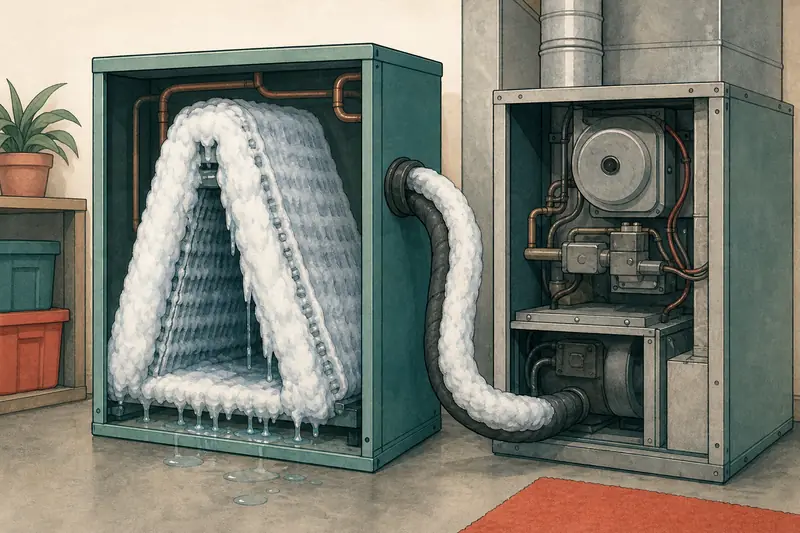
- Ice on the coil comes from weak airflow or low refrigerant (Carrier); a thaw usually takes a few hours, and heavy ice can take most of a day.
- EPA: dry wet materials within 24 to 48 hours and keep drip pans clean and drain lines flowing.
- ENERGY STAR puts the condensate drain on its maintenance checklist because a plugged one causes water damage.
Where do HVAC water leaks come from?
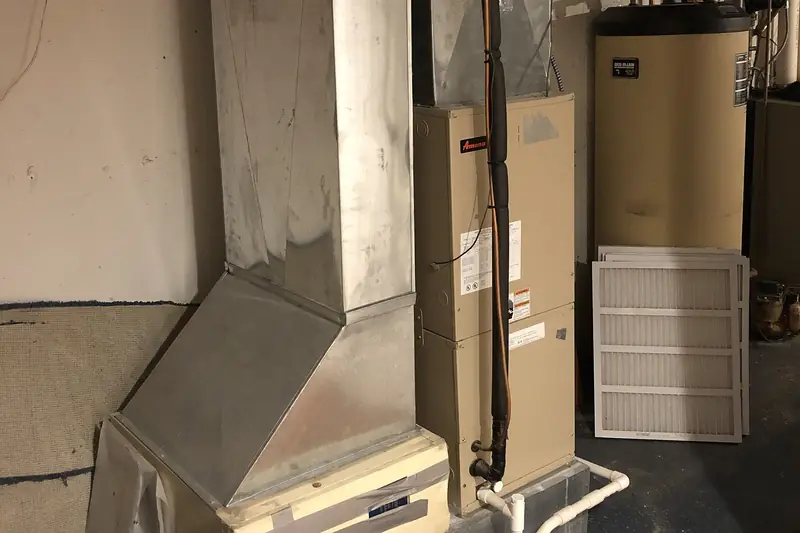
Nearly all of them come from four sources: the cooling coil's pan and drain, a condensing furnace's drain, a whole-house humidifier, or a condensate pump. Carrier names a clogged condensate drain, a pump or drainage problem and a humidifier as the usual causes around a furnace, with the heat exchanger less common but more serious. Season narrows it fast: summer water usually means the coil, winter water the furnace or humidifier.
Pages for each source
Why does an AC or furnace make water?
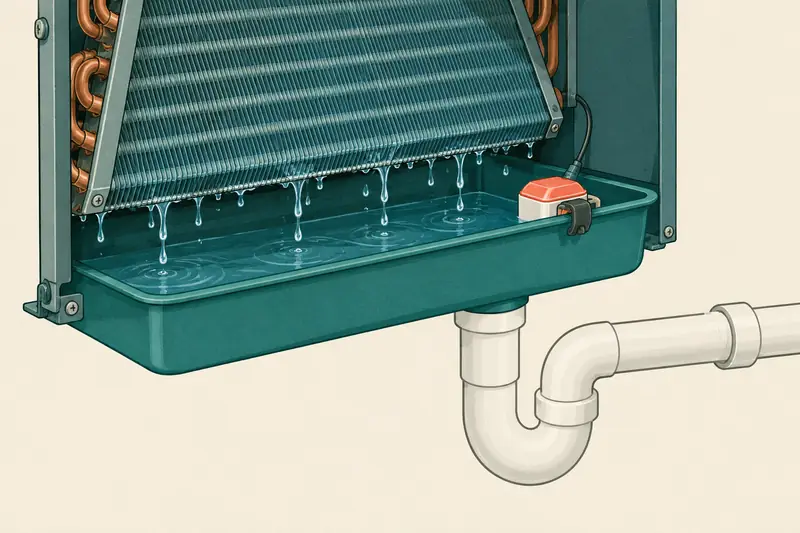
Both pull moisture out of air on purpose. Damp house air crossing a cold cooling coil leaves water on the fins, and a high-efficiency furnace cools its exhaust in a secondary heat exchanger until water vapor turns to liquid, as Trane explains. A standard furnace with a metal flue makes no condensate of its own, so water under one points somewhere else.
That water then travels through a pan, a trap and a line to a floor drain, the outdoors or a small pump. A float or overflow switch may sit in the pan; Trane says it shuts down the indoor unit when the water rises, which is why a wet pan and a system that won't run often show up together.
Related pages
What does ice on the AC mean?
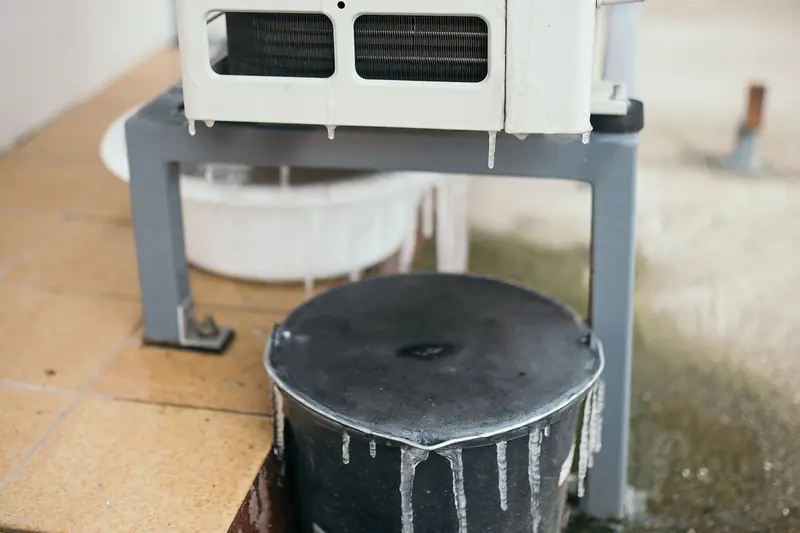
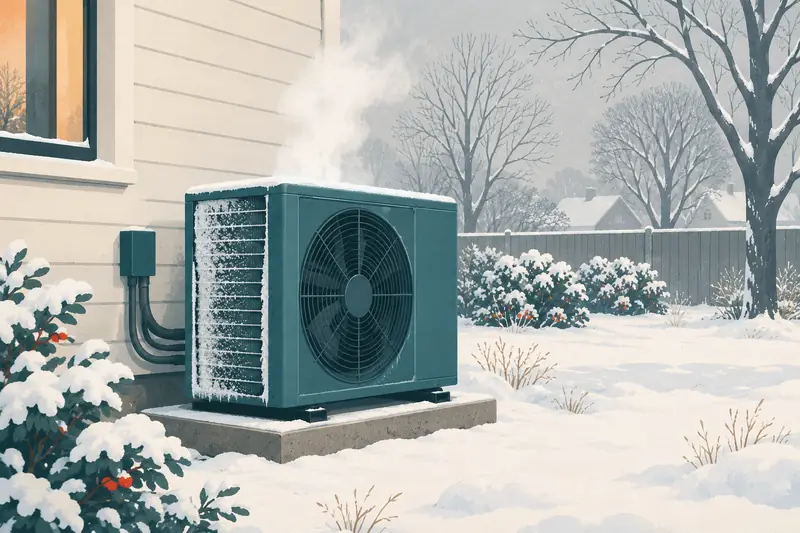
Ice on the indoor coil or the copper lines means the coil is running too cold, from an airflow restriction or low refrigerant, in Carrier's words. Switch cooling OFF, let it thaw with no heat sources and no chipping, and check the filter and returns before trying again. Frost on a heat pump's outdoor coil in winter is a different matter: defrost cycles clear it, usually within a few minutes, up to about 15.
Ice pages
Which leak page matches what you see?
Match the place and the season. Use the table below, then open the page for that source; each one lists likely causes, numbered checks and the signs that mean stop.
| What you see | Most likely source | First safe check | Stop and call if |
|---|---|---|---|
| Puddle under the coil cabinet, summer | Clogged AC drain line | Power off; vinegar flush at the access point | Water reaches wiring |
| Water at a furnace with PVC pipes, winter | Condensing furnace drain | Follow the drain tubing for kinks | Line won't clear |
| Drip below a duct-mounted box, winter | Whole-house humidifier | Shut its water supply where the maker shows how | Valve keeps dripping |
| Ice on the copper line | Frozen coil | Cooling OFF, fan ON, wait | Ice keeps returning |
| Small tank by the unit is full | Condensate pump | Plug, outlet, tubing | Pump hums but won't empty |
Which HVAC water leaks need a technician?
Any leak that touches wiring, any ice that keeps returning, and any water at a standard furnace with no other source need a licensed technician. Refrigerant is the clearest line: under EPA Section 608 only certified technicians can buy it, so low refrigerant is never a homeowner fix. Carrier also warns that a heat exchanger leak may carry a carbon monoxide risk; if a CO alarm sounds, get everyone outside and call 911 from there.
Stop and call if
- Water is on or near wiring, a control board, an outlet or the burner area: power off and get help.
- A carbon monoxide alarm sounds: go outside first, then call 911 or the fire department.
- Ice keeps returning after a full thaw with a clean filter.
- A ceiling below an attic unit is stained, sagging or dripping.
- A breaker trips again after one reset.
- If you're unsure, stop and call a licensed HVAC technician.
Before you call
How do you limit water damage?
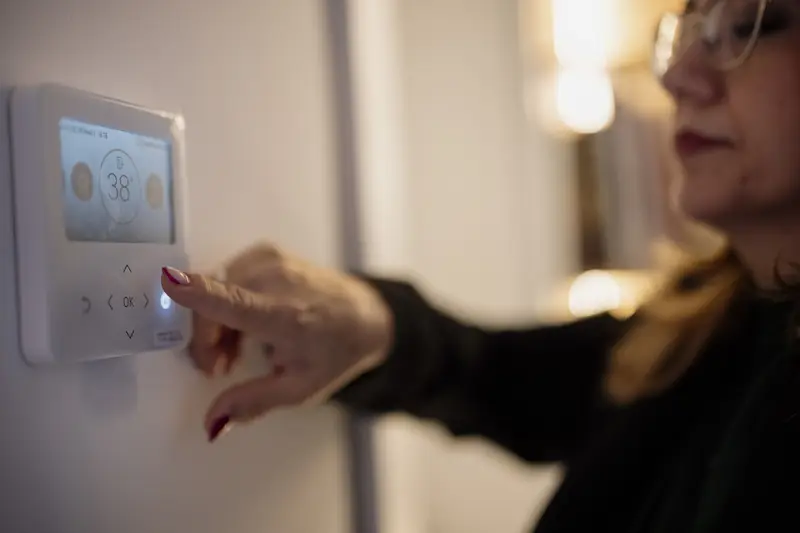
Shut the system off, soak up the water and dry everything within 24 to 48 hours, which is EPA's window for mold. Trane's first two steps for a dripping air handler are to shut the system off at the thermostat or breaker and mop up the water. Move boxes off the floor near the unit, run fans or a dehumidifier in the room, and photograph where the water came from for the technician.
Prevention is mostly routine. Check the filter monthly, replace it when it looks dirty, per the filter maker, and at least every 3 months for 1-inch filters. Keep the drain flowing: Carrier describes pouring about a cup of distilled vinegar into the indoor access point with the power off. Chlorine cleaners are left out here. Humidity targets are on house humidity too high or too low, and the home page lists every symptom.
Numbers from the sources
- 90%+AFUE furnaces that produce condensateCarrier
- 24–48 hrsto dry water-damaged materialsEPA
- 2–4 hrsBryant's fan-on thaw estimate for a frozen coilBryant
- 1 cupdistilled vinegar for a drain flushCarrier
Case notes
This hub summarizes Carrier's furnace-leak, frozen-AC and drain-line pages, Trane's furnace-leak, air handler and cold-air pages, Bryant's AC repair page, ENERGY STAR's checklist and EPA's mold and Section 608 pages, read in October 2026. It leaves out repairs inside the cabinet, refrigerant work, chlorine cleaners and prices.
Asked at intake
Is it normal for an HVAC system to drip water outside?
Yes. A drain line that ends outdoors drips steadily while cooling runs on a humid day. The concern is water inside the house, not at the end of the line.
Why is water leaking from my HVAC only in summer?
Summer is when the cooling coil makes water, so a slow drain or a full pump shows up then. Winter leaks usually trace to a condensing furnace or a humidifier.
Can an HVAC leak raise indoor humidity?
ENERGY STAR notes that a plugged drain can affect indoor humidity levels. Standing water in a pan also keeps the cabinet damp.
Does homeowners insurance matter for HVAC water damage?
Policies differ, and this site doesn't cover insurance. Photos of the water, the source and the dates help whoever reviews it.
What does a gurgling sound with a leak mean?
Carrier mentions gurgling as water or trapped air moving through a drain line. It points to the drain, so the drain checks come first.
Can I keep using the heat while the humidifier leaks?
Often yes, once the humidifier's water supply is shut off and no water is near the furnace's electrical parts. If you can't tell where the water starts, leave the system off.
All leak and ice pages
Back to the Hum Drip Hiss front desk