Frozen AC Coil and Ice on the Lines
A frozen AC coil almost always means the coil got too cold, from weak airflow (a dirty filter, blocked returns, a dusty coil) or from low refrigerant; switch cooling off and let it thaw.
Checked against makers' and agencies' documents by Hum Drip Hiss · how pages are made · Updated
Vitals
- Carrier: ice forms when warm air isn't reaching the coil or when the pressure inside it is too low from a refrigerant leak.
- Bryant's first step is the thermostat set to System Off with the fan on On, then waiting until the ice has fully melted.
- Thawing usually takes a few hours; heavy ice can take most of a day. Cooling stays off until every bit of ice is gone.
- Trane: don't chip at the ice; it can damage the coil and cause a leak. This site also says no hair dryers or heaters.
- EPA Section 608: only certified technicians can buy refrigerant for home air conditioners and heat pumps.
- ENERGY STAR says airflow problems can cut a system's efficiency by up to 15%.
Why does an AC coil freeze?
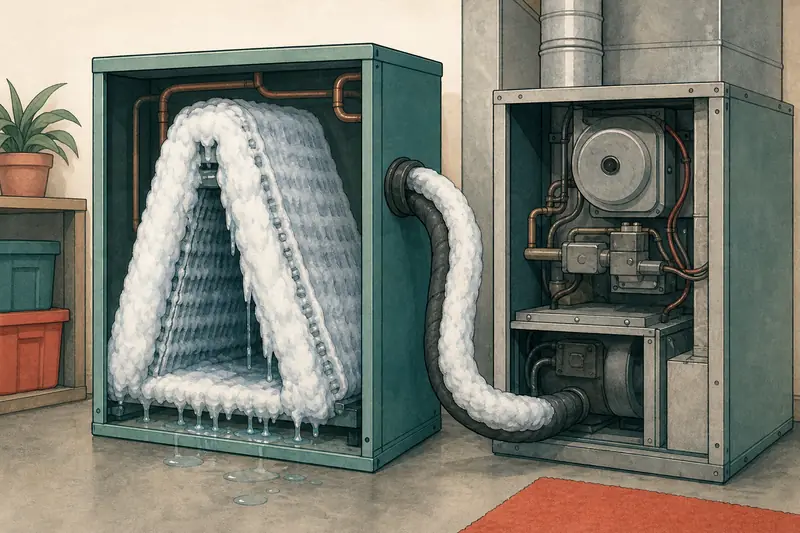
The coil freezes when its surface gets colder than freezing, and the two usual reasons are too little warm air crossing it or too little refrigerant inside it. Carrier sums it up as an airflow restriction or a refrigerant leak. Moisture from the air that would normally drip off the fins turns to frost, the frost blocks more air, and the ice spreads to the copper line outside.
Likely causes, most common first:
- A clogged air filter.
- Return grilles blocked by furniture or rugs, or many supply registers closed.
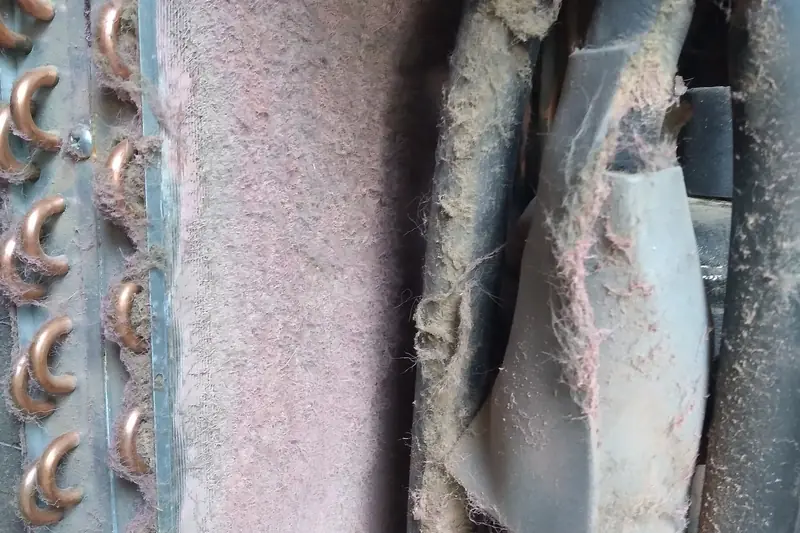
- A dusty indoor coil; Trane notes dirt on the coil can make it frost over.
- A blower fan that is slow or not running; Carrier lists a malfunctioning fan among the causes.
- Low refrigerant from a leak.
Trane's frozen-coil page singles out furniture: a couch in front of the return vent is a common way to starve the coil.
What should you do when the AC is frozen?
Stop cooling right away, keep the blower running if your maker allows it, and let the ice melt on its own. Trane says to switch the thermostat from Cool to Off, and that setting the fan to On instead of Auto speeds the thaw. Running the compressor against a frozen coil can damage the outdoor unit, so don't keep it going hoping the ice clears.
Steps while it thaws:
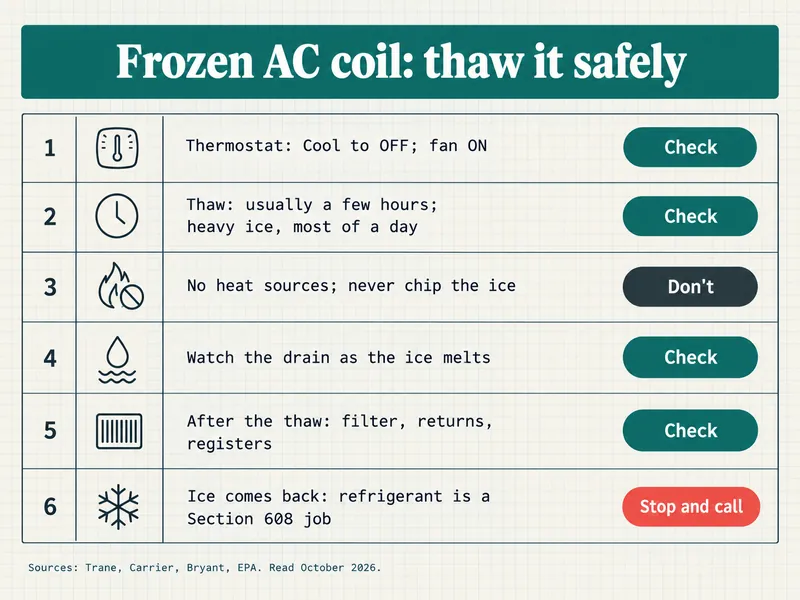
- Thermostat to OFF (not Cool). Fan to ON, where your maker says so.
- If you have a heat pump, don't switch it to defrost mode to melt an indoor coil; Trane says not to.
- Put towels or a shallow pan where water may run; melting ice can overwhelm the drain.
- Don't chip, scrape or pry the ice.
- Don't aim a hair dryer, space heater or hot water at the coil or lines.
How long does a frozen coil take to thaw?
Usually a few hours; a coil packed with heavy ice can take most of a day. Maker estimates differ: Bryant describes the fan thawing the coil over 2 to 4 hours, and Carrier says to leave the AC off for at least 3 to 4 hours. The rule that matters is simple: no cooling until every bit of ice on the coil and the lines has melted.
While it melts, watch the drain. Carrier's page carries a note to check that no water is overflowing from the drain line as the ice turns to water. If the pan spills, see AC leaking water inside for the drain-line flush.
What can you check after it thaws?
Check everything that controls airflow, in this order, before you try cooling again. ENERGY STAR notes that airflow problems can reduce efficiency by up to 15 percent, and they are also the cause you can fix yourself.
- The filter: check it monthly, replace it when it looks dirty, per the filter maker, and at least every 3 months for 1-inch filters.
- Return grilles: clear furniture, rugs and boxes away from them.
- Supply registers: open them, including in unused rooms.
- The thermostat fan setting: back to Auto after the thaw, unless you prefer it on.
- The outdoor unit: with power off at the disconnect, clear leaves and anything stacked against it.
Then run cooling and look at the larger copper line near the indoor unit once it has run for a while. Frost or ice there means switch cooling off again. The broader homeowner sequence is on safe checks before you call.
What if the frozen AC coil keeps coming back?
A coil that refreezes after a clean filter and open returns needs a technician, because the remaining causes sit inside the cabinet or the refrigerant circuit. Carrier calls ice a sign of a refrigerant or airflow problem that requires expert repair. A slow blower, a dirty coil and a leak all need tools and access a homeowner shouldn't use.
Closed registers can play a part too. A Lawrence Berkeley National Laboratory study warned that closing too many registers restricts airflow so much that cooling systems may suffer from frozen coils, and found little or no saving from the practice. If some rooms run warm, uneven room temperatures covers better options.
Stop and call if
- Ice comes back within a day or two of a full thaw with a clean filter.
- The system blows warm air or can't reach the setpoint even after a full thaw.
- The indoor blower doesn't run when the fan is set to ON.
- Water from the thaw reaches wiring, the furnace controls or a ceiling.
- The outdoor unit hums, buzzes or trips its breaker; reset the breaker once at most.
- If you're unsure, stop and call a licensed HVAC technician.
Can low refrigerant cause it?
Yes, and it is the one cause a homeowner can't treat. Low refrigerant means a leak somewhere in the sealed system; Lennox says it is not something you can refill like washer fluid, and a licensed technician has to find and repair the leak before recharging. Federal rules back this up: under EPA Section 608, only certified technicians can buy refrigerant for home systems, and intentionally venting refrigerant is prohibited.
Newer systems may use R-454B or R-32, which EPA classes as lower-flammability (A2L) refrigerants, another reason the circuit stays closed to anyone without training. If the AC also blows warm air, the AC blowing warm air page and the stop-and-call list cover the next steps.
Tell the technician
How far the ice spread
Coil only, the copper line, or all the way to the outdoor unit.
How long it took to thaw
Hours with the fan on, and whether water overflowed.
What you changed
New filter, cleared returns, opened registers.
How fast it came back
Same day, next day, or only on the hottest afternoons.
What the sources say
- 2–4 hrsBryant's fan-on thaw estimateBryant
- 3–4 hrsCarrier's minimum time to leave the AC offCarrier
- 15%efficiency lost to airflow problems, at mostENERGY STAR
- 60%share of registers closed beyond which LBNL advised against itLawrence Berkeley National Laboratory
- 608EPA section limiting refrigerant sales to certified techniciansEPA
| Cause | Sign | Homeowner step | Technician step |
|---|---|---|---|
| Dirty filter | Gray, clogged filter | Replace it | None, unless ice returns |
| Blocked returns | Furniture against grilles | Clear them | Airflow measurement |
| Dusty indoor coil | Ice despite a clean filter | None: the coil is sealed in | Coil cleaning |
| Blower problem | Weak or no air with fan ON | Note it and call | Motor and board checks |
| Refrigerant leak | Ice returns, warm air | Keep cooling off | Leak repair, then charge |
Case notes
Built from Carrier's frozen-AC and troubleshooting pages, Trane's frozen-coil and cold-air pages, Bryant's AC repair page, Lennox's warm-air page, ENERGY STAR's maintenance checklist, the LBNL register-closing study and EPA's Section 608 pages, read in October 2026. Omitted on purpose: any heat source for thawing, coil cleaning inside the cabinet, refrigerant gauges or charging, and repair prices.
Asked at intake
Can I run just the fan on a frozen AC?
Yes, where your maker allows it. Bryant and Trane both describe cooling off and the fan on to move room air across the coil, which speeds the thaw.
Why is there ice on the outdoor AC line but not the coil?
Ice usually starts on the indoor coil, where you can't see it, and creeps out along the larger copper line. Frost on the outdoor line in summer means the coil inside is probably frozen too.
Is ice on a heat pump in winter the same problem?
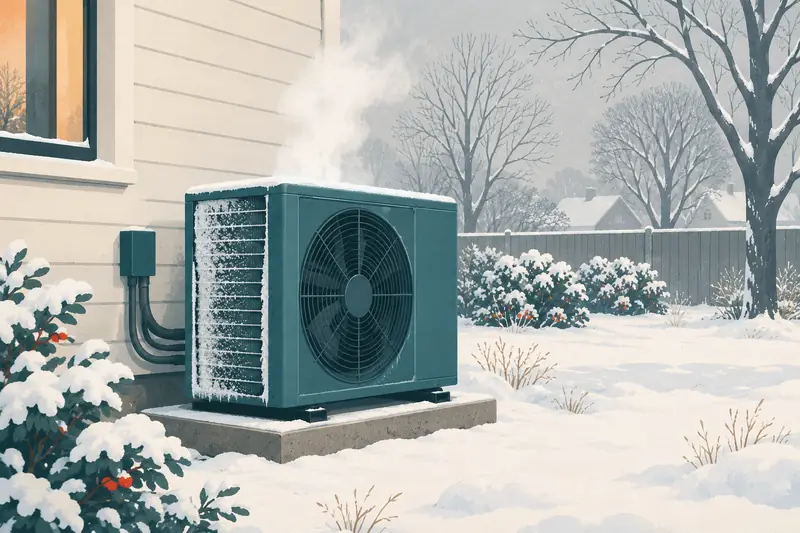
No. A heat pump's outdoor coil frosts in cold weather and clears itself with defrost cycles. See the heat pump defrost mode page for what is normal there.
Can a frozen AC coil damage the compressor?
Trane warns that running with a frozen coil can cause irreparable damage to the outdoor unit. That is why cooling stays off until all the ice is gone.
Will a new filter always fix a frozen coil?
Only when the filter was the cause. If the ice returns with a clean filter and open returns, the cause is inside the system.
Is it safe to use a hair dryer to thaw the coil?
This site says no. Makers disagree on it, and heat aimed at a cold coil, wiring and a wet drain pan adds risk without saving much time.
Why does my AC freeze only at night?
Cooler nights mean less heat reaching the coil, so a system that is already short on airflow or refrigerant can tip into freezing. It points to the same causes, so the same checks apply.
Water and ice, continued
Back to the Hum Drip Hiss front desk