Triage
When to Stop and Call an HVAC Technician
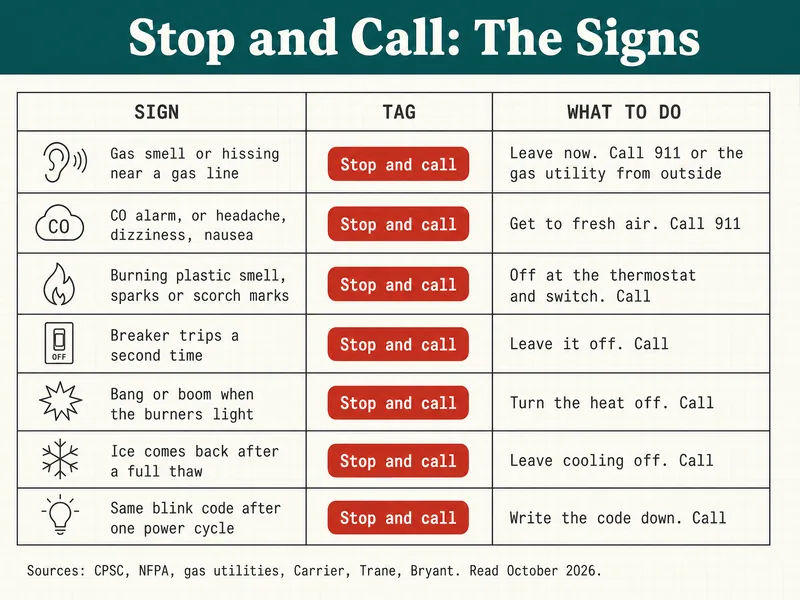
When to call an HVAC technician? For gas or a CO alarm, leave and call 911 first; call a technician for burning plastic, sparks, a twice-tripped breaker, a boom at ignition, returning ice or a recurring fault code.
Checked against makers' and agencies' documents by Hum Drip Hiss · how pages are made · Updated
Vitals
- Nicor Gas says to call 911 and the utility once you are in a safe place away from the leak, and never to assume someone else has reported it.
- The CPSC says never to ignore a sounding CO alarm and not to re-enter until emergency responders give permission.
- Carrier says a burning smell that lasts more than a few hours, grows stronger, or smells like plastic or wiring means turn the furnace off and have it inspected.
- A tripped HVAC breaker gets 1 reset; Bryant says that if it trips again, leave it off and contact a qualified professional.
- Goodman's manual for one inverter outdoor unit says to shut the power down and leave the control box for 10 minutes, because parts stay charged.
- Only Section 608 certified technicians may buy refrigerant for home AC and heat pumps (EPA).
Get out first, then call
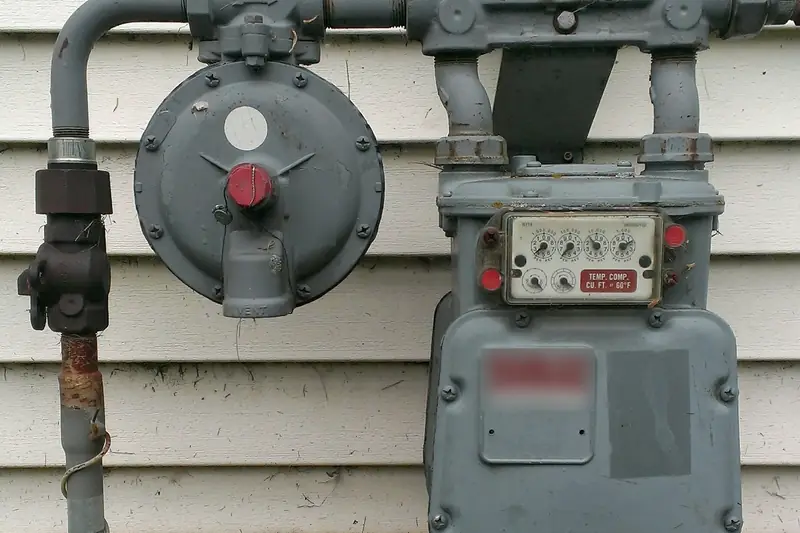
- Rotten-egg or sulfur smell, or a hissing, whistling or roaring sound near a gas line or appliance: everyone out now, touching no light switch, phone, lighter or garage door opener on the way.
- A carbon monoxide alarm sounding, or anyone has headache, dizziness, nausea or confusion: get everyone into fresh air.
- Smoke or flames from the furnace, air handler or outdoor unit.
- Call 911 or the gas utility's emergency line only once you are outside and well away, and stay out until responders say it is safe.
- If you're unsure, treat it as an emergency: get out and call 911 from outside.
When should you call an HVAC technician instead of checking?
Call a technician instead of checking whenever the symptom involves gas, combustion, smoke, sparks, a safety switch, refrigerant or anything behind a screwed-on panel. The safe homeowner checks cover only the thermostat, power switches, the filter, registers, the condensate drain and clearance around the outdoor unit; once those are done and the problem remains, the next step is a call.
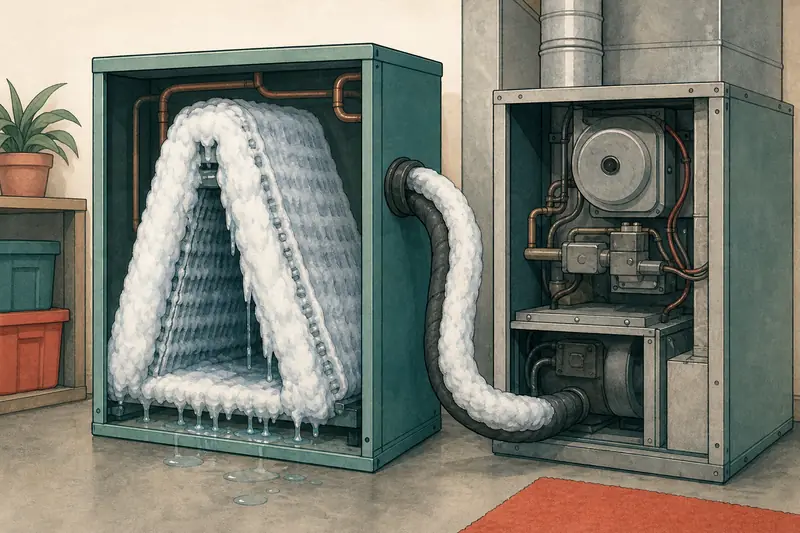
Also call when a safe check fixes a problem that then comes back. A breaker that trips a second time, ice that returns after a full thaw, a drain that clogs again within days or the same furnace code after one power cycle all point to a fault that the check only masked.
Which signs mean leave the house first?
Gas odor and a CO alarm that is sounding both mean leave first, every time. Dominion Energy says not to turn any battery-powered, rechargeable or electrical device on or off, including phones and garage door openers, and not to smoke or use lighters or matches. Leave doors and windows as they are, don't touch the meter, and don't go hunting for the source.
Dominion also notes the odorant can be weak or absent during a real leak, so a hiss near a gas line counts too. With propane, the industry's safety booklet also says to get away immediately, then call the propane retailer, 911 or the fire department from a safe distance; leave the tank and its valve alone.
For CO, NFPA's educational messages say to go outside immediately, call 911 once outside and stay out until emergency personnel say it is safe to go back in. If responders trace the CO to a furnace or other appliance, the CPSC says not to run it until trained personnel have serviced it. The gas smell page and the CO detector beeping page cover both in more detail.
Which electrical signs mean shut it off?
A burning-plastic or electrical smell, sparks, scorch marks, a breaker that trips twice, or water reaching wiring all mean switch the system off at the thermostat, then at the furnace switch or breaker, and call. Trane calls a burning-plastic smell a possible electrical problem and a big safety hazard.
A dusty smell on the first heating run is different: it should fade within a few hours, as the burning smell page explains. An outdoor fan that hums but doesn't spin is another shut-off sign; Carrier says to turn the system off rather than let it run, since a stalled condenser fan can overheat the compressor.
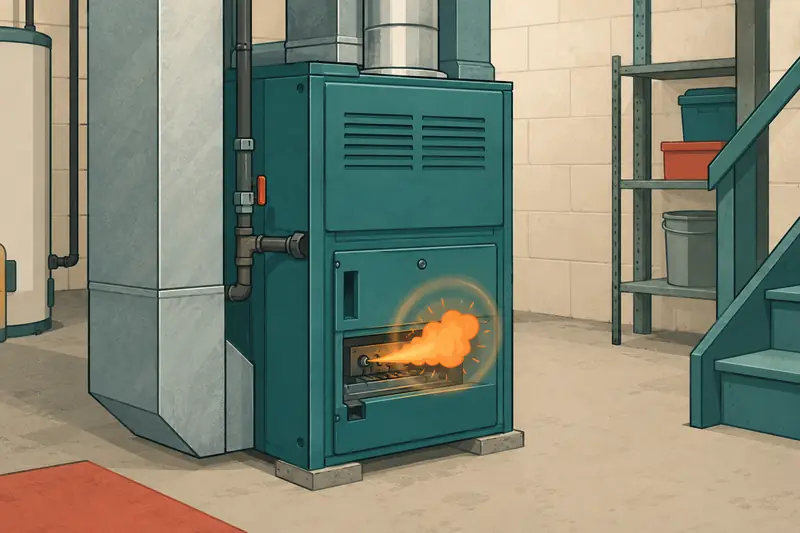
Combustion signs belong on the same list. Trane says a sudden bang at the furnace on startup could mean delayed ignition and needs immediate attention. Soot around the furnace or flue pipe is also a reason to shut the furnace off and call; the furnace banging page covers the bang.
Which parts should homeowners never open?
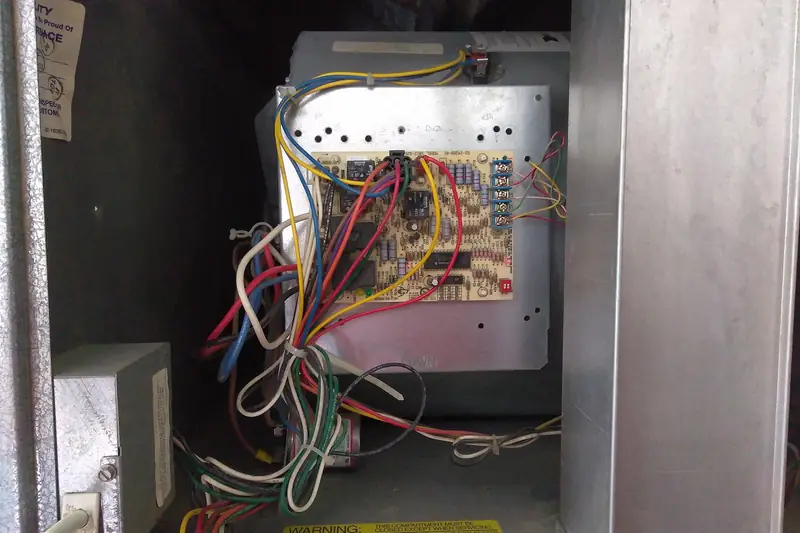
Five places stay closed to homeowners: the burner compartment, the outdoor unit's service panel, the electrical panel's inner cover, the control board area and every refrigerant line. Bryant warns never to remove electrical access panels or test capacitors, compressors, contactors or other internal parts.
The reason is stored energy. Capacitors can hold a charge after the power is off, and Goodman's manual says a fan turned by wind can charge one too, so leave capacitor and contactor work to a licensed technician. Furnace rollout, limit and pressure switches are safety devices; Rheem's installation instructions say not to jumper them and not to reset one without identifying and correcting the fault.
Refrigerant is off limits by law as well as by risk: the EPA requires certification for technicians who service equipment that could release it.
| Sign | What it can mean | Do this first | Then |
|---|---|---|---|
| Rotten-egg smell or hissing | Gas leak | Everyone out, nothing switched | 911 or gas utility from outside |
| CO alarm or flu-like symptoms with no fever | Carbon monoxide | Fresh air outside | 911; stay out until cleared |
| Burning plastic or electrical smell | Electrical fault | Off at thermostat and switch | Call a technician |
| Breaker trips a second time | Electrical or motor fault | Leave it off | Call a technician |
| Bang or boom at ignition | Delayed ignition | Turn the heat off | Call a technician |
| Ice returns after a full thaw | Airflow or refrigerant problem | Cooling off | Call a technician |
| Same blink code after one power cycle | A fault the control keeps finding | Write the code down | Call a technician |
The numbers behind the rules
- 911the number utilities and NFPA name, called from outsideNFPA
- 1reset allowed for a tripped HVAC breaker before callingBryant
- 10 minwait Goodman's manual gives after shutting down one inverter unit's powerGoodman
- 608EPA section: only certified technicians buy and handle refrigerantEPA
- 3 hrignition lockout before one Carrier 58MVP furnace control resets itselfCarrier
What should you tell the technician?
Tell the technician what happened, when, and what you already did, in that order. Exact details help them plan the visit.
Tell the technician
When it started
The day and time, whether it happens every cycle or only sometimes and whether it followed a power outage.
What you heard, smelled or saw
A bang, hum, squeal, hiss or click; a dusty, plastic or musty odor; water, ice, smoke or soot, and where.
The code or alarm pattern
The blink count exactly as it flashed, the thermostat message, or the CO alarm pattern and display reading.
What you already checked
Thermostat mode, filter, breaker (and whether it tripped again), drain flush, and anything responders found.
How do you find a qualified HVAC technician?
Start with your state's contractor licensing rules, because requirements differ from state to state. The ENERGY STAR hiring tips say to find out about license and insurance requirements for contractors in your state, ask for customer references and call them, and sign a written proposal before work starts.
For any refrigerant work, ask whether the technician holds EPA Section 608 certification.
When reading a company's own pages, look for the services it lists, the area it covers and how it states its licensing. Central Plumbing & HVAC's heating and air-conditioning pages, linked below, are one example of how a local company's service page lays out what it does; that company serves only Bucks and Montgomery counties in Pennsylvania. Look for the same details on any company you call.
Case notes
This page is built from gas utility safety pages (Nicor Gas, CenterPoint Energy, Dominion Energy, National Grid), the propane industry's safety booklet, CPSC carbon monoxide material, the NFPA 2026 educational message set, EPA refrigerant rules, ENERGY STAR's hiring tips, and manuals and support pages from Carrier, Trane, Lennox, Bryant, Goodman and Rheem, read in October 2026. Left out: repair costs, contractor rankings, and any instruction to open a panel, reset a safety switch or handle refrigerant.
Asked at intake
Should you turn off the furnace if you smell gas?
No. Don't touch the thermostat, switches or the furnace on the way out, because any of them could make a spark. Leave first and let the gas utility or fire department shut things off.
Can a CO alarm go off when nobody feels sick?
Yes. An alarm can sound before anyone has symptoms, which is the point of having one. The CPSC says never to ignore a sounding CO alarm, so get outside and call 911 even if everyone feels fine.
Is a furnace that locked itself out dangerous?
A lockout means the control stopped the burners after repeated failed starts or a tripped safety, which is the system protecting itself. Write the code down and call; don't keep cycling power to force it to light.
Can you reset a flame rollout switch yourself?
Makers say not without finding and correcting the cause. Rheem's instructions say not to reset the switch until the fault is identified and fixed, and a tripped rollout switch can mean flames are not being drawn into the heat exchanger.
What if the technician can't come for days?
Leave the system off if the sign involved burning, sparks, a repeated breaker trip, ice or a boom.
Do you need a technician for a frozen AC coil that thawed?
Not always for the first freeze, if a clogged filter or blocked return was the clear cause and you fixed it. If the ice comes back after a full thaw, call, because Carrier says it usually signals a refrigerant or airflow problem.
Related pages
Back to all symptoms, by what you notice