House Humidity Too High or Too Low
House humidity too high? EPA advises 30 to 50 percent and below 60; an oversized AC, a fan left on ON, a plugged drain or a humidifier set too high usually pushes it over.
Checked against makers' and agencies' documents by Hum Drip Hiss · how pages are made · Updated
Vitals
- EPA advises keeping indoor relative humidity below 60 percent, ideally between 30 and 50 percent.
- EPA says not to humidify above 50 percent, and to lower the humidistat if water condenses on windows, walls or pictures.
- Setting the thermostat fan to ON instead of AUTO can blow humid air back into the room, per Lennox.
- ENERGY STAR's 2005 right-sized AC paper says oversized units short-cycle and let some coil moisture evaporate back into the air.
- AprilAire designs its humidifiers to hold 35% indoor humidity at 70°F whenever it is 20°F or warmer outside.
- AprilAire says hard water can increase scale in its evaporative humidifiers and recommends soft or softened water.
Why is house humidity too high?
Most often the air conditioner isn't running long enough, or in the right way, to pull water out of the air. The usual causes, most common first:
- The thermostat fan set to ON. Lennox says this can blow humid air back into the room even when cooling isn't running.
- An oversized air conditioner that cools the house fast and shuts off before it dehumidifies.
- A plugged condensate drain. ENERGY STAR says a plugged drain can cause water damage and affect indoor humidity levels.
- A dirty filter or coil, which Lennox says interferes with the system's ability to capture moisture.
- A whole-house humidifier left on into spring or set above 50 percent.
- Moisture from daily life: showers, cooking and drying clothes, with no exhaust fan running.
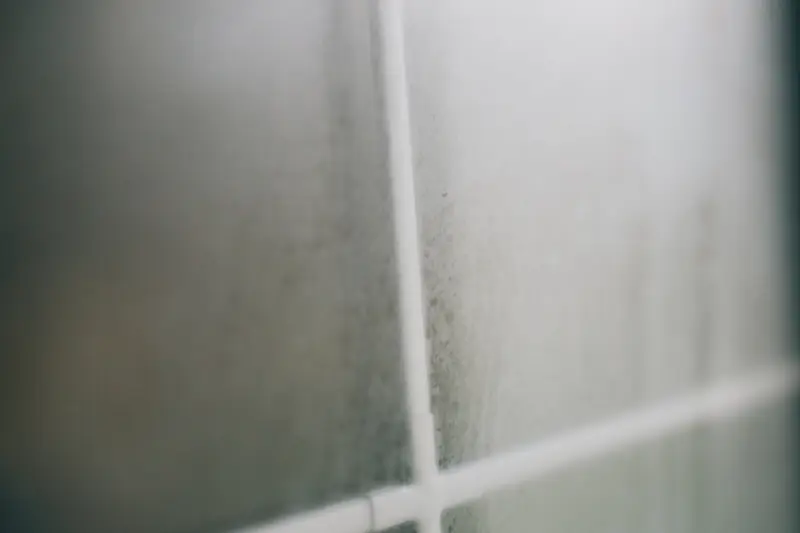
In winter, condensation on windows usually means a humidifier set too high for the outdoor cold; in summer, damp air usually points at the AC.
What indoor humidity should you aim for?
Aim for 30 to 50 percent, and keep it below 60. That is EPA's advice for limiting mold, and its humidifier page adds that you should not humidify above 50 percent because higher levels may encourage biological growth.
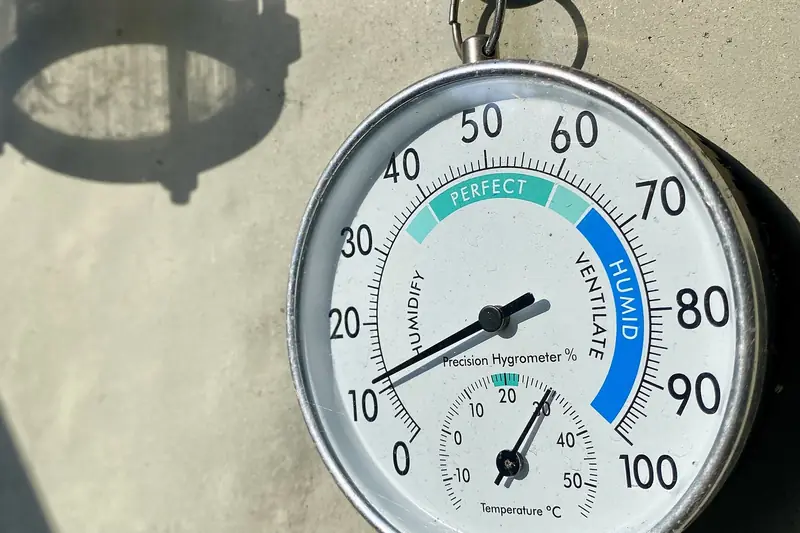
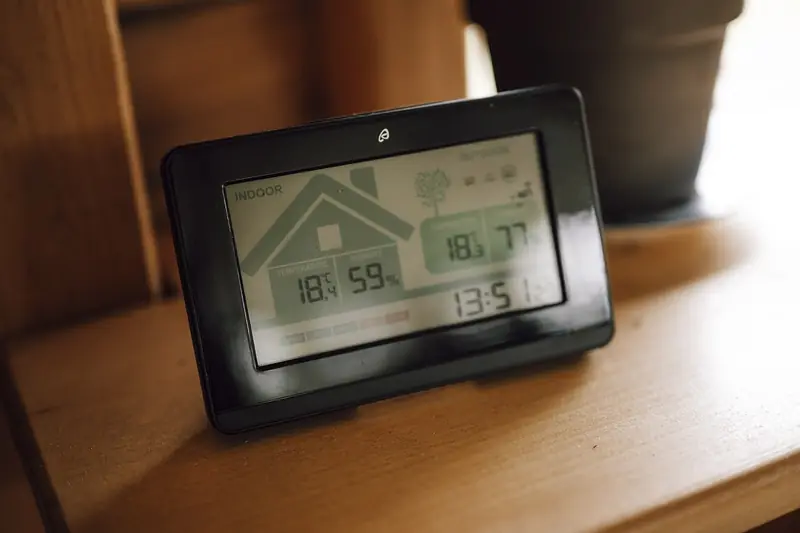
Measure before you change anything. EPA notes that hygrometers, sold at hardware stores, measure humidity; put one in a bedroom and one on the main floor and read them at the same time for a few days. A thermostat with a humidity display works too, but it only reads the spot where it hangs.
Can the AC make house humidity worse?
Yes, in two ways. ENERGY STAR's 2005 right-sized air conditioner paper explains that an AC has to run long enough for moisture to condense on the coil and drain away; oversized units short-cycle, and some moisture evaporates back into the air. ENERGY STAR's quality installation page also links poor system airflow to "overly damp air."
The second way is the fan. Running the blower after cooling stops passes air over a wet coil. Honeywell notes that installers in very humid regions sometimes lock the fan out for 5 to 90 minutes after a cooling call for exactly this reason. Lennox's advice is a steady setpoint and the fan on AUTO, so each cycle runs long enough to remove moisture. If the system starts and stops every few minutes, see short cycling.
Where the AC alone can't keep up, ENERGY STAR says certified dehumidifiers use about 20% less energy than similar conventional units, and whole-home models work through the ducts. Sizing and fitting a whole-home unit is a technician's job.
Why is the air so dry in winter?
Cold outdoor air carries little moisture, and once it leaks inside and warms up, its relative humidity drops. AprilAire says its humidifiers are designed to hold 35% at an indoor 70°F whenever it is 20°F or warmer outside, and that some homes can hold more depending on their age and construction.
Don't chase high winter numbers. EPA says to lower the humidistat, move the humidifier or use it less if water condenses on windows, walls or pictures. Sealing drafts helps dry winter air too, because less cold air leaks in. The hot upstairs, cold downstairs page covers air leaks and ducts.
How does hard water affect a humidifier?
In a whole-house evaporative humidifier, hard water shows up as scale on the pad. AprilAire says its evaporative humidifiers work with hard or soft water, but hard water can increase scale buildup and require more maintenance, and it recommends soft or softened water for best performance. Its maintenance page says to replace the water panel every year on most models, or twice per heating season on the Model 400.
Portable ultrasonic and impeller units are different: EPA says they disperse tap-water minerals into the air as "white dust," and suggests distilled water. Evaporative and steam units are not expected to do that. A scaled pad or a sticking water valve can also leak; see furnace leaking water.
Check the humidifier maker's water guidance first; if a water test confirms hard water and the maker recommends softer water, a softener is one option. Follow the humidifier maker's instructions on what water it takes; pad, valve and wiring work beyond the owner's manual is for a technician.
What can you check yourself when house humidity is too high?
These checks are safe, take about 15 minutes, and match the 10-minute safe checks list:
- Measure. Read a hygrometer in two rooms; note the numbers and the time.
- Fan setting. In cooling season, set the thermostat fan to AUTO.
- Filter. Hold it to the light monthly; a dirty one goes, and a 1-inch filter gets changed at least every 3 months (ENERGY STAR).
- Condensate drain. With power off, look for standing water in the drain pan. Carrier and Trane suggest pouring roughly one cup of distilled vinegar into the line's access cleanout (or use a cleaner your equipment maker approves); vinegar won't shift every blockage. The AC leaking water inside page shows the parts.
- Humidifier. In summer, turn its control to off or the lowest setting, as AprilAire's summer shutdown steps say. In winter, lower it if windows fog.
- Exhaust fans. EPA suggests running the bathroom fan while showering and exhaust fans while cooking.
When humidity means stop and call
- Water on the floor near the furnace, air handler or humidifier, especially near wiring or controls.
- Visible mold on the coil or in the ducts, or a musty smell from the vents. EPA says not to run the system if you suspect mold contamination (dirty sock syndrome).
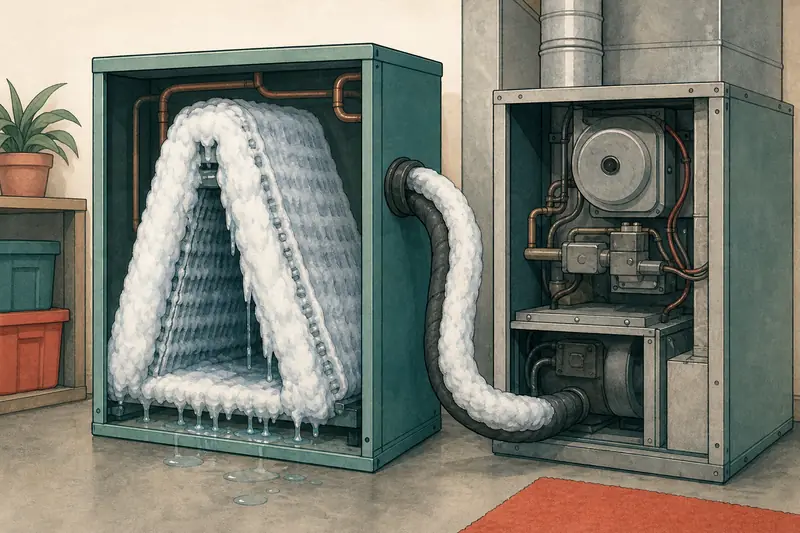
- Frost or ice on the copper lines or indoor coil. Turn cooling off and wait for a full thaw.
- Indoor humidity stays above 60 percent for days even after the fan, filter and drain checks above.
- If you're unsure, stop and call a licensed HVAC technician.
Details worth giving the technician
Readings
Humidity and temperature in two rooms, with dates and times, and the outdoor weather.
Equipment
Whether there is a whole-house humidifier or dehumidifier, its setting, and when the pad was last changed.
What changed
New equipment, a remodel, new windows, or the first humid summer since moving in.
What you tried
Fan on AUTO, filter changed, drain flushed, humidifier turned down, and what happened.
Numbers on the chart
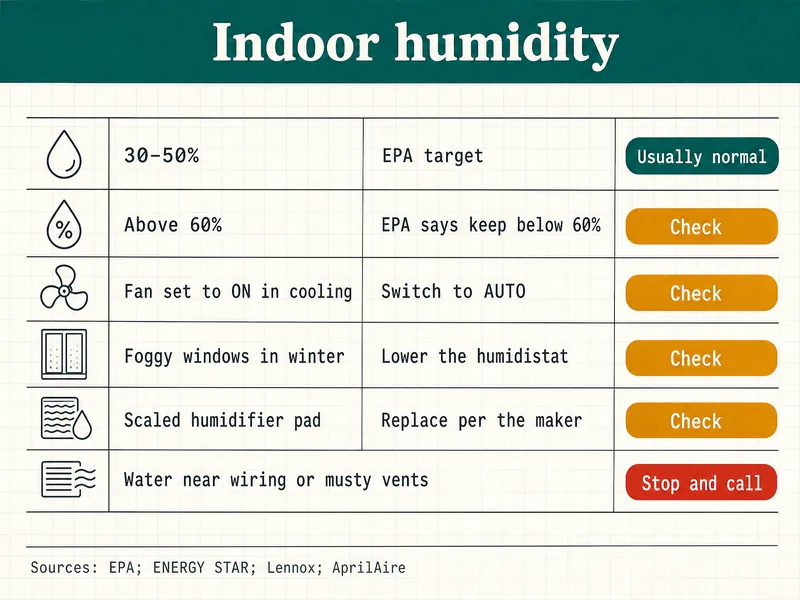
- 30–50%the comfort band EPA names for relative humidity indoorsEPA
- Below 60%where EPA wants a home's humidity kept to limit moldEPA
- 50%level EPA says not to humidify aboveEPA
- 35% at 70°FAprilAire humidifier design point when it is 20°F or warmer outsideAprilAire
- 20%energy a certified dehumidifier saves against a similar standard modelENERGY STAR
| Sign in the house | Common source | Step you can take | Call when |
|---|---|---|---|
| Sticky rooms while the AC runs | Fan on ON or an oversized AC | Fan to AUTO; measure humidity | Still above 60% after a week |
| Water in the drain pan | Plugged condensate drain | Power off; flush with distilled vinegar | Pan refills or water reaches the floor |
| Foggy windows in winter | Humidifier set too high | Lower the humidistat | Water runs onto walls or sills |
| Crusty humidifier pad | Hard-water scale | Replace the pad per the maker | The humidifier leaks |
| Musty smell from vents | Mold on the coil or in ducts | Stop running the system | Always: call a technician |
Case notes
Sources for this page: EPA's mold and moisture page and its humidifier care page; ENERGY STAR's maintenance checklist, quality installation and dehumidifier pages and its 2005 right-sized air conditioner paper; Lennox and Honeywell pages on humidity and fan settings; and AprilAire's FAQ and maintenance pages, each opened in October 2026. Not included: mold cleanup methods, humidifier wiring or valve work, sizing rules, and any prices.
Asked at intake
Does a dehumidifier replace a properly running AC?
No. A working, right-sized AC removes moisture as it cools; a dehumidifier helps where the AC alone can't keep humidity under 60 percent, such as basements or very humid climates.
Why is the basement damp when the rest of the house is fine?
Basements are cool and often draw moisture from the ground, and many have few supply registers. A dehumidifier and EPA's advice to keep drip pans and drain lines clear are the usual first steps.
Can high humidity make the AC freeze?
Humidity alone doesn't freeze a coil; low airflow from a dirty filter or blocked returns usually does. If you see ice, switch cooling off and see the frozen coil page.
Should the humidifier run in summer?
No. AprilAire's summer shutdown steps tell owners to set the control to off or its lowest setting and close the bypass damper on bypass models.
Is 25 percent humidity in winter a problem?
EPA's range is 30 to 50 percent. Lower readings can feel dry; raise the humidifier setting in small steps and back off if windows fog.
Why does the house feel clammy even at 72°F?
Comfort depends on humidity as well as temperature. Check the fan setting and measure humidity; a reading above 60 percent points at the AC's run time or a drain problem.
Do I need soft water for a whole-house humidifier?
AprilAire recommends soft or softened water for best performance but says its evaporative units work with either; hard water means more scale and pad changes. Follow your own model's manual.
Related comfort pages
Back to all symptoms, by what you notice