Carbon Monoxide Detector Beeping
Carbon monoxide detector beeping in a repeating four-beep pattern? Get everyone outside to fresh air and call 911 from there; a lone chirp is more often a battery or end-of-life signal.
Checked against makers' and agencies' documents by Hum Drip Hiss · how pages are made · Updated
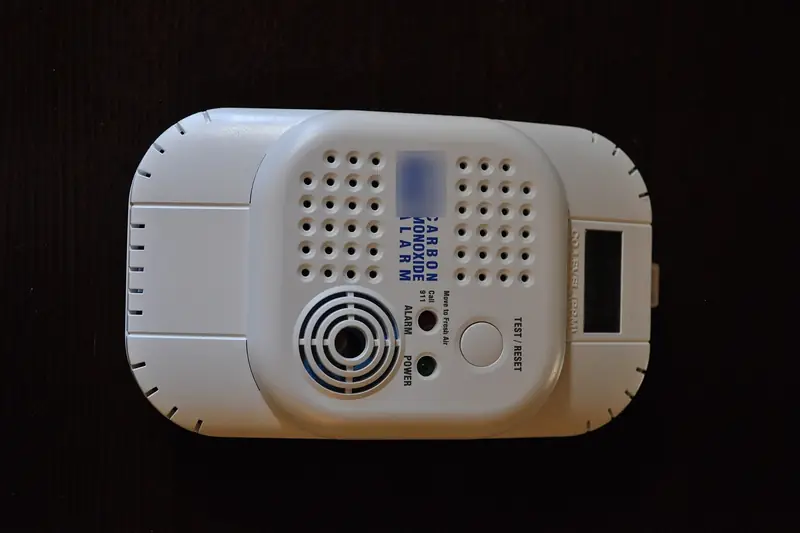
Vitals
- NFPA: a continuous set of four loud beeps means carbon monoxide is present; go outside, call 9-1-1 and stay out (NFPA "Learn the sounds").
- Kidde describes its alarm pattern as four short beeps, five seconds of silence, then four more.
- NFPA says a single chirp every 30 or 60 seconds means a low battery, but end-of-life sounds vary by maker, so check the label or manual.
- CO alarms last about 7 to 10 years depending on the model; the replace-by date is on the alarm.
- CPSC says to put CO alarms on every level of the home and outside sleeping areas.
- The EPA calls carbon monoxide an odorless, colorless gas, so the alarm is the only warning you get.
CO alarm sounding? Do this first
- Get everyone, pets included, outside into fresh air now. Don't stop to find the cause.
- Once outside, call 911 or the fire department.
- Don't go back in until the responders tell you it's safe.
- Never assume it's a false alarm, even if nobody feels ill.
- If anyone has a headache, dizziness, nausea or confusion, tell the 911 dispatcher.
- Don't run the furnace or any fuel-burning appliance again until a trained professional has checked it.
- If you're unsure, treat it as an emergency: get out and call 911 from outside.
What does a carbon monoxide detector beeping mean?
It depends on the pattern. A loud, repeating group of four beeps is the alarm itself and means get out now. A short chirp once every 30 or 60 seconds is a maintenance signal, usually a low battery or an alarm reaching the end of its life. A long single squeal or an error on a digital screen is something else again, which the manual explains.
When in doubt, treat a sound as the alarm. Kidde says that any time a digital unit displays a number, with or without an alarm sound, you should assume it senses carbon monoxide, leave the home and call 911.
How do you tell an alarm from a chirp?
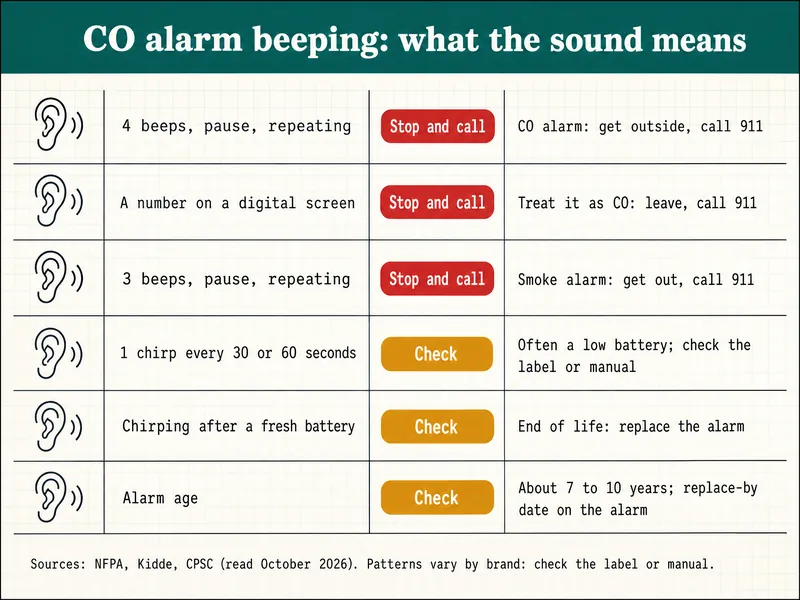
Count the beeps and listen for the gap. NFPA's "Learn the sounds" sheet sets out the common patterns, and the makers' manuals match it closely:
- Four loud beeps, a pause, repeating: carbon monoxide alarm. Go outside and call 911.
- Three loud beeps, a pause, repeating: on a combination unit or a separate smoke alarm, that is smoke or fire. Get out and call 911.
- One chirp every 30 or 60 seconds: NFPA says this means a low battery on most alarms.
- Chirping that continues after a fresh battery: NFPA says the alarm is at the end of its life and must be replaced.
Models differ, so check the label on the back of the alarm or its manual. On one sealed 10-year First Alert model (SMCO110V-AC), low battery and end of life share the same five-chirps-a-minute signal, and both mean replacing the whole alarm. A chirp is not always just a battery.
What should you do when the CO alarm sounds?
Get everyone outside, then call for help from there. The CPSC carbon monoxide safety page says to move outside to fresh air immediately, call the fire department or 911, and not to reenter until the responders give permission. NFPA's 2026 Educational Messages give the same order: go outside, then call 9-1-1, and stay outside until emergency personnel say it's safe.
Don't silence the alarm and go back to bed, and don't hunt for the source first. CPSC calls an alarming CO alarm a warning of a potentially deadly hazard that should never be ignored. Kidde's manual for its battery alarms puts it in capitals: never restart the source of a CO problem until it has been corrected.
Watch for symptoms in everyone. CPSC's carbon monoxide center lists headache, dizziness, weakness, nausea, vomiting, sleepiness and confusion, and CPSC's safety page says early symptoms are like the flu but without a fever. If anyone has them, tell the dispatcher.
Afterward, if responders trace the CO to the furnace or another appliance, CPSC says not to run it until trained personnel have serviced it. That repair is a job for a licensed HVAC technician.
Tell the technician
What the alarm did
The beep pattern, what any digital display showed, and roughly what time it started.
What responders found
Whether the fire department measured CO and which appliance or room they pointed to.
How people felt
Any headaches, nausea or dizziness, and whether symptoms eased outside.
What was running
Furnace, water heater, range, fireplace or a car in an attached garage at the time.
What does an end-of-life signal sound like?
It varies by brand and model, so the label or manual is the only reliable answer. NFPA says CO alarms have end-of-life sounds that vary by manufacturer. As examples, Kidde's safety hub describes 2 beeps every 30 seconds plus "END" on digital models, and First Alert's blog describes 5 beeps every minute.
The rule that works for every brand comes from NFPA: if the chirping continues after you've put in a fresh battery, the alarm has reached the end of its life and must be replaced. Kidde adds two warnings: replacing the battery won't stop an end-of-life beep, and an alarm in end-of-life mode no longer detects carbon monoxide. Replace it the same day.
Expect a CO alarm to last about 7 to 10 years depending on the model. Kidde says all its CO alarms made from 2013 on have a 10-year life, with a few listed exceptions. Whatever the brand, the replace-by date is on the alarm itself. Kidde also says UL and CSA began requiring an end-of-life signal in 2009.
Where should CO alarms go?
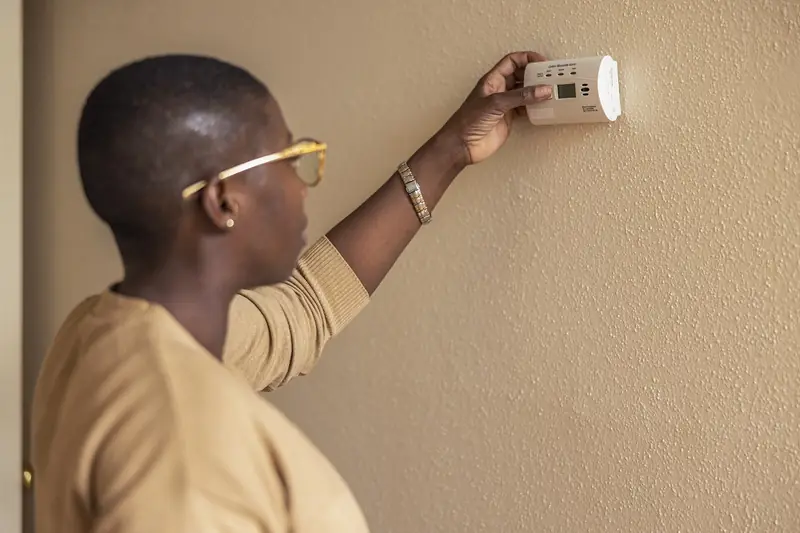
On every level of the home and outside each sleeping area. CPSC recommends battery-operated alarms or ones with battery backup in those spots, and says to avoid places near heating vents or where furniture or drapes could cover them. Interconnected alarms are best, CPSC says, because when one sounds they all sound.
Place them as the maker's instructions describe for height and distance from fuel-burning appliances; those details differ between models. Test them with the test button as the manual says, and note the replace-by date somewhere you'll see it.
Can a furnace cause carbon monoxide?
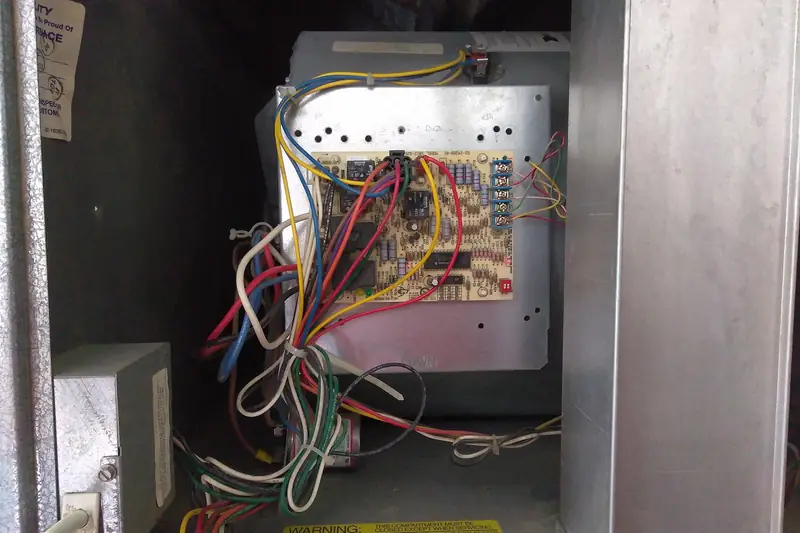
Yes. Any appliance that burns gas, oil, propane or wood can produce carbon monoxide if it isn't working or venting properly. The EPA lists leaking chimneys and furnaces, back-drafting from furnaces and water heaters, and flues that are blocked, disconnected or leaking among the sources in homes.
That is why CPSC, the EPA and NFPA all call for a yearly professional inspection of fuel-burning heating equipment. Trane adds that soot around the furnace or flue pipe is a reason to call for service and to shut the furnace off in the meantime. An all-electric heat pump doesn't burn fuel, but an attached garage, gas range or water heater still makes a CO alarm worthwhile.
The furnace's own warning lights are a separate system; the page on a furnace blinking red light explains how to read them. A CO alarm sounding while the furnace shows a code is still a get-out-first event.
| Sound or display | Usually means | What to do | Source |
|---|---|---|---|
| 4 beeps, pause, repeating | Carbon monoxide detected | Get outside, call 911, stay out | NFPA, Kidde |
| A number on a digital display | Alarm is sensing CO | Treat it as an alarm: leave and call 911 | Kidde |
| 3 beeps, pause, repeating | Smoke or fire (smoke or combination alarm) | Get out, call 911, stay out | NFPA |
| 1 chirp every 30 or 60 seconds | Often a low battery | Replace the battery per the label; check the manual | NFPA |
| Chirping after a fresh battery | End of life; may no longer detect CO | Replace the alarm | NFPA, Kidde |
Readings
- 4 beepsThe repeating CO alarm pattern, with a short pause between groupsNFPA
- 5 secondsSilence between each set of four beeps on Kidde alarmsKidde
- 30 or 60 secInterval of a single low-battery chirpNFPA
- 10 yearsLife of Kidde CO alarms built from 2013 onward, with listed exceptionsKidde
- 2009Year UL and CSA began requiring an end-of-life signalKidde
A gas leak is a different danger: natural gas has an added smell and CO has none. The page on a gas smell in the house covers that, and the smells hub sorts the rest. The stop-and-call page lists every sign that needs a professional, and the other lights, alarms and codes are grouped in their own folder.
Case notes
Built from NFPA's "Learn the sounds" sheet and 2026 Educational Messages, CPSC's carbon monoxide safety page and information center, Kidde's support page, safety hub and one battery-alarm manual, First Alert's manual for the SMCO110V-AC and its CO blog post, the EPA's page on carbon monoxide indoors, plus Trane's blog post on odors and noises (each read in October 2026). Model-specific patterns are given only as examples. The page leaves out silencing or reset steps for any alarm, because the safe response to an alarm is to leave. Nothing was tested in a home.
Asked at intake
My CO alarm beeped four times and stopped. Is it safe to stay?
No. Treat any four-beep sequence as an alarm: get everyone outside and call 911. One Kidde battery-alarm manual notes that after 4 minutes in alarm the pattern can slow to once every 60 seconds, so a quiet gap doesn't mean the CO is gone.
Why does my CO alarm chirp at night?
Often because the battery is low, and NFPA says a single chirp every 30 or 60 seconds means replace it. If it keeps chirping after a fresh battery, the alarm is at end of life and needs replacing.
How do I know how old my CO alarm is?
Look at the label on the back. Makers print a manufacture or replace-by date there; most alarms last about 7 to 10 years depending on the model.
Can I just pull the battery to stop the beeping?
Not on an alarm that's sounding, and not on a sealed 10-year unit. If it's a four-beep alarm, leave and call 911. If it's a chirp, follow the manual; a removed battery means no protection.
Does a CO alarm also detect natural gas?
No. A CO alarm senses carbon monoxide. Natural gas detectors are separate devices; if you smell gas, leave and call from outside whatever the alarms are doing.
Do I need a CO alarm if my home is all electric?
CPSC's advice is an alarm on every level of the home, without exceptions for electric heat. Any gas range, fireplace, water heater or attached garage is a reason to have one.
Should the fire department come even if everyone feels fine?
Yes. CPSC says to call 911 or the fire department when the alarm sounds, and never to ignore it. Responders can measure the CO level and tell you when it's safe to go back in.
Keep reading

Back to the Hum Drip Hiss front desk