Furnace Won't Ignite
Furnace won't ignite? Check the thermostat, the furnace power switch, the filter and the door panel first; a failed igniter, flame sensor, pressure switch or gas problem is a technician's job.
Checked against makers' and agencies' documents by Hum Drip Hiss · how pages are made · Updated
Vitals
- Carrier's first three furnace checks are the thermostat on Heat, the furnace power switch on, and the air filter.
- A modern gas furnace lights in a set order: inducer fan, pressure switch, igniter, gas valve, then the flame sensor proves the flame.
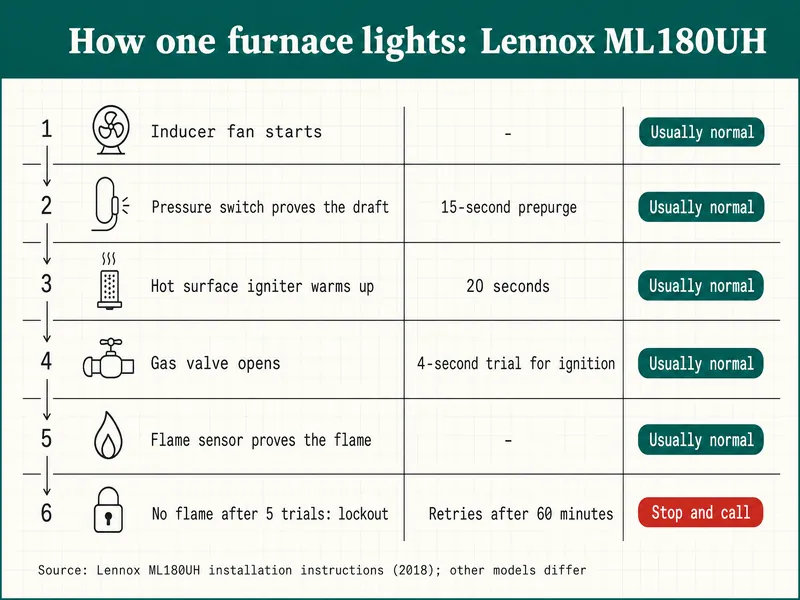
- On one Lennox model (ML180UH) that takes a 15-second prepurge, a 20-second igniter warm-up and a 4-second trial for ignition.
- After 5 failed trials that Lennox model locks out and retries after 60 minutes; a Carrier 58MVP lockout resets itself after 3 hours.
- Blink codes differ by brand: 3 flashes means a pressure switch fault on the Lennox ML180UH but a limit switch on Rheem's standard furnaces.
- If you smell gas, don't try to light anything: get everyone out, then phone 911 or the gas company once you're outside.
Why won't the furnace ignite?
When a furnace won't ignite, either it isn't being asked to heat, it has no power, one of its safety switches has stopped the start-up, or a part in the ignition chain has failed. The first two you can check in a few minutes. The rest show up as a blink code, and that code plus what you heard is what a technician needs.
The furnace's own sequence decides where it stopped. If you hear the inducer fan run and then nothing, the stop came early; if you see the igniter glow and hear a click but no flame, it came later. The furnace clicking but no heat page covers that sound in particular.
How does a furnace light?
A gas furnace with electronic ignition lights in a fixed order and checks itself at each step. Carrier describes the startup as inducer motor, then ignitor, then gas valve, and its flame-sensor page explains that if no flame signal is detected, the control board closes the gas valve and the furnace shuts off.
One maker's numbers show how tight the timing is. In the Lennox ML180UH installation instructions (2018), the inducer fan starts, the pressure switch proves the draft, and a 15-second prepurge follows. The hot surface igniter warms up for 20 seconds, the gas valve opens for a 4-second trial for ignition, and the flame sensor proves the flame. Other models differ, so treat these as one example, not a rule.
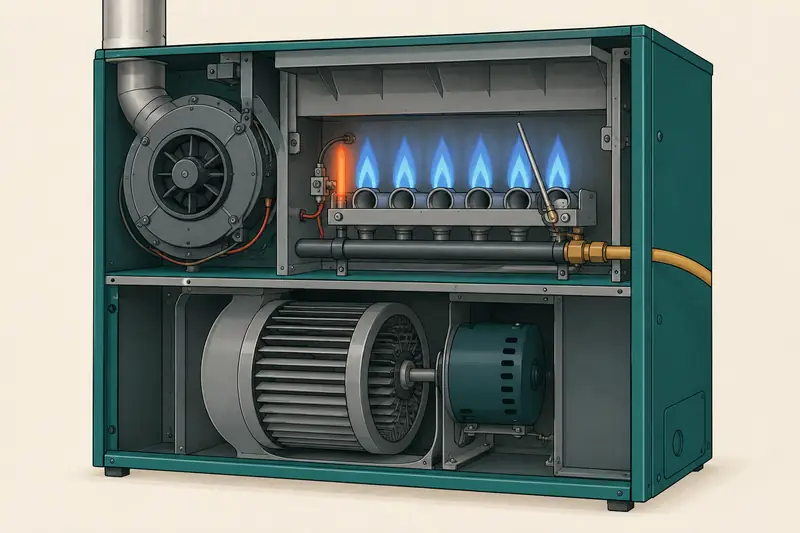
Older furnaces may use a standing pilot instead. Carrier says a thermocouple in those furnaces generates a small voltage when heated by the pilot flame to hold the gas valve open. A pilot that won't stay lit points to a technician's repair.
What can you check when the furnace won't ignite?
You can check everything outside the burner compartment, in this order, and stop at the cabinet. Bryant's rule for air conditioners applies here too: homeowner troubleshooting ends before the equipment cabinet is opened. The same order appears on the safe checks list.
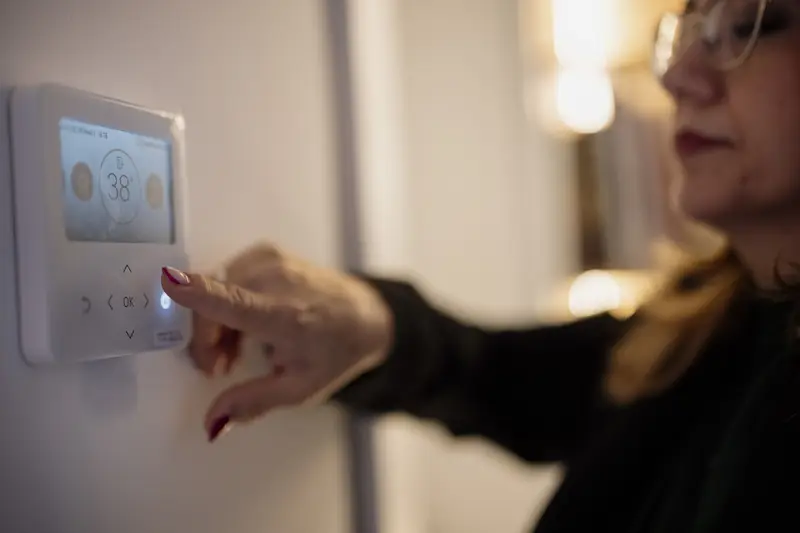
- Thermostat. Set it to Heat with the temperature above the room reading. If the screen is blank, fit fresh batteries.
- Power. Make sure the furnace switch is ON; it resembles a household light switch mounted on or beside the cabinet. Check the furnace breaker; one reset is the limit, and a second trip means leave it off and phone a technician.
- Door panel. Trane notes some furnaces have a blower door switch which cuts power and gas when the door is off. Make sure the lower panel sits fully closed.
- Filter. The Lennox manual warns that dirty or plugged filters will cause the limit control to shut the unit off. Replace a dirty filter.
- Gas supply. Carrier suggests seeing whether other gas appliances in the home are working, such as the range; if none are, contact your utility.
Don't relight anything by hand. The ML180UH manual says plainly not to try to light the burners by hand, and NFPA's safety messages say that if you smell gas, do not light the appliance.
If you smell gas, stop here
- Get everyone out now. Don't flip switches, use phones, light anything or start a car or garage door inside.
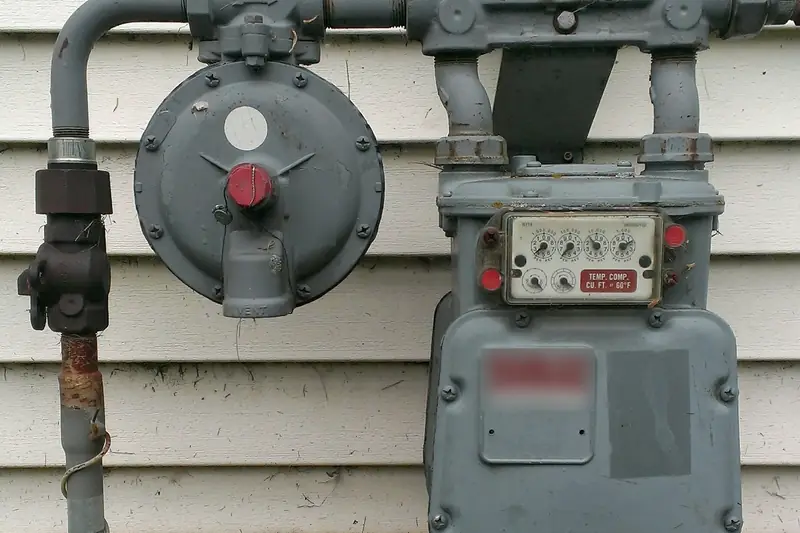
- Don't look for the source or touch the meter.
- From a spot well clear of the house, phone 911 or the gas company's emergency number; many utilities ask for both.
- Go back in only when the utility or fire department says it's safe.
- If you're unsure, stop and call a licensed HVAC technician.
What does the blink code say about the failed ignition?
The blink code tells you where the start-up failed, but only your furnace's own label can translate it. Trane says red blinking lights generally signal a problem and to write down the pattern. Read the light through the sight window or the label on the door; Carrier says to remove the cabinet door only if your owner's manual specifically permits it.
The same count means different things by brand. On the Lennox ML180UH, 3 flashes means the pressure switch is open with the inducer running and 7 flashes means lockout because the burners failed to light. On Rheem's standard single-stage furnaces, 3 blinks means a limit switch is open. Match the count to the label on your furnace's door, and see the furnace blinking red light page for more.
Why does the furnace try to ignite and then quit?
A furnace that tries and quits is usually running its retry routine and then locking out. On the ML180UH, if no flame is detected the control repeats the igniter and gas-valve steps 4 more times, so 5 trials in all, before it locks out and retries after 60 minutes. Carrier's 58MVP literature lists an ignition lockout that the control will auto reset after 3 hours.
Write the code down before you do anything. Turning the power off and on once is reasonable; doing it over and over to force a start is not, because each lockout is the furnace telling you something in the chain failed. A dirty flame sensor, a failed igniter, a pressure switch that won't close or a blocked vent can all end in the same lockout, and the Lennox manual says this type of lockout is usually due to low gas line pressure.
Which parts are a technician's job?
The igniter, flame sensor, thermocouple, pressure switch, rollout and limit switches, gas valve, control board and burners are all a technician's job. Carrier says bypassing or removing the flame sensor is dangerous and that internal parts such as the flame sensor should be maintained by a trained professional. Its parts page adds that most furnace parts should only be replaced by a licensed HVAC professional, while homeowners can safely change the air filter.
Don't sand, clean or move the flame sensor, touch the igniter, or jumper any switch to get heat back. The cards below show what the two most common ignition parts look like and how they're specified. They are a technician's parts, there to help you follow what a technician tells you, not to buy and fit yourself.
Tell the technician
The blink code
The color and count of flashes, and what the door label says it means.
How far it got
Inducer ran or not, igniter glowed or not, a click, a brief flame, or nothing.
When it started
The date, whether it followed a filter change, power outage or new thermostat.
What you checked
Thermostat mode and batteries, furnace switch, breaker reset once, door panel, filter, other gas appliances.
Readings
- 15 sprepurge before the igniter heats, Lennox ML180UHLennox
- 20 signiter warm-up on the same modelLennox
- 4 strial for ignition once the gas valve opensLennox
- 60 minwait before that model retries after a lockoutLennox
- 3 hauto reset of an ignition lockout, Carrier 58MVPCarrier
| What you notice | What it suggests | Homeowner check | Call when |
|---|---|---|---|
| Nothing runs at all | No call for heat or no power | Thermostat on Heat, switch ON, breaker once | Breaker trips again |
| Inducer runs, then stops | Pressure switch or venting fault | Read the blink code | Code repeats |
| Igniter glows, no flame | Gas supply or gas valve | Check other gas appliances | Always, if they work |
| Flame lights, then goes out | Flame not proved | Note how long it burned | Always |
| Repeated tries, then quiet | Lockout | Write the code, cycle power once | It locks out again |
Case notes
Built from Carrier's furnace troubleshooting, flame sensor, parts and cold-air pages, the Lennox ML180UH installation instructions, Carrier's 58MVP technical literature, Rheem's standard flash-code list, Trane's blinking-light page and NFPA's 2026 educational messages, read in October 2026. Model-specific timings and codes are labelled with their model. Deliberately missing: pilot relighting steps, flame sensor cleaning, any work behind the burner door, lockout reset tricks and repair prices.
Asked at intake
Why does the furnace igniter glow but the burners don't light?
The igniter is working, so the stop is at the gas valve or gas supply. Check whether the range or water heater works; if nothing gas works, contact your utility. If they work, call a technician and give the blink code.
Why does the flame catch briefly and then die?
That pattern usually means the control didn't prove the flame. Carrier's flame-sensor page says the board closes the gas valve when no flame signal is detected. Sensor cleaning and testing belong to a technician.
Is it safe to keep resetting the furnace to get heat?
No. Cycle power once after writing the code down. Makers build in lockouts for safety, and no maker page gives homeowners a reset routine beyond that.
Can a clogged filter stop a furnace from lighting?
It can stop the heat. The Lennox ML180UH manual says dirty or plugged filters will cause the limit control to shut the unit off. Replace it and see if the furnace runs normally.
Can a new thermostat cause the furnace not to ignite?
It can if it isn't set to Heat, isn't powered, or isn't configured for your system. Check mode, setpoint and the screen. If wiring is unclear, ask a technician.
Does a furnace that lights fine still need a yearly check?
Yes. CPSC advises having the heating system professionally inspected and serviced annually, and NFPA says furnaces need inspection at least once a year by a licensed professional. A yearly visit is when a technician can catch a weak igniter or dirty sensor before it locks out.
More pages
Back to all symptoms, by what you notice