Heat Pump Defrost Mode and Emergency Heat
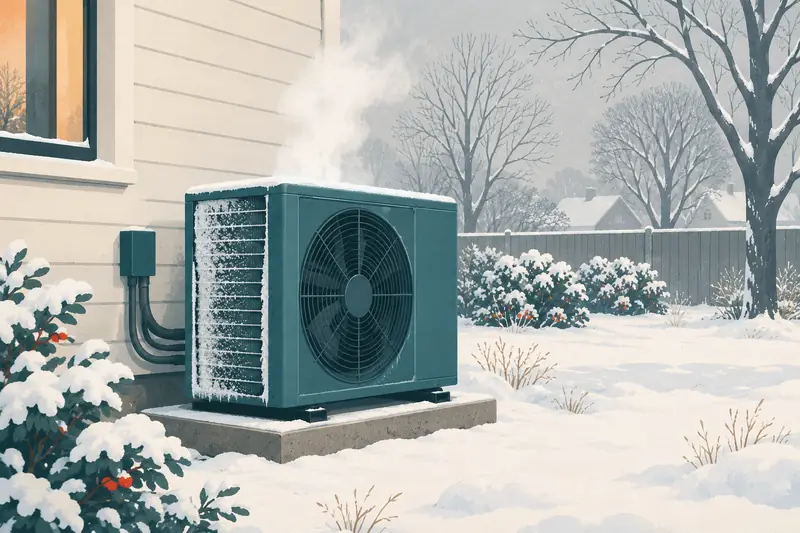
Heat pump defrost mode is normal in cold, damp weather: the outdoor fan stops, steam rises and you may hear a whoosh for a few minutes, up to about 15, before heating resumes.
Checked against makers' and agencies' documents by Hum Drip Hiss · how pages are made · Updated
Vitals
- A defrost cycle usually lasts a few minutes, up to about 15: Lennox gives 5 to 15 minutes and Trane says its own demand defrost runs 3 to 5.
- Lennox says most systems check for frost every 30 to 90 minutes in heating mode.
- Trane says defrost can start in the low 40s °F but is more common in the 20s and 30s.
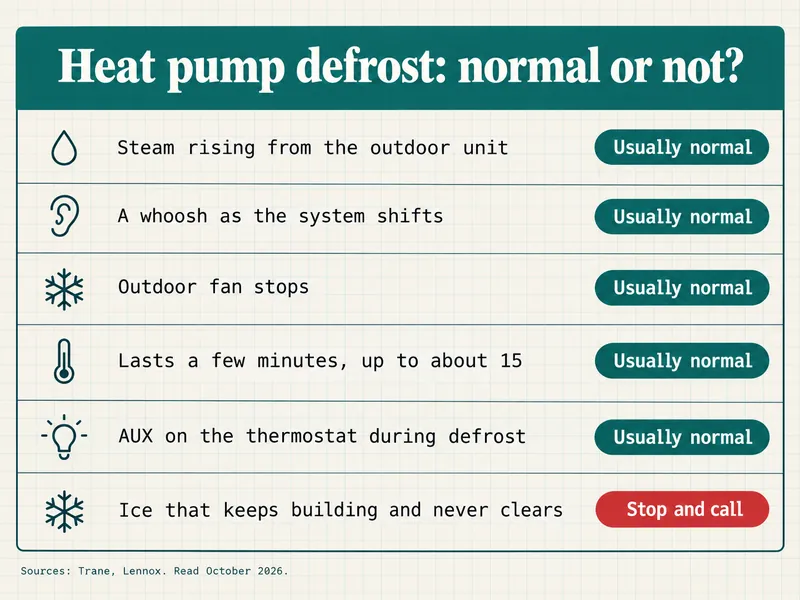
- Steam, a whoosh and a stopped outdoor fan are all normal signs of defrost.
- AUX on the thermostat during defrost or very cold weather is normal; AUX running for long stretches in mild weather is a reason to call.
- Emergency heat is for when the heat pump itself has failed, per Carrier.
What is heat pump defrost mode?
Heat pump defrost mode is a short, automatic reversal that melts frost off the outdoor coil. In heating mode the outdoor coil runs colder than the air around it, so moisture in the air freezes on its fins. Every so often the control checks for that frost and, if it finds enough, switches the system to send warm refrigerant outside for a few minutes.
You don't start it and you can't skip it. Lennox says most systems check for frost every 30 to 90 minutes while heating. Trane adds that defrost can begin when it is in the low 40s outside, though it is more common in the 20s and 30s, when damp air frosts the coil fastest.
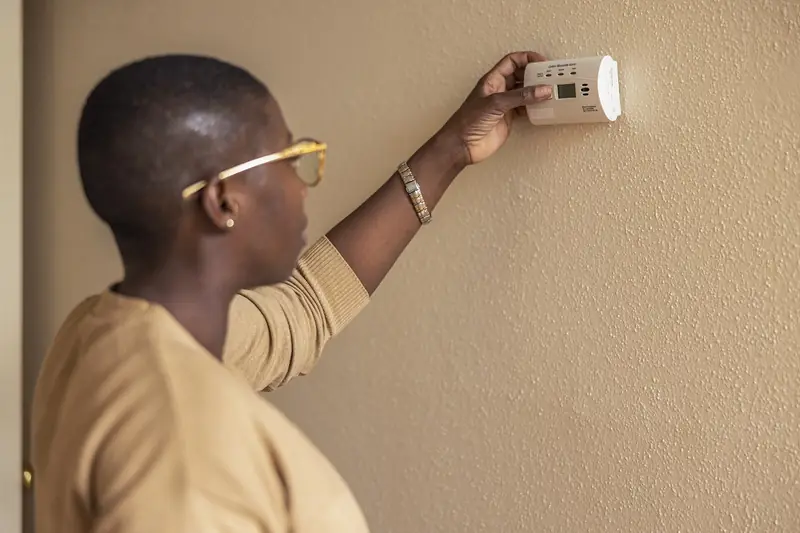
While it runs, the indoor air may feel cooler for a moment, and the thermostat may show AUX as backup heat covers the gap. Both are part of a normal cycle.
Is steam from the heat pump normal?
Yes, steam from the outdoor unit during defrost is normal. Trane describes "a cloud of steam" from melting ice as "perfectly normal", and Lennox calls it water vapor that is expected during the process.
The other signs come together. The outdoor fan may stop so the coil can warm up, and you may hear a swooshing or whooshing sound as the refrigerant changes direction. Trane also notes that a heat pump can hum during defrost while the fan is stopped. Water dripping from the base of the unit afterward is the melted frost draining away.
What is not normal is smoke rather than steam, or a burning or electrical smell. If what you see smells of burning, treat it as smoke, turn the system off at the thermostat and call. The page on burning smells covers which smells mean stop.
How long does a defrost cycle last?
A defrost cycle usually lasts a few minutes, up to about 15. Lennox gives 5 to 15 minutes depending on weather and frost. Trane says its demand-defrost systems run shorter cycles, usually 3 to 5 minutes, because they defrost only when frost is actually there.
How often it happens depends on the weather. Damp air near freezing frosts the coil fastest, so defrost can come every half hour or so on those days. Frequent cycles alone are not a fault. What matters is that each cycle ends and the coil comes out clear or nearly clear.
When is ice on a heat pump a problem?
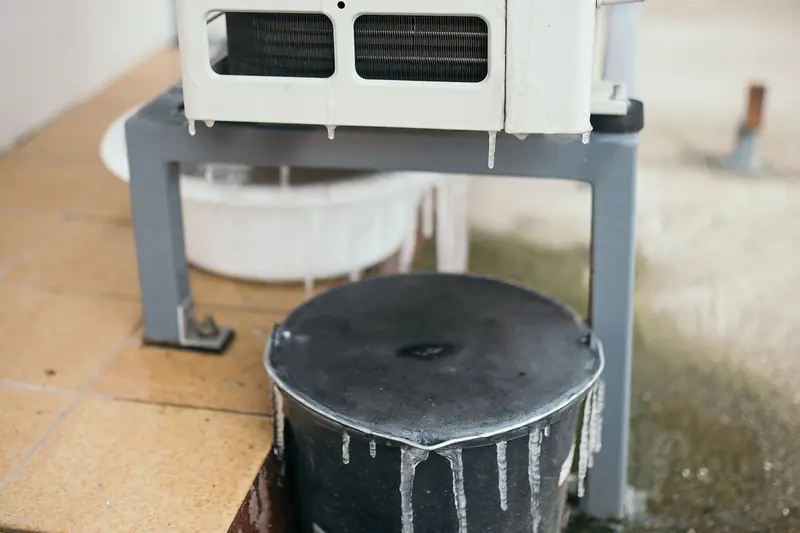
Ice is a problem when it keeps building, covers the coil or the top of the unit, or never clears after defrost runs. Lennox puts it simply: "Light frost is normal, but heavy ice buildup signals a problem." Trane says to call if the heat pump seems to be in defrost constantly, or if cycles get longer and longer while frost and ice spread over the unit.
Lennox's frozen heat pump page sets a time limit: if ice doesn't melt within 6 to 8 hours or refreezes quickly, call a technician. A heat pump that ices up this way may have a defrost control, sensor, fan or refrigerant problem, and all of those are inside the unit.
Ice can also come from outside the unit. A gutter dripping onto the top, or snow drifted against the coil, can add ice faster than defrost clears it. Those are things you can look at from a step back.
Stop and call if
- Ice keeps building over the coil or top of the unit and doesn't clear after defrost.
- The unit seems to be in defrost almost all the time, or cycles keep getting longer.
- Ice hasn't melted within 6 to 8 hours, or it refreezes quickly.
- AUX heat runs for long stretches in mild weather.
- You see smoke, smell burning plastic, or hear grinding from the outdoor fan.
- If you're unsure, stop and call a licensed HVAC technician.
What do emergency heat and auxiliary heat mean?
Auxiliary heat is backup heat that helps the heat pump; emergency heat is that same backup running alone with the heat pump shut off. Honeywell Home describes AUX as the backup heat that turns on to help the compressor hold your setting, and notes that emergency heat and auxiliary heat are often the same source, either electric heat strips or a fossil-fuel furnace.
Seeing AUX is normal during defrost and in very cold weather. Trane says you may see AUX on the thermostat whenever the heat pump is in defrost mode. If AUX runs for long stretches on a mild day, the heat pump may not be carrying its share, and that is worth a call. Lennox advises calling if aux heat stays on for more than about 30 minutes.
Emergency heat is a manual setting. Lennox defines it as using the supplemental heat by itself, without the heat pump. Carrier says to switch to it only if the heat pump has physically broken down or malfunctioned; then call for service rather than leaving it there all winter.
What can you safely check?
You can safely check the thermostat, the filter and the space around the outdoor unit. Start indoors and work out.
- Confirm the thermostat is on HEAT, not EM HEAT, and the setpoint is where you want it.
- Check the filter. Replace it if it looks dirty, and at least every 3 months for 1-inch filters, per ENERGY STAR.
- Make sure supply registers are open and returns are clear of furniture.
- Outside, look from a step back. Is a gutter dripping on the unit? Is snow drifted against the coil?
- If snow needs clearing, switch the unit off at the outdoor disconnect or the breaker first, then brush or shovel snow away from the sides by hand.
Don't chip, scrape or pry ice off the coil, don't pour hot water on it (Lennox warns it can crack components), and don't open the service panel. Capacitors and controls inside can hold a charge even with power off, so leave that work to a licensed technician. The full order of indoor and outdoor checks is on the safe checks page.
Tell the technician
Timing
How long each defrost runs, how often, and the outdoor temperature at the time.
Ice
Where it builds (coil, top, base), how thick, and whether it clears between cycles.
Thermostat
How often AUX shows, whether you switched to EM HEAT, and when.
What you checked
Filter, registers, gutter drip, snow cleared with power off.
Readings
- 5–15 minlength of a typical defrost cycleLennox
- 3–5 minTrane demand defrost cycleTrane
- 30–90 minhow often most systems check for frostLennox
- 6–8 hoursice still there after this means callLennox
| What you notice | Usually means | What you can do | Call a technician if |
|---|---|---|---|
| Steam from the outdoor unit | Frost melting in defrost | None needed | It smells of burning or looks like smoke |
| Outdoor fan stopped, whoosh | Defrost under way | Time it | It lasts far beyond 15 minutes every time |
| AUX on the thermostat | Backup heat during defrost or cold | Note how long | Long AUX runs in mild weather |
| Thick ice on coil and top | Defrost not keeping up | Gutter, snow (power off) | Not clear within 6 to 8 hours |
| EM HEAT needed to stay warm | Heat pump not working | Thermostat on HEAT | Always: call for service |
Case notes
This page draws on Trane's defrost cycle article, Lennox's pages on the defrost cycle, frozen heat pumps, aux heat and emergency versus auxiliary heat, Honeywell Home's thermostat support page, Carrier's auxiliary heat page and ENERGY STAR's maintenance list; every source was read in October 2026. Maker figures (5 to 15 minutes, 3 to 5 minutes, 30 to 90 minutes, 6 to 8 hours) are each maker's own and are named as such. Left out: any work inside the outdoor unit, refrigerant checks, repair costs, and a DOE definition of emergency heat, which no live DOE page gives.
Asked at intake
Why does my heat pump blow cool air for a few minutes in winter?
During defrost the system sends heat outside to melt the frost, so the air from the vents can feel cooler for a short time. Backup heat (AUX) often comes on to cover it. If cool air lasts well beyond a defrost cycle, check the thermostat mode and then call.
Should a heat pump defrost every 30 minutes?
It can be. Lennox says most systems check for frost every 30 to 90 minutes in heating mode, and damp, near-freezing weather frosts the coil fastest. Constant defrost with ice spreading over the unit is the pattern to call about.
Can I force a heat pump into defrost?
The control decides when to run defrost, based on its own frost check. If the unit is icing over, leave the thermostat on HEAT and call rather than switching modes back and forth.
Should I cover my heat pump in winter?
No source here recommends covering a heat pump that runs in winter, because it needs open airflow across the coil. Keep snow, leaves and drifting off the sides, with the power off before you clear it.
How long can I run on emergency heat?
Emergency heat is meant to keep you warm until the heat pump is repaired, not as a regular setting. Carrier says to use it only if the heat pump has broken down, and then to call for service.
Does AUX heat mean something is wrong?
Not by itself. AUX during defrost or on very cold days is normal. If it runs for long stretches in mild weather, the heat pump may not be heating properly, and Lennox suggests calling if aux heat stays on for more than about 30 minutes.
Where to go next
Back to the Hum Drip Hiss front desk