Folder · 4 symptoms
Furnace Lights, Alarms and Thermostat Codes
Furnace lights, alarm beeps and thermostat messages each point somewhere different: a blink code narrows a fault, a CO alarm means get outside now, and defrost or AUX is often normal.
Checked against makers' and agencies' documents by Hum Drip Hiss · how pages are made · Updated
Vitals
- A repeating set of 4 loud beeps from a CO alarm means carbon monoxide is present: go outside and call 911, per NFPA.
- Furnace blink codes are not universal: 3 flashes means a pressure switch fault on one Lennox model and a limit switch fault on Rheem standard furnaces.
- A CO alarm lasts about 7 to 10 years depending on the model; the replace-by date is on the alarm.
- A blank thermostat usually comes down to batteries, a breaker, the furnace switch, the door switch or a drain float switch, per Honeywell Home.
- Heat pump defrost usually lasts a few minutes, up to about 15, with steam and a stopped fan.
- AUX during defrost or very cold weather is normal; emergency heat is for a heat pump that has failed.
Get out first if
- A CO alarm sounds its alarm pattern, or anyone has headache, dizziness, nausea or confusion: everyone outside, then call 911 from outside.
- You smell gas: leave without touching switches or phones, then call 911 or the gas utility once you're well away.
- You see smoke or flames at the furnace: get out and call 911.
- A furnace code comes back after one restart, or AUX runs for long stretches in mild weather: turn it off and call.
- If you're unsure, stop and call a licensed HVAC technician.
What are furnace lights and alarms telling you?
Each signal is a message from a different device, and the first job is to tell which one is talking. A blinking light on the furnace comes from its control board and reports a fault code. A beep from a wall or ceiling unit comes from a CO or smoke alarm. Text such as AUX, EM HEAT or a blank screen comes from the thermostat.
The urgency is not the same. A CO alarm pattern is an emergency every time; the CPSC says to move outside to fresh air immediately and never ignore it. A furnace code is a reason to look, write it down and often call. Defrost steam and AUX are usually normal. When two signals happen at once, such as a furnace code and a CO alarm, the alarm wins.
The 10-minute safe checks list covers what you can look at before calling, and stop and call lists every sign that ends the checking. The Hum Drip Hiss home page sorts every symptom by sound, smell, leak and light.
How do you read a furnace blink code?
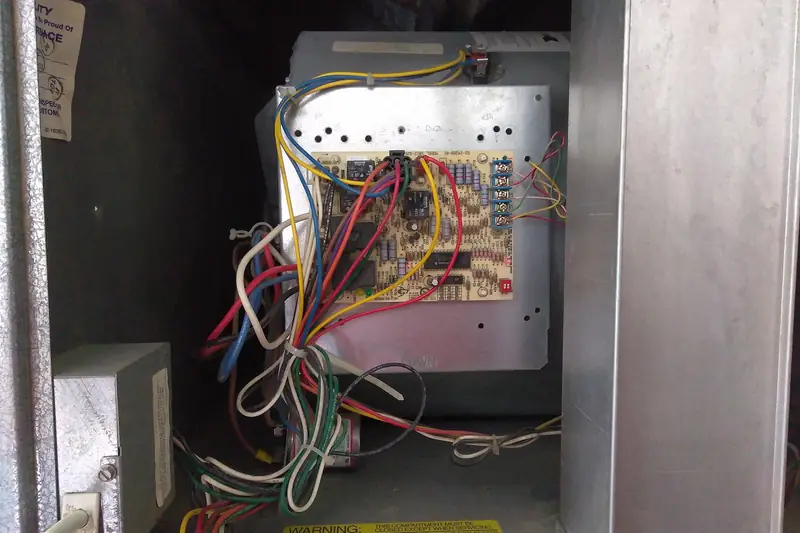
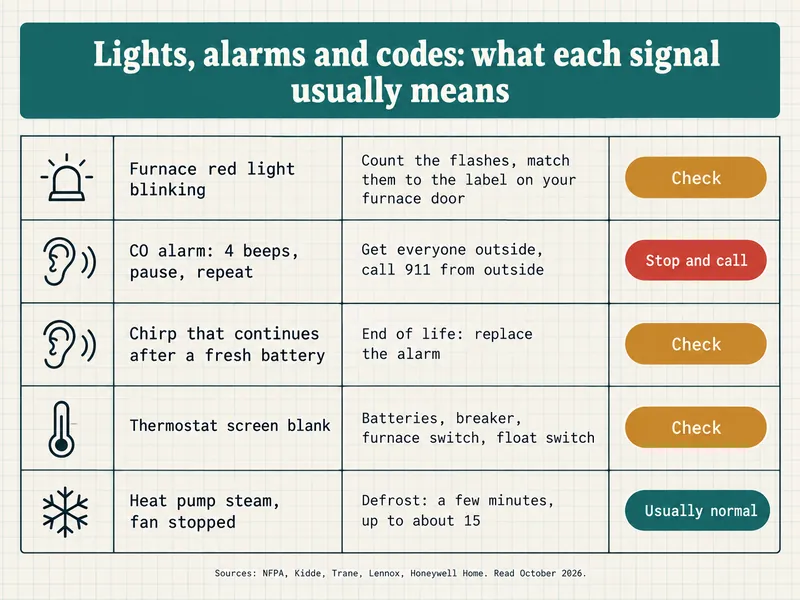
Count the flashes, write the pattern down, and match it to the label on your furnace's door. Trane says red blinking lights generally signal a problem, while a slow green blink can simply mean no call for heat.
The count alone is not enough. On the Lennox ML180UH, 3 flashes means "Pressure switch open"; on a Rheem standard furnace, 3 blinks means "Limit Switch Open". Carrier's 58MVP uses two-digit codes from short and long flashes on an amber light. Read through the sight window, keep the panels on, restart once at most, and call if the code returns.
Furnace codes
Which beeps mean get out?
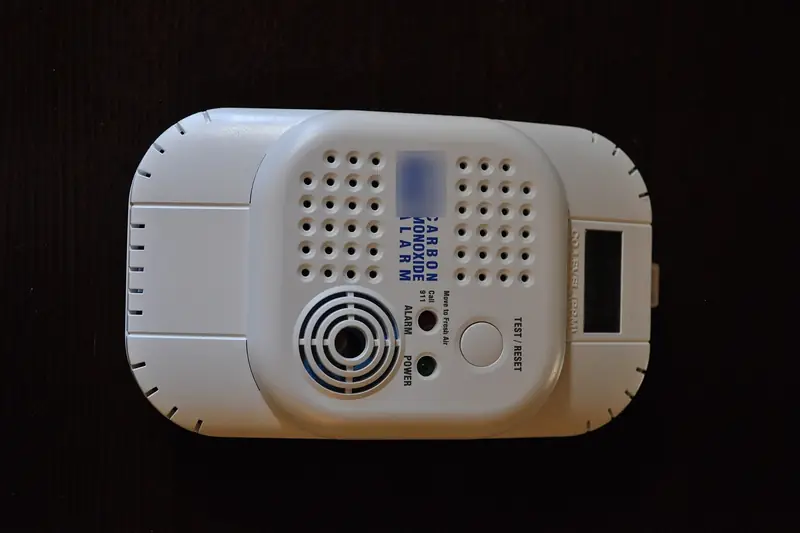
The CO alarm pattern means get out: NFPA describes it as a continuous set of four loud beeps. Kidde's support page describes four short beeps, five seconds of silence, then four more. Get everyone outside, call 911 or the fire department from outside, and stay out until responders say it is safe.
A single chirp is different. NFPA says a chirp every 30 or 60 seconds usually means a low battery, and chirping that continues after a new battery means the alarm has reached the end of its life. End-of-life signals vary by brand and model, so check the label or manual; some sealed alarms use the same chirp for both. The CPSC calls for CO alarms on every level of the home and outside sleeping areas.
CO alarms

Why would a thermostat go blank?
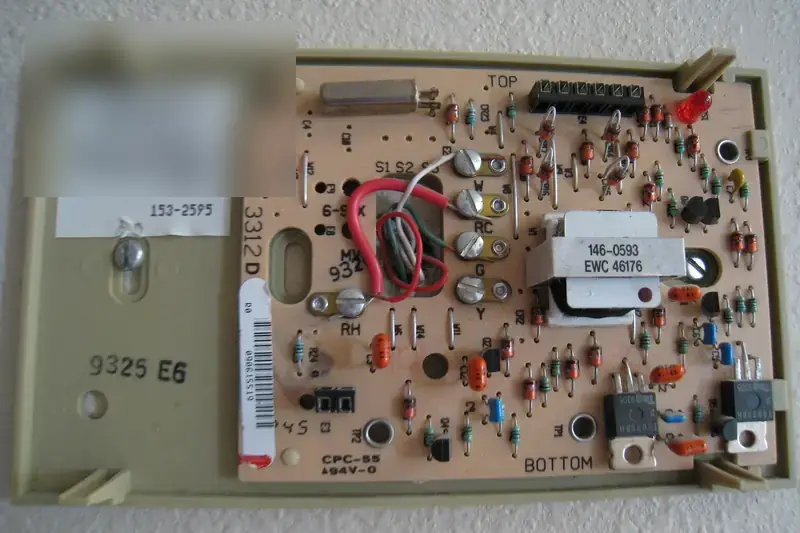
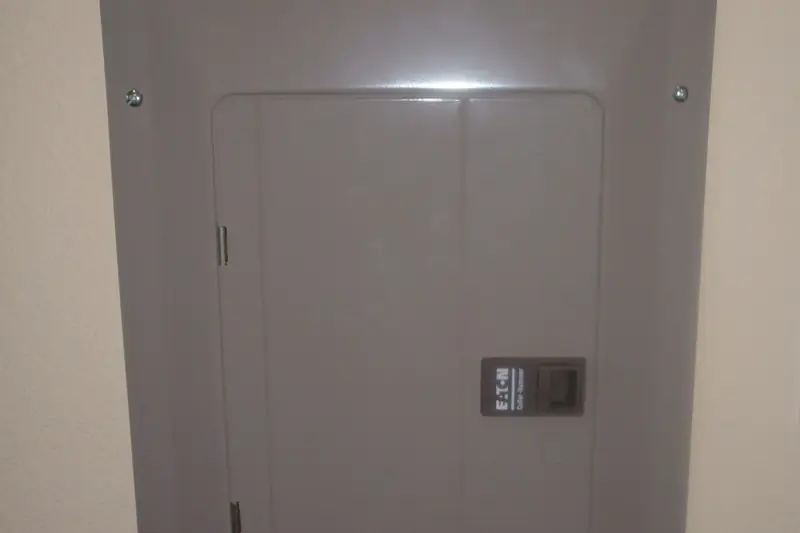
A thermostat goes blank when it loses power, and the source is usually batteries, a tripped breaker, the furnace switch, the furnace door switch or a condensate float switch. Honeywell Home's order is batteries first, then breakers, the furnace power switch and the door switch. Lennox adds that a float switch triggered by a drain backup can cut system power, so look for water around the indoor unit.
Reset a tripped HVAC breaker once. If it trips again, leave it off and call.
Thermostat screens
What do heat pump defrost and emergency heat mean?
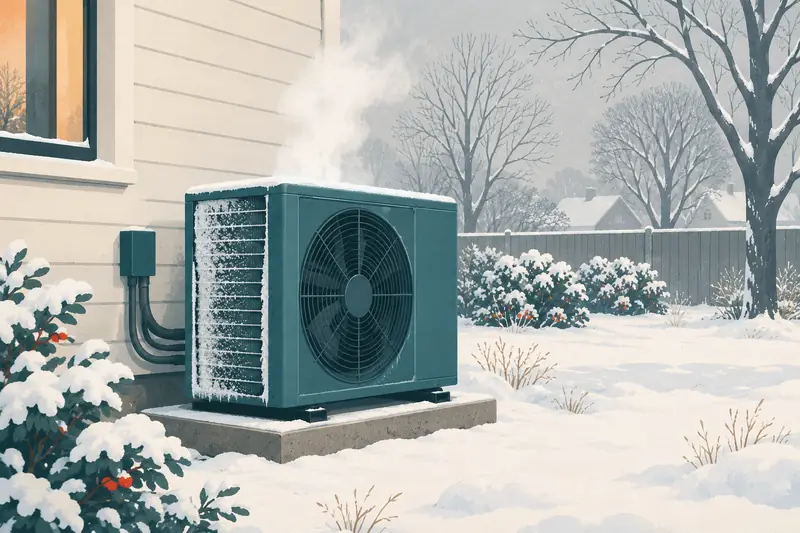
Defrost is a normal cycle that melts frost off the outdoor coil, and emergency heat is a manual backup for a heat pump that has failed. Lennox says a defrost cycle usually lasts 5 to 15 minutes, and Trane says steam, a whoosh and a stopped outdoor fan are all normal.
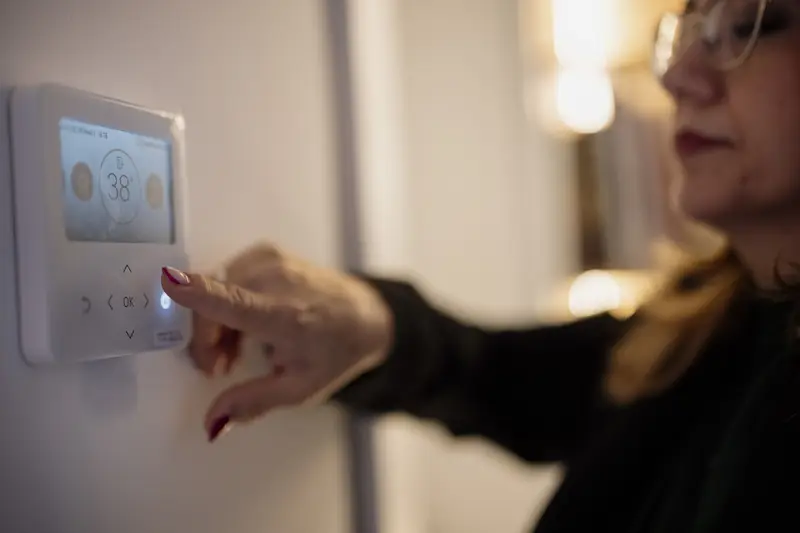
AUX on the thermostat during defrost or very cold weather is normal backup heat. If AUX runs for long stretches in mild weather, or ice keeps building on the outdoor unit, call a technician. Carrier says to switch to emergency heat only if the heat pump has broken down.
Heat pump signals
Readings
- 4loud beeps, repeating: the CO alarm patternNFPA
- 30 or 60 sbetween chirps for a low batteryNFPA
- 5fault codes stored by the Lennox ML180UH controlLennox
- 5–15 mintypical heat pump defrost cycleLennox
| Signal | Usually means | Safe check | Stop and call if |
|---|---|---|---|
| CO alarm: 4 beeps, pause, repeat | Carbon monoxide detected | None: go outside | Always: call 911 from outside |
| Chirp after a fresh battery | Alarm at end of life | Read the label or manual | Anyone feels unwell |
| Furnace red light blinking | Fault code | Count, match to door label | Code returns after one restart |
| Thermostat screen blank | Lost power | Batteries, breaker, switches | Breaker trips again |
| Heat pump steam, fan stopped | Defrost cycle | Time it | Ice never clears |
| AUX in mild weather | Heat pump not keeping up | Filter, thermostat on HEAT | It runs for long stretches |
Case notes
This hub summarizes the four pages in this section. It draws on NFPA's alarm-sound sheet, the CPSC carbon monoxide pages, Kidde's support page, Trane's blinking-light and defrost pages, Lennox's ML180UH instructions and its defrost, no-power and emergency heat pages, Rheem's flash code list, Honeywell Home's thermostat support and Carrier's auxiliary heat page, all read in October 2026. Left out: any universal code chart, any reset routine beyond one restart, and work inside the furnace, alarm or outdoor unit.
Asked at intake
Can a CO alarm and a smoke alarm sound alike?
NFPA describes the CO alarm as a continuous set of four loud beeps; the label or manual on your alarm lists its other sounds. If you are not sure which alarm is sounding, treat it as an emergency and go outside.
Why does my thermostat say AUX when it's not that cold?
AUX can come on during a defrost cycle on any heating day. Hours of AUX on a 50°F afternoon is a different matter: that points to a heat pump that isn't carrying the load, and a technician should look.
Is there one chart for all furnace blink codes?
No. A given count can mean one fault on one brand and another fault elsewhere, and even the light color varies. The label on your furnace's door is the only chart that applies.
Should I unplug a beeping CO alarm?
Not if it is sounding the alarm pattern: get outside first and call 911. For a chirp, read the label or manual, replace the battery if it has one, and replace the alarm if the chirp continues.
What should I write down before calling about a light or alarm?
Note the date and time, the exact pattern (how many flashes or beeps, and whether it repeats), what the system was doing, and anything you already checked, such as the filter or the breaker. A photo of the code label on the furnace door helps the technician match the pattern to your model.
Does emergency heat on the thermostat mean something is broken?
Not always. AUX often appears during defrost or very cold weather, which is normal. Emergency heat is a setting for when the heat pump itself has failed; if you find yourself needing it, call a licensed HVAC technician rather than running on it for days.
More in this section