Burning Smell From the Furnace
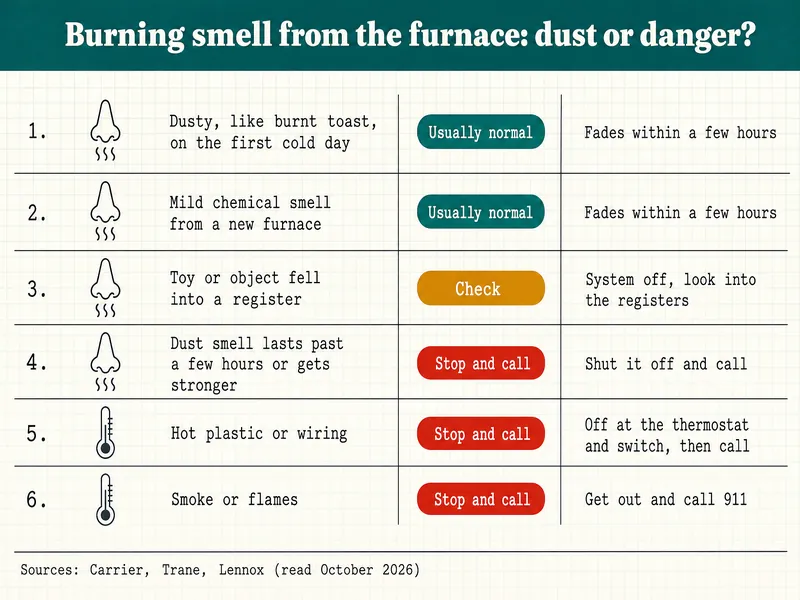
Burning smell from the furnace on the first cold day is usually dust and should fade within a few hours; hot plastic, wiring or a smell that keeps getting stronger means turn it off and call.
Checked against makers' and agencies' documents by Hum Drip Hiss · how pages are made · Updated
Vitals
- Trane says dust settles on the furnace and in the ducts over summer and burns off when the heat first comes on.
- Maker estimates for how long that lasts run from 10-15 minutes (Trane) to an hour or two (Lennox) to a few hours (Carrier); this site uses "within a few hours".
- A burning-plastic smell can come from the casing on wires inside the furnace, which Trane calls a big safety hazard.
- Carrier says to turn the furnace off if the smell lasts longer than a few hours, gets stronger, or smells like plastic or wiring. A rotten-egg smell is different: it means gas, so leave the house without touching switches and call 911 or the gas company from outside.
- A brand-new furnace can give off a mild chemical smell for a few hours as its protective finish heats up (Lennox).
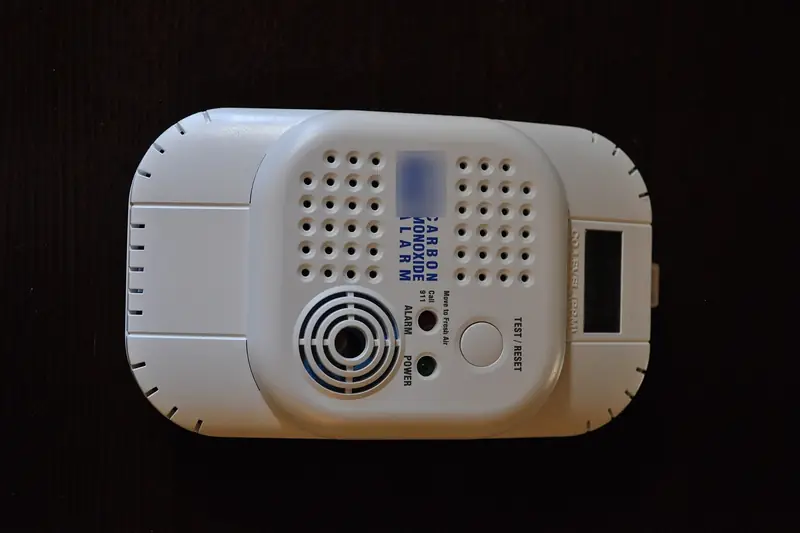
- Carbon monoxide has no smell, so a furnace that smells fine can still need a working CO alarm (EPA).
Is a burning smell from the furnace normal?
Often, yes, on the first cold day of the season. Through the warm months dust settles on the heat exchanger and inside the ducts, and the first few heating cycles cook it off. Trane describes it as smelling like burning toast and says not to panic; Lennox calls dust and debris the most common cause.
What makes it "normal" is the pattern. It shows up when the heat first runs after months off, it smells dusty rather than sharp or chemical, and it fades. A smell that arrives in the middle of the season, smells like melting plastic, or keeps getting stronger is a different problem.
How long should a first-run smell last?
It should fade within a few hours of the first run. The makers' own figures differ: Trane's smells and noises page says 10-15 minutes, Lennox says to let the unit run for an hour or two, and Carrier gives anywhere from about 30 minutes to a few hours.
If it's still there after a few hours, or it seems to get stronger instead of weaker, stop treating it as dust. Carrier says a smell that persists beyond a few hours or becomes stronger should be investigated. Turn the furnace off and call a licensed HVAC technician.
A new furnace has its own version. Lennox says the protective finish on a new furnace starts to burn when it is first heated, giving off a mild, chemical-like smell that should disappear within a few hours in a well-ventilated home.
What does a hot plastic or electrical smell mean?
It can mean something electrical is overheating, and it's a reason to shut the furnace off now. Trane says the melting-plastic smell may come from the casing on the electrical wires inside the furnace. Carrier names an overheated blower motor, possibly from heavy dust or a clogged filter, as one source, and Lennox lists a damaged wiring harness and an overheated blower motor.
A sharp metallic smell belongs in the same group. Lennox ties a metallic odor to a serious electrical problem, and Trane says a pungent metallic smell can be a warning sign of a cracked heat exchanger, which matters because a heat exchanger keeps combustion gases out of the house air. On an oil furnace, Carrier says an oily smell could mean an oil leak or burner trouble. None of these are homeowner repairs.
Rotten eggs or sulfur is not a burning smell at all; it means gas. Don't turn the furnace off or touch anything. Get everyone outside, leave windows and doors as they are, and call 911 or the gas utility once you're well away. The gas smell page has the full steps.
What should you do right away?
For a plastic, electrical or worsening smell, switch the furnace off at the thermostat, then at the furnace's power switch or its breaker, and call. Trane says to turn off the furnace and call for HVAC repair, and Carrier says to stop using it until a qualified professional has inspected it.
If you see smoke or flames anywhere in the house, don't stop at the thermostat. Get everyone out of the house and call 911 from outside.
Stop and call if you notice
- A hot plastic, rubber, wiring or metallic smell while the furnace runs.
- A dusty smell that lasts more than a few hours or keeps getting stronger.
- Smoke, sparks, scorch marks or flames anywhere near the furnace or a register: get out and call 911.
- A rotten-egg or sulfur smell: leave the house first and call 911 or the gas utility from outside.
- A CO alarm sounding at the same time: get everyone outside and call 911.
- If you're unsure, stop and call a licensed HVAC technician.
What can you check after it's off?
With the furnace off, a few checks are yours to make; everything inside the cabinet is not. Work through these in order and stop at the first one that explains the smell.
- Look at the filter. Carrier says a dirty filter can let dust build up and restrict airflow. Check it monthly and replace it when it looks dirty, per the filter maker, and at least every 3 months for 1-inch filters; ENERGY STAR's maintenance checklist puts the filter on a monthly check.
- Look into the registers. Lennox says a toy or other small object can fall into a vent over summer and smell like burning plastic when the heat comes on. With the system off, lift the register cover and remove anything you can see and reach.
- Clear the space around the furnace. Lennox suggests cleaning the area around the unit before the season starts, since dust and stray objects collect there while it sits unused.
- Leave the rest closed. Leave the burner and blower panels in place, don't touch wiring, or restart the furnace to "see if it's still there". Carrier says not to attempt to diagnose or repair electrical or combustion-related problems yourself.
The ten-minute safe checks list covers the same filter and register steps in more detail.
Could it be something else in the house?
Yes. A burning smell that seems to come from the vents can start somewhere else, because the return grilles pull air from the whole house. Carrier lists a refrigerator, toaster oven or clothes dryer as possible sources of an electrical burning smell, and says to unplug the suspected appliance and, if needed, switch off its circuit breaker.
Notice where the smell is strongest and whether it's there with the furnace off. If it stays after the furnace is off and you can't trace it to an appliance, treat it like any unexplained electrical smell: leave the house if it's getting worse and call 911. A smell that only appears when the heat runs points back at the furnace and a technician.
| Smell | Likely source | Safe step | Stop and call if |
|---|---|---|---|
| Dusty, like burnt toast, first cold day | Summer dust burning off (Trane, Lennox) | Let it run; check the filter | It lasts past a few hours or grows stronger |
| Mild chemical, new furnace | Protective finish heating up (Lennox) | Let it run for a few hours | It doesn't fade |
| Melting plastic | Wire casing or a fallen object (Trane, Lennox) | Furnace off; look in the registers | It's not an object you can see and remove |
| Electrical or metallic | Overheated motor or wiring, possible heat exchanger fault (Carrier, Lennox, Trane) | Furnace off at the switch or breaker | Always |
| Oily (oil furnace) | Oil leak or burner trouble (Carrier) | Furnace off | Always |
| Rotten eggs or sulfur | Gas leak (Carrier, Trane) | Get out; call from outside | Always |
Readings
- 10-15 minHow quickly Trane says a first-run dust smell should goTrane
- 1-2 hoursHow long Lennox says to let the unit run while the dust smell clearsLennox
- 30 minThe low end of Carrier's estimate, which runs up to a few hoursCarrier
- 1 monthHow often ENERGY STAR says to inspect the filterENERGY STAR
How do you keep it from coming back?
A yearly check before the heating season is the main defense. The EPA recommends that fuel-burning furnaces be inspected and serviced before each heating season to protect against carbon monoxide poisoning, and Lennox says a fall tune-up lets a technician test the wiring and connections.
Between visits, start each season with a clean filter, keep the registers clear, and test your CO alarms. Lennox points out that carbon monoxide is odorless, so a nose can't stand in for an alarm; see what a carbon monoxide detector beeping means.
Tell the technician
What it smelled like
Dusty, plastic, electrical, metallic or oily, and whether it changed over time.
When it happens
Only at startup, all through a heating cycle, or even with the furnace off.
How long it lasted
Minutes or hours, and whether it got weaker or stronger before you switched it off.
What you already did
Which switch or breaker you turned off, the filter's condition, and anything you took out of a register.
Other odors are ranked from leave-now to usually-harmless on the smells hub, and a musty smell from the vents is covered under dirty sock syndrome. The stop-and-call list collects every sign on this site that means a technician, not a homeowner.
Case notes
Based on Trane's furnace burning-smell page and its HVAC smells and noises page, Carrier's burning-smell page, Lennox's page on a heater that smells like it's burning, EPA's page on air duct cleaning, plus ENERGY STAR's maintenance checklist (each read October 2026). Where the makers give different times for the dust smell, the page uses the more cautious "within a few hours". It leaves out any step inside the furnace cabinet (motor, wiring, burners, heat exchanger) and any repair cost. Nothing was tested in a home.
Asked at intake
Why does my furnace smell like burning every fall?
Dust collects on the heat exchanger and in the ducts while the furnace sits idle, and the first heating cycles burn it off. Starting the season with a clean filter helps; the smell should fade within a few hours.
Is it safe to sleep with a burning smell from the furnace?
Not if the smell is plastic, electrical, metallic or getting stronger; turn the furnace off and call before bed. A faint dusty smell on the first night of the season is a different case, and working CO alarms should be on every level either way.
The smell is near the furnace but also in the kitchen. Which is it?
Turn each off in turn and note when the smell fades. Carrier says electrical burning smells often come from appliances, and that a suspect appliance should be unplugged.
Does a burning smell mean carbon monoxide?
Not by itself. Carbon monoxide has no smell, so the only reliable warning is a CO alarm. If the alarm sounds or anyone feels dizzy, sick or confused, get outside and call 911.
Can a dirty filter cause a burning smell?
It can contribute. Carrier says a clogged filter restricts airflow and can let dust build up, and it names heavy dust or a clogged filter as possible reasons a blower motor overheats.
Should I run the furnace again to see if the smell comes back?
No. Once you've switched it off for a plastic, electrical or worsening smell, leave it off until a licensed technician has looked at it. Restarting it only repeats whatever was overheating.
Keep reading

Back to the Hum Drip Hiss front desk